
Whole-Home Water Filtration Installation Near Me
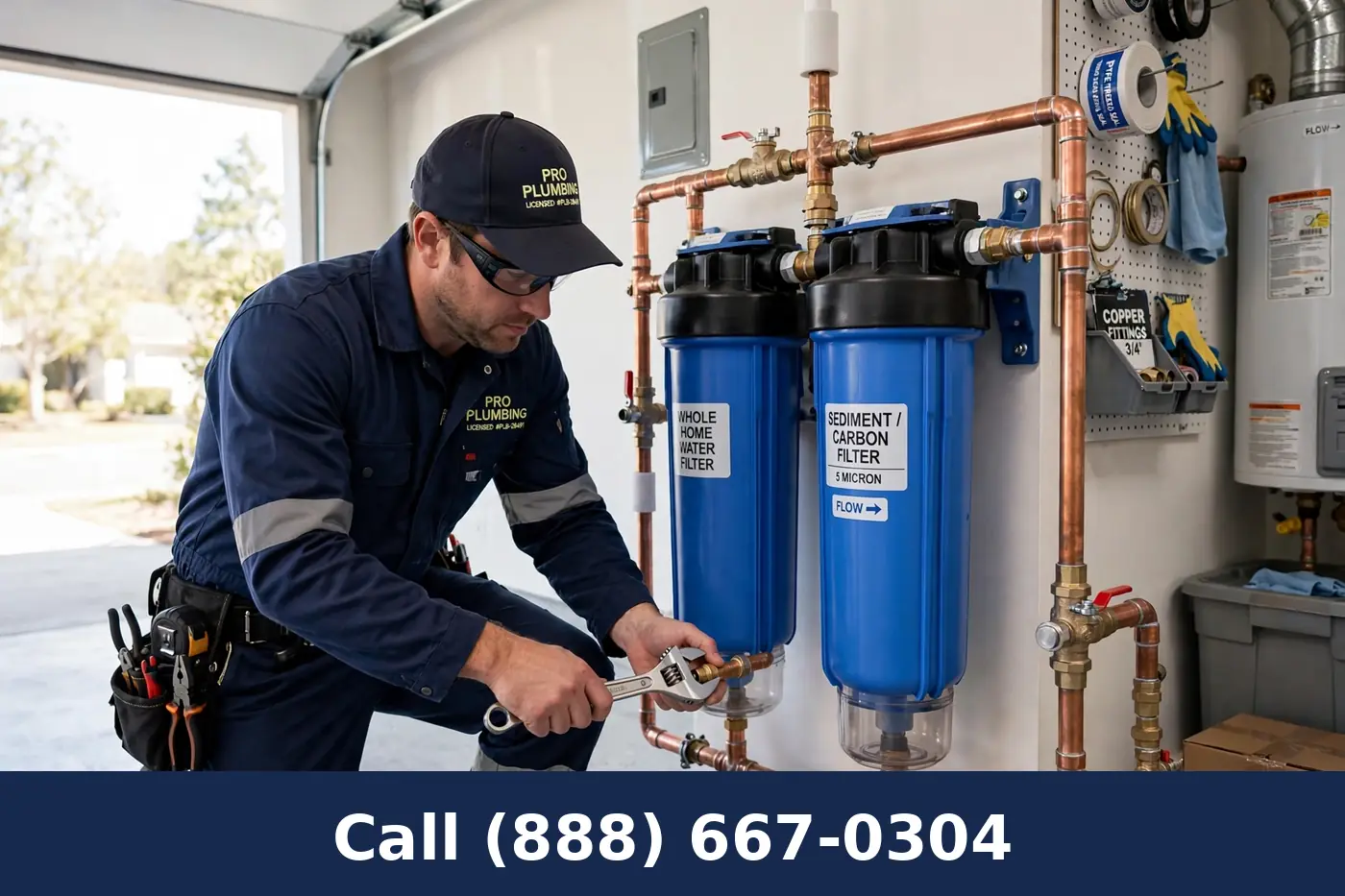
Starting price: Call for pricing
A whole-home water filtration system treats water at the point where it enters your house, so every tap, shower, and appliance draws cleaner water. Plumber Modesto Pros sizes and installs point-of-entry systems matched to your plumbing, flow rate, and local water chemistry. The result is better taste, fewer odors, and real protection for fixtures and appliances.
What does a whole-home water filtration system actually do?
A whole-home water filtration system is installed on the main water line where it enters the house, before the line splits off to individual fixtures. Every gallon that reaches a sink, shower, toilet, dishwasher, or washing machine passes through the system's filter stages first. Most systems use multiple stages in sequence, starting with a sediment pre-filter that catches rust, sand, and debris that would otherwise clog the finer stages downstream. The water then moves through activated carbon media, which reduces chlorine, chloramine, and many of the compounds behind bad taste and odor. Some systems add specialty media for iron, manganese, or heavy metals, and homes on wells often pair filtration with UV sterilization for microbial concerns. The output is treated water distributed through the existing plumbing, reaching every point of use.
How is whole-home filtration different from a water softener?
This is one of the most common points of confusion, and mixing the two up leads to buying the wrong equipment. A water softener uses ion-exchange resin to swap calcium and magnesium, the minerals behind hardness and scale, for sodium or potassium. It does essentially nothing for chlorine, sediment, taste, or odor. A whole-home filtration system does the opposite job: it strips out particulates, chemicals, and odor-causing compounds through sediment and carbon media, while dissolved hardness minerals pass straight through. Many homes, especially those on well water, need both pieces of equipment working together rather than choosing one. A water test tells you which problems your water actually has, so you can match the equipment to the complaint instead of guessing.
What happens inside the filter stages?
Order matters inside a multi-stage system because each stage protects the one after it. The first stage is usually a sediment cartridge, often rated around 5 microns, made of spun polypropylene. It catches dirt, rust flakes, and suspended solids that would clog carbon media prematurely. The second stage is typically an activated carbon block, made from densely packed coconut shell carbon. Carbon is the workhorse for taste and odor: it reduces chlorine by a large margin and works against many organic chemicals such as pesticides and herbicides. A third stage may hold specialty media, such as iron and manganese reducing material for well water. It may also hold copper-zinc media that further reduces chlorine and helps limit bacterial growth inside the housing. Some setups finish with a post-filter that catches any fine carbon particles before water leaves the system. Each cartridge has its own service interval, and installing them in the right sequence keeps replacement costs down.
When does a home need this kind of system?
Municipal water that arrives with a strong chlorine smell or taste is a common trigger. Visible sediment, gritty aerators, or rust-colored water after the tap sits unused also point toward filtration. Homes on private wells face a wider set of concerns, including iron, manganese, hydrogen sulfide odors, and agricultural runoff. Private wells are not covered by the same testing rules as city supplies. Families who notice staining on fixtures, cloudy ice cubes, or spots on glassware that resist wiping are seeing the effects of untreated water. If several of these signs show up together, a single point-of-entry system is usually simpler and less trouble to maintain than separate filters at every faucet.
How does the installation process work?
The process starts with a conversation about what you are seeing in your water and a look at the main line where it enters the home. A technician checks pipe size, available space, and water pressure, then recommends a system with the right number of stages and flow capacity. On installation day, the main water supply is shut off and the line is drained so the crew can cut in the filter housings. The system is mounted on the main line with a bypass valve, which lets water flow around the filters during maintenance without shutting the whole house down. New housings are plumbed in with shut-off valves on both sides, cartridges are seated and sealed, and the water is restored slowly while the crew checks every joint for leaks. The technician then flushes the system to clear carbon fines from the new cartridges and walks you through the maintenance schedule. Most installations wrap up within a day, and you can use your water normally as soon as the flush is done.
What affects the cost of a whole-home filtration system?
Several real factors move the price, and none of them are mysterious. The number of stages is the biggest one: a simple two-stage sediment and carbon unit costs less to buy and maintain than a four-stage system with iron reduction and UV. The size of the housings matters too, because larger homes with higher flow rates need bigger cartridges to keep pressure steady. Water chemistry drives media choice; well water with iron or sulfur needs specialty stages that city water homes can skip. Access and plumbing layout matter as well: a main line that is easy to reach in a garage keeps labor simple. A line tucked behind finished walls or in a tight crawl space takes more work to reach. Ongoing cartridge replacement is part of ownership, and the technician should explain the replacement intervals before you commit. For an exact quote on your home, call (888) 667-0304 and describe what you are seeing in your water.
How does Plumber Modesto Pros serve homes in this area?
Plumber Modesto Pros works with homeowners, landlords, and small businesses across the Modesto area and the surrounding Central Valley communities. The service area includes many homes on municipal supplies as well as rural properties on private wells near agricultural land, where sediment and mineral issues are common. Installations are sized to the home, not pulled from a one-size-fits-all box, and every job leaves the mechanical room cleaner than it was found. Maintenance reminders help you stay on top of cartridge changes so the system keeps performing. When the water at your taps is not what it should be, call (888) 667-0304 and talk through what you are seeing. The right fix starts with understanding your water.
Features
- Point-of-entry installation on the main water line serving the whole house
- Sediment pre-filter that traps rust, sand, and debris down to 5 microns
- Activated carbon block stage for chlorine, taste, and odor reduction
- Optional iron and manganese reduction media for well water concerns
- UV sterilization stage available for homes on private wells
- Built-in bypass valve for simple cartridge changes and service
- System sizing matched to pipe diameter and household flow demand
Benefits
- Cleaner, better-tasting water from every tap and shower in the home
- Fewer chlorine odors when running the kitchen sink or showering
- Less sediment reaching faucets, cartridges, and supply valves
- Reduced staining on sinks, tubs, and laundry from iron and minerals
- Longer working life for dishwashers, washing machines, and water heaters
- Fewer clogged aerators and showerheads from grit and scale particles
- One central system to maintain instead of filters at each fixture