
Whole-Home Plumbing Winterization Near Me
Starting price: Call for pricing
Winter finds every weak point in a plumbing system, and Plumber Modesto Pros closes them before the cold arrives. Our whole-home winterization covers draining outdoor lines, insulating exposed pipes, testing every shutoff valve, and checking the water heater, sump pump, and vulnerable fixtures. Call (888) 667-0304 in the fall and face winter with a plumbing system that is ready for it.
What is whole-home plumbing winterization?
Winterization is a systematic pre-winter service that prepares every part of your plumbing for cold weather. Instead of reacting to ice-blocked lines and burst pipes in January, a technician goes through the entire system in the fall. That visit covers draining what should be drained, insulating what should be insulated, testing what should be tested, and documenting everything. It is preventive maintenance with a seasonal focus, and it is the most reliable way to get through winter without a plumbing emergency.
The service covers the full water path from the meter to the fixtures. Supply lines, drain lines, outdoor plumbing, the water heater, the sump pump, shutoff valves, and hose bibbs each get attention. Nothing is left to assumption. A Plumber Modesto Pros winterization ends with a written report showing what was done, what was found, and what should be watched. You head into the cold months knowing exactly where your system stands.
Why does winter punish plumbing so hard?
Cold attacks plumbing in three ways. First, still water in a pipe exposed to cold air or cold soil loses heat until it turns to ice. And the expanding ice can split copper, crack fittings, and stretch PEX beyond its recovery. Second, materials contract in the cold, which stresses old joints, packing nuts, and washers that were already near the end of their life. Third, winter changes how the house itself behaves: furnaces cycle, humidity drops, and foundation vents that were fine in October become wind tunnels in January.
The damage pattern is consistent year after year. Outdoor faucet lines split inside the wall. Crawl-space supply lines ice up on the first windy night. Water heaters work harder against cold incoming water and reveal sediment problems as rumbling and slow recovery. Sump pumps face their toughest test during winter storms when power flickers and groundwater surges. Winterization addresses each of these failure modes directly, before the weather does it for you.
What does the outdoor plumbing drain-down involve?
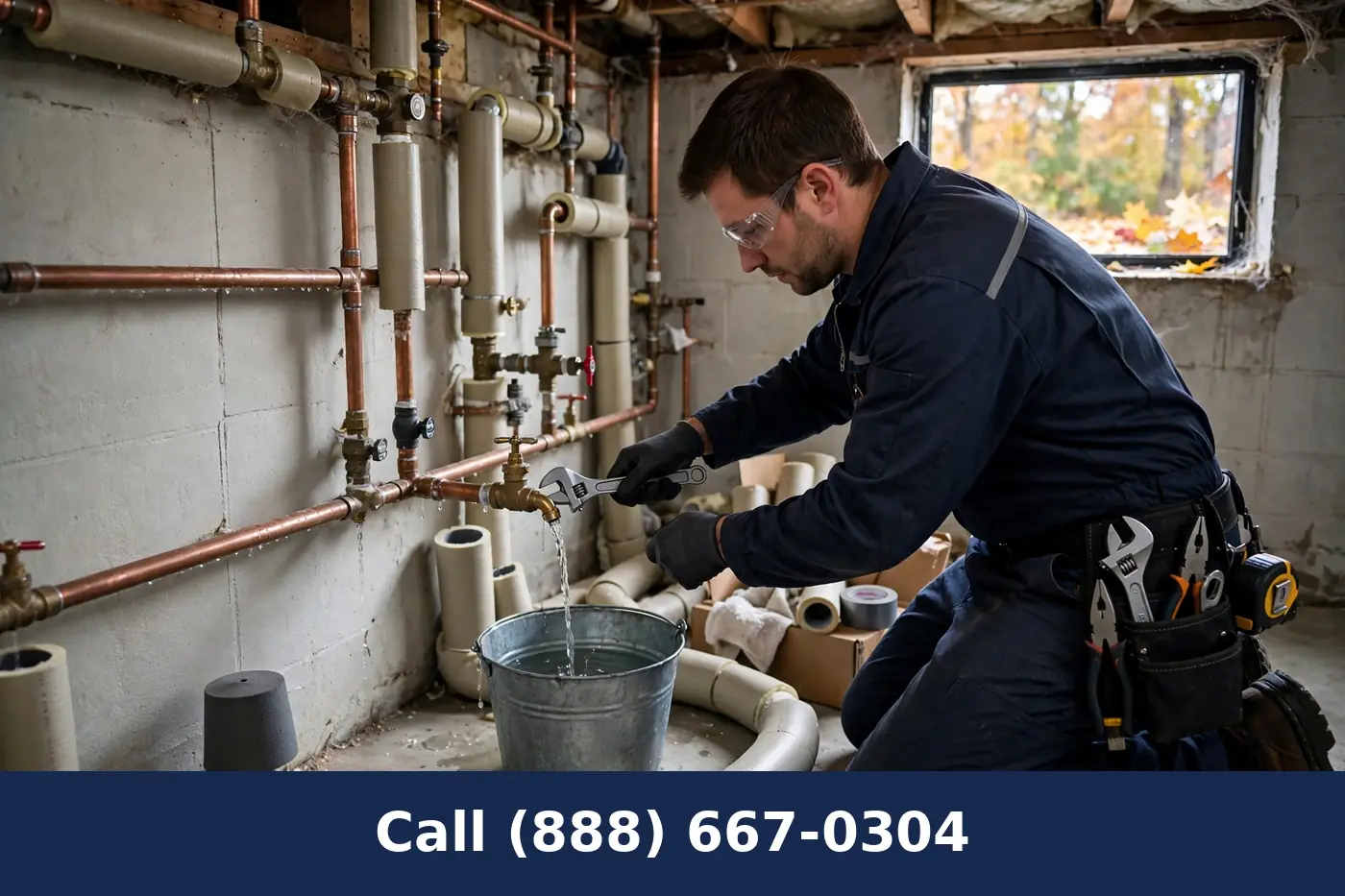
Every exterior water outlet gets shut off from inside, drained, and left open for the winter. The technician locates the interior shutoff valve for each hose bibb, closes it, then opens the outdoor faucet to let the line drain completely. The bleeder cap on the shutoff valve, a small cap on the side of the valve body, is opened to drain the last trapped water from the valve itself. It is then closed again. The outdoor faucet is left in the open position so any residual moisture has room to expand without pressure.
Irrigation tie-ins and outdoor kitchen or bar-sink feeds get the same treatment. Hoses are disconnected, drained, coiled, and stored indoors, because a connected hose traps water in the faucet body and defeats the entire drain-down. Insulated faucet covers go on as a final layer. Each shutoff valve gets a tag marking what it controls, so anyone in the household can find the right valve quickly if a problem appears mid-winter.
How are indoor vulnerable lines protected?
The technician walks every accessible run in unconditioned spaces: crawl spaces, attics, garages, and unfinished basements. Bare pipe gets foam sleeve insulation sized to its diameter, with sealed seams and covered elbows, tees, and valve bodies. Where pipes pass through exterior walls or floor plates, the gaps get sealed against drafts, because moving cold air strips heat from a pipe far faster than still cold air.
Lines with a history of icing get stronger measures. Thermostat-controlled heat cable goes on under the insulation for runs that have blocked before, holding the pipe above the ice point automatically all winter. In extreme cases the technician may recommend rerouting a chronically exposed line through conditioned space. And the winterization report will spell out exactly which runs fall into that category and why. Nothing is upsold; the report distinguishes between what is prudent now and what can wait.
What gets checked on the water heater and sump pump?
The water heater faces its hardest season in winter, when incoming water is coldest and demand is highest. The technician checks the temperature setting, tests the temperature-and-pressure relief valve, and inspects the anode rod port and visible connections for corrosion. The technician assesses sediment by listening to the tank and checking recovery performance. A tank full of sediment works harder, costs more to run, and fails sooner, so the report will recommend a flush when the signs point that way.
The sump pump gets tested under load: the float is lifted, the pump runs, and the discharge is confirmed flowing clear outside, well away from the foundation. The discharge line is checked for low spots where water could sit and ice up. And the check valve is verified so pumped water does not fall back into the pit. Battery backups are tested where present. Winter storms bring the year's heaviest groundwater and the highest chance of power interruption, which is exactly when a sump pump must not fail.
Why test every shutoff valve?
A shutoff valve that has not moved in five years may not move when you need it most. Mineral buildup and corrosion seize valve stems, and a stuck main shutoff turns a manageable leak into a flood while you hunt for alternatives. During winterization, the technician exercises the main shutoff and every fixture valve. That means closing and reopening each one, checking for weeping at the packing nut, and replacing washers or repacking stems that show trouble.
Each valve gets tagged with its location and function. That sounds like a small thing until a pipe bursts at midnight and someone who has never touched the plumbing needs to kill the water in seconds. The tag turns a panicked search into a single confident motion. Valves that are failing get flagged in the report with a recommendation. A valve discovered broken in October is a cheap fix, while the same valve discovered broken in January is an emergency.
What affects the cost of whole-home winterization?
Home size and layout set the baseline. A single-story ranch with an accessible crawl space takes less time than a three-story home with plumbing spread across attics, garages, and additions. The number of outdoor faucets, the length of exposed pipe, and the condition of existing insulation all move the price. Homes that have never been winterized take longer on the first visit because every valve needs exercising and every run needs assessment; return visits in later years go faster.
Add-on work found during the visit is quoted separately and only done with your approval. A seized main shutoff that needs replacement, a water heater that needs flushing, or a sump pump that fails its test are all common findings. And the technician will explain each one plainly with its own price before proceeding. The winterization itself is quoted up front after a brief walkthrough. Call (888) 667-0304 for an exact quote on your home.
How do we serve your area?
Plumber Modesto Pros winterizes homes and businesses across the communities we serve. Single-family homes are the core of this work, especially older houses with crawl spaces and newer houses with plumbing in bonus-room attics. Vacation homes and rentals get winterization as asset protection, since an unoccupied house with a burst pipe can run water for days before anyone notices. We schedule these with property managers in bulk each fall.
Commercial buildings have their own winter risks: rooftop units with condensate lines, warehouses with plumbing along exterior walls, restaurants with mop sinks and prep areas near loading doors. Our technicians adapt the same systematic checklist to commercial layouts and provide documentation suitable for facilities records. Whatever the building, the deliverable is the same: a system prepared for cold, and a report proving it.
When should winterization be scheduled?
Early fall is ideal. Scheduling in September or October means calm weather, open appointment slots, and time to complete any follow-up work the inspection uncovers before the cold arrives. Waiting until the first cold snap warning compresses everything. The technician is fighting the calendar, parts runs take longer, and any valve or pipe found in bad shape becomes an urgent repair instead of a planned one.
Think of it like servicing a furnace. Nobody wants the first cold night to be the discovery that the system was not ready. Plumbing deserves the same foresight, because its failures are wetter and more destructive than a cold house. Call (888) 667-0304 in the fall, and Plumber Modesto Pros will make sure your plumbing is ready long before the first cold snap tests it.
Features
- Complete drain-down of outdoor faucets, spigots, and irrigation tie-ins
- Insulation of exposed supply lines in crawl spaces, attics, and garages
- Testing and tagging of the main shutoff and every fixture valve
- Water heater inspection, flush assessment, and temperature check
- Sump pump and discharge line check before winter storms
- Sealing of air leaks around pipe penetrations in exterior walls
- Written winter-readiness report with photos of all work performed
Benefits
- Every vulnerable line in the home addressed in one scheduled visit
- Outdoor plumbing drained before the first hard cold snap
- Shutoff valves tested and tagged so anyone can find them in an emergency
- Crawl-space and attic lines insulated where they were left bare
- Water heater checked and tuned before its heaviest season
- A written winter-readiness report for your records
- Fewer cold-weather surprises and emergency calls all winter