
Well Water Chlorination & Disinfection Near Me
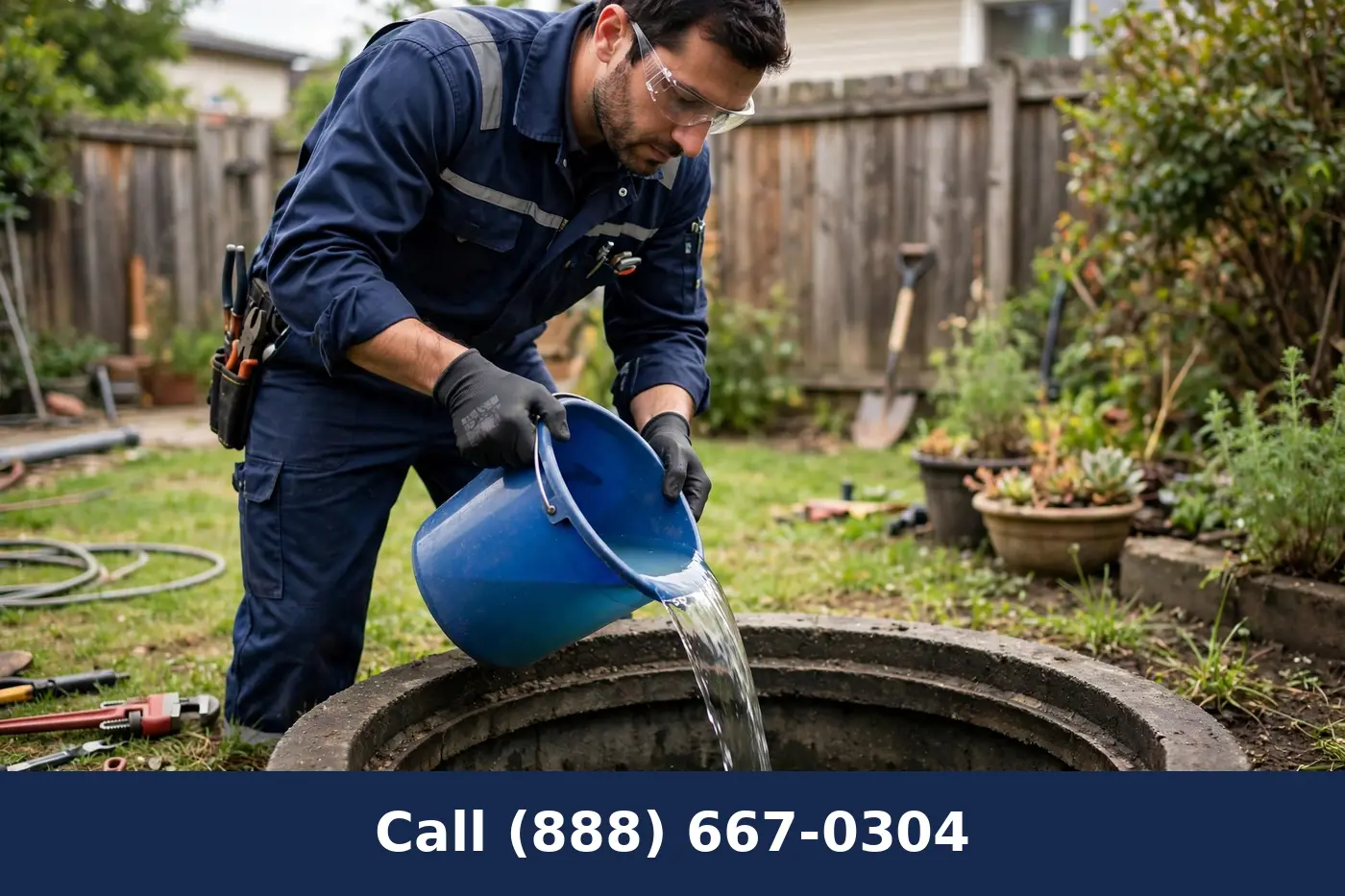
Starting price: Call for pricing
Well water chlorination and disinfection, also called shock chlorination, floods your well and plumbing with a strong chlorine solution that kills bacteria. It is the standard response after flooding, repairs, or a positive bacteria test. Plumber Modesto Pros handles the dosing, circulation, and follow-up testing for you.
When a well test comes back positive for coliform bacteria, or floodwater has reached your wellhead, your drinking water needs more than a filter change. It needs a full reset. Well water chlorination and disinfection, widely known as shock chlorination, floods the well and every pipe in the house with a strong chlorine solution that destroys bacteria wherever it hides. Plumber Modesto Pros performs the entire treatment safely, then verifies the result with laboratory testing.
This is not a do-it-yourself chemistry experiment. The right chlorine concentration, the right contact time, and the right flush procedure all matter. Too little chlorine leaves bacteria alive, and careless flushing can damage your septic system or kill your landscaping. A professional treatment gets it right the first time.
What is well water chlorination and disinfection?
Shock chlorination introduces a high concentration of chlorine into the well casing and the household plumbing at the same time. Standard guidance calls for at least fifty parts per million of chlorine held in the system for many hours. That is far stronger than the trace amounts in treated city water. That strength is what makes it effective against bacteria clinging to casing walls, drop pipes, and fixture interiors.
The procedure starts with preparation. We shut off power to the pump, remove the well cap, and clear any sediment so the chlorine contacts clean surfaces. Using unscented household bleach, typically around five percent sodium hypochlorite, we mix a dose matched to your well's diameter and water depth. A six-inch residential well with twenty feet of water needs roughly half a gallon of bleach, and the dose scales from there.
The diluted solution goes down the casing, taking care to avoid pouring directly onto pump wiring. Then the pump is restarted and a garden hose runs water back into the well until chlorine odor is strong at the hose. That recirculation mixes the solution through the entire water column. Next, every cold-water faucet in the house is opened one by one until chlorine can be smelled at each one, then closed. Toilets are flushed to charge their tanks, and the water heater is refilled with chlorinated water.
Then comes the waiting. The solution sits in the system for at least eight hours, and twelve to twenty-four is better. Nobody drinks, cooks with, or bathes in the water during this time. After the contact period, we flush from an outdoor spigot into a safe area, away from plants, lakes, and the septic tank, until the chlorine odor is gone. Indoor fixtures follow. Finally, we wait several days and collect a bacteria sample for the lab, because only a clean test result means the job is done.
When do you need your well disinfected?
A positive bacteria test is the clearest trigger. Total coliform or E. coli in your sample means contamination is present, and shock chlorination is the standard first response recommended by health departments nationwide. New wells and wells that just had a pump or pipe replaced should also be disinfected before anyone drinks from them, since construction work introduces bacteria.
Flooding is another major reason. If surface water reached your wellhead or the area around it, assume the well is contaminated until proven otherwise. Even heavy storms that pond water near the casing warrant caution and testing.
Some homeowners notice slime on fixtures or a musty change in the water that suggests bacterial growth in the plumbing. Disinfection resets the system in those cases too. And if you are buying or selling a home with a well, lenders and health departments often require a disinfection and a clean follow-up test as part of the transaction.
How does the professional process work from start to finish?
Call (888) 667-0304 and tell us what happened: a failed test, a flood, a recent repair, or a suspicious change in the water. We ask about your well's size and depth so we arrive with the correct materials.
On site, we inspect the wellhead first, because disinfection is pointless if the casing is cracked or the seal is missing. A compromised well will simply get contaminated again. If the structure looks sound, we proceed with the treatment, handling all the bleach mixing with proper eye protection and gloves.
We manage the full sequence: dosing, recirculation, charging every fixture, and the timed wait. Before leaving, we post clear notices so everyone in the household knows the water is off-limits until flushing is complete. We return or guide you through the flush, making sure chlorinated water goes somewhere safe, never into the septic tank in one big slug and never onto prized plantings.
Testing is the final step, and we treat it as part of the service, not an afterthought. We coordinate the lab sample seven to ten days after flushing, and we recommend a retest a few weeks later to confirm the system stays clean. If bacteria return, that points to an ongoing entry point, and we can investigate with a camera survey rather than repeating the same treatment endlessly.
What factors affect the cost of well disinfection?
The size of your well is the starting point. Wider and deeper wells hold more water and need more chlorine and more time to treat and flush. A small residential well is a straightforward visit, while a large-diameter bored well takes considerably more solution and labor.
The condition of the plumbing matters too. Homes with many bathrooms, a large water heater, and treatment equipment take longer to charge and flush. If your system needs significant preparation, such as clearing heavy sediment or bypassing complex treatment equipment, that adds time.
Follow-up testing is part of the real cost of doing the job properly. Lab fees for bacteria analysis are separate from the labor, and we always recommend at least one follow-up test. Call (888) 667-0304 and describe your well, and we will explain exactly what your situation calls for.
How does Plumber Modesto Pros help well owners with chlorination?
Plumber Modesto Pros helps well owners across the area recover from contamination events with a calm, methodical process. Flood season, aging casings, and new pump installations are the situations we see most, and each one gets the same careful treatment and verified follow-up.
We work with families who have never dealt with a bacteria test before and do not know what a positive result means. We explain it plainly, handle the treatment, and stay involved until the lab confirms clean water. We also support real estate transactions, where a documented disinfection and clean test can be the difference between a smooth closing and a stalled one.
Clean water is not something to leave to chance or to a bottle of bleach and a prayer. Call (888) 667-0304 and let Plumber Modesto Pros disinfect your well properly, then prove it with a test.
Features
- Chlorine dosing calculated for your well diameter and depth
- Circulation of solution through the entire plumbing system
- All faucets and fixtures flushed until chlorine is detected
- Overnight contact time for complete disinfection
- System flush directed away from plants and septic
- Post-treatment bacteria lab testing coordination
- Retest guidance to confirm lasting results
Benefits
- Eliminate harmful bacteria hiding in your well and pipes
- Restore safe drinking water after flooding or repairs
- Protect your family from waterborne illness
- Meet lender and health department testing requirements
- Extend the useful life of an older well system
- Clear slime and bacterial buildup from plumbing
- Get verified lab results confirming the water is safe
Frequently asked questions
How long will I be without usable water?
Plan on the water being unusable for drinking, cooking, or bathing for at least eight hours, and ideally a full day. We help you schedule the treatment so the wait causes the least disruption.
Does shock chlorination really kill the bacteria?
Yes, it absolutely can when done correctly. Chlorine at the right concentration and contact time destroys coliform bacteria and E. coli throughout the well and plumbing. Follow-up lab testing confirms the result.
Should my water softener be bypassed during treatment?
Yes. Treatment systems should be bypassed and softeners disconnected during the process, because high chlorine levels can damage filter media and resin. We restore everything to normal operation afterward.
What if bacteria keep coming back after treatment?
If tests keep coming back positive, the bacteria are likely re-entering through a cracked casing, a failed seal, or surface water intrusion. At that point a camera inspection and structural repair are needed, not more chlorine.