Well Drilling Near Me
Starting price: Call for pricing
A drilled water well gives a property its own independent supply, tapping an underground aquifer through a cased borehole instead of depending on a municipal connection. Modern rotary drilling rigs bore through soil and rock. The well is then finished with steel or PVC casing, a sanitary grout seal, a screen or open rock section, plus development and yield testing. Plumber Modesto Pros drills residential and agricultural wells for Modesto-area farmland communities and rural homes beyond the city water lines.
What is a drilled water well?
A drilled water well is a narrow, deep borehole reaching down to a water-bearing layer of soil or rock called an aquifer. It gives a property its own private water source. Unlike the wide, shallow dug wells of the past, modern drilled wells are typically four to eight inches in diameter.
They extend far below the surface, often a hundred feet or more. That depth is the well's greatest strength: deep aquifers are insulated from surface contamination and hold steadier through dry seasons than shallow groundwater. Once drilled, the well is finished with casing, a sanitary seal, and a pump system that delivers water to the home on demand.
Across the farmland and rural pockets around Modesto, drilled wells supply homes, orchards, and livestock operations that sit beyond municipal water lines.
How does rotary drilling work?
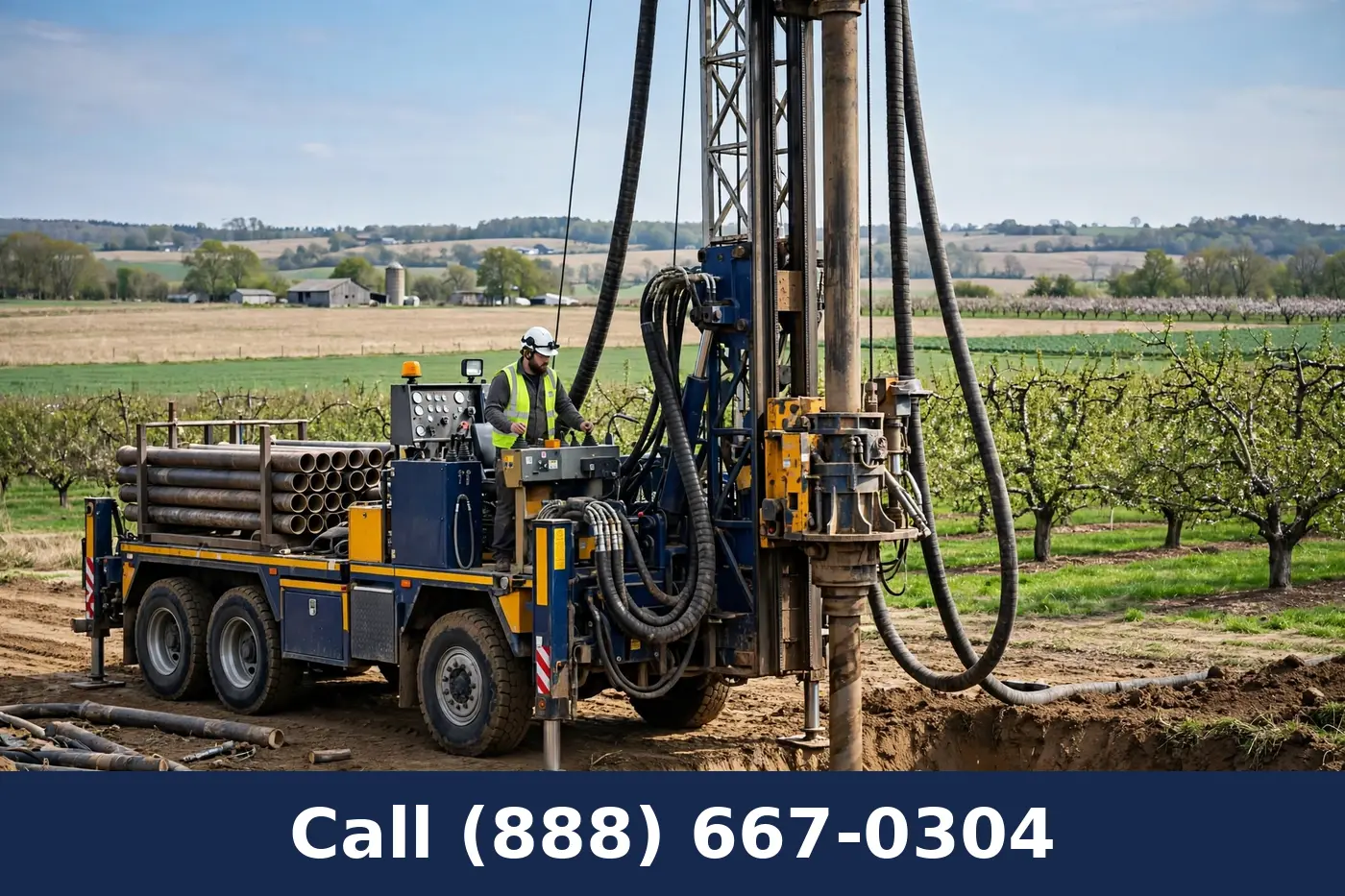
Rotary drilling is the standard method for modern water wells. It works by rotating a drill bit on the end of a long drill stem while circulating fluid through the system. Drilling mud or air travels down through the hollow drill stem.
It cools and lubricates the bit while carrying loosened cuttings back up around the outside of the stem. The mud also stabilizes the borehole walls as drilling progresses, which matters in the sandy and gravelly valley sediments common around Modesto. Rotary rigs drill much faster than older cable-tool methods and can reach depths of many hundred feet where the geology calls for it.
An experienced driller reads the cuttings coming up in the mud to identify each layer, watching for the productive sands and gravels that signal a good aquifer.
What happens after the bit reaches water?
Reaching the aquifer is the midpoint of the job, not the end, because how the well is finished determines its water quality and lifespan. Casing, which is steel or PVC pipe, is set into the borehole to keep the walls from caving and to seal off shallow zones that could carry contamination downward. The annular space between the casing and the borehole wall is then grouted with bentonite or cement from the bottom up.
That grout forms the sanitary seal defending against surface pollution. Where the well draws from loose sand and gravel, a manufactured screen with precisely sized slots admits water while holding back formation material. A filter pack of graded sand sometimes surrounds it.
In solid rock aquifers, the well may be left as open borehole below the casing where the rock itself is stable. Each of these choices follows the geology encountered, which is why the driller's log of the layers matters.
What are well development and yield testing?
Development is the process of cleaning the well after construction, removing drilling mud, fine sediment, and loose material from the aquifer surrounding the borehole. Techniques include surging, jetting, and pumping at increasing rates, all aimed at opening the formation so water flows into the well without restriction. A properly developed well produces cleaner water and delivers more of the aquifer's capacity than one put into service dirty.
Yield testing follows: the well is pumped at a measured rate while the water level is tracked, showing how much the well produces and how quickly the level recovers. That test result, recorded in gallons per minute with drawdown data, tells the homeowner and the pump installer exactly what the supply can support. It also becomes the baseline for the well's permanent record, useful for any future troubleshooting.
How deep do wells need to be around Modesto?
Depth is set by geology, not by rule of thumb, and Central Valley geology varies with location and with the history of groundwater use in the area. Productive aquifer zones in the valley are typically found in layered sands and gravels beneath finer surface soils. The driller targets those zones based on local knowledge and the cuttings.
Deeper is not automatically better: the goal is a clean, sustainable aquifer with good recharge, not simply the deepest hole. Neighboring well records give useful context about typical depths and yields in a given area, though each new well is drilled on its own evidence. During drilling, the driller monitors water-bearing zones as they appear and makes the completion decision based on what the hole actually shows.
Plumber Modesto Pros discusses realistic depth expectations for the specific property before the rig ever arrives.
What should a property owner prepare before drilling day?
Access is the first consideration: the drill rig is a large truck-mounted unit that needs a clear path to the chosen well site and room to set up and work. The well location itself should respect setbacks from septic systems, property lines, and potential contamination sources, keeping the supply as protected as possible. Underground utilities in the work area need marking before any drilling begins.
A water source for mixing drilling mud is helpful on sites without an existing supply, and the driller will confirm arrangements in advance. Neighbors appreciate a heads-up since drilling is noisy work that typically runs during daytime hours. The drilling crew handles the technical setup; the owner's main job is providing clear access and confirming the agreed location.
What affects the cost of drilling a well?
Depth is the primary driver, since every additional foot means more drilling time, more casing, and more materials. Geology matters because hard rock drills slower than valley sediments and may call for different bits and techniques. Diameter and casing choices affect material quantities, with larger diameters serving higher-demand agricultural uses.
Site access and setup conditions influence rig time, as tight or remote locations take longer to work. Completion details like screens, filter packs, and development time add to the scope beyond the raw borehole. Calling (888) 667-0304 arranges a site visit where Plumber Modesto Pros evaluates the property and explains what the geology and the project will require.
Why drill with Plumber Modesto Pros in the Modesto area?
Central Valley wells live or die on driller judgment: reading cuttings, choosing screen intervals, and knowing when the aquifer is truly found. Plumber Modesto Pros drills residential and agricultural wells for the farmland communities around Modesto, where water is both a household necessity and a working resource. Every well gets a proper sanitary grout seal, thorough development, and a documented yield test, because a well is a decades-long investment that deserves a complete finish.
Owners receive the drilling log and test results for their records, which matter for pump sizing and any future service. Calling (888) 667-0304 starts the conversation about what lies beneath the property and how to reach it properly.
Features
- Rotary drilling rigs capable of reaching deep valley aquifers through soil and rock
- Steel or PVC casing set to stabilize the borehole and protect water quality
- Sanitary grout seal in the annular space blocking surface contamination
- Well screens and filter packs fitted where the aquifer needs them
- Well development to clear drilling fines and maximize clean yield
- Yield testing that measures what the well actually produces
- Water sampling guidance so the new supply can be tested for potability
Benefits
- Gain a private water supply independent of municipal rates and restrictions
- Reach reliable aquifer depths that shallow or aging wells cannot
- Protect your drinking water with a proper grout seal against surface contaminants
- Get a well developed for clean, sediment-low water from the start
- Know your well's real production capacity from an actual yield test
- Serve homes, orchards, and livestock from a single properly built well
- Work with a driller who knows Central Valley geology and water conditions
Frequently asked questions
How do I know if my property can have a well drilled?
A site visit evaluates access for the rig, setbacks from septic systems and property lines, and local geology. Neighboring well records give useful context, and the driller confirms conditions before work begins.
How long does drilling a residential well take?
The drilling itself often takes a day or two depending on depth and geology, with additional time for casing, grouting, development, and yield testing. The full completion sequence is what makes the well reliable.
Will the water be safe to drink right away?
New wells should have their water tested for potability before use as drinking water. The driller provides guidance on sampling, and development plus proper grouting give the supply its best starting quality.
What is the grout seal and why does it matter?
Grout fills the space between the casing and the borehole wall, blocking surface water and contaminants from traveling down along the outside of the casing. It is the well's primary sanitary protection and a standard part of proper construction.