
Water Softener Repair & Maintenance Near Me
Starting price: Call for pricing
A water softener that stops softening usually has a fixable cause: a salt bridge in the brine tank, fouled resin, a clogged injector, or settings that drifted. Plumber Modesto Pros services water softeners end to end, from breaking up salt bridges and cleaning brine tanks to replacing exhausted resin and rebuilding control valves. Regular maintenance keeps the system regenerating properly and the resin bed healthy for years.
What does water softener repair and maintenance cover?
Water softener service covers everything that keeps the system softening: the brine tank, the resin bed, the control valve, and the settings that tie them together. Maintenance is the scheduled care that prevents problems, mainly keeping salt levels right and the brine tank clean. Repair is the diagnostic work when something has already gone wrong: water testing hard again, the unit not using salt, the brine tank overflowing, or the system stuck mid-cycle. Plumber Modesto Pros handles both, because a softener that is maintained rarely needs repair, and a softener that is repaired correctly goes back to needing only maintenance.
Why is my softener not using salt?
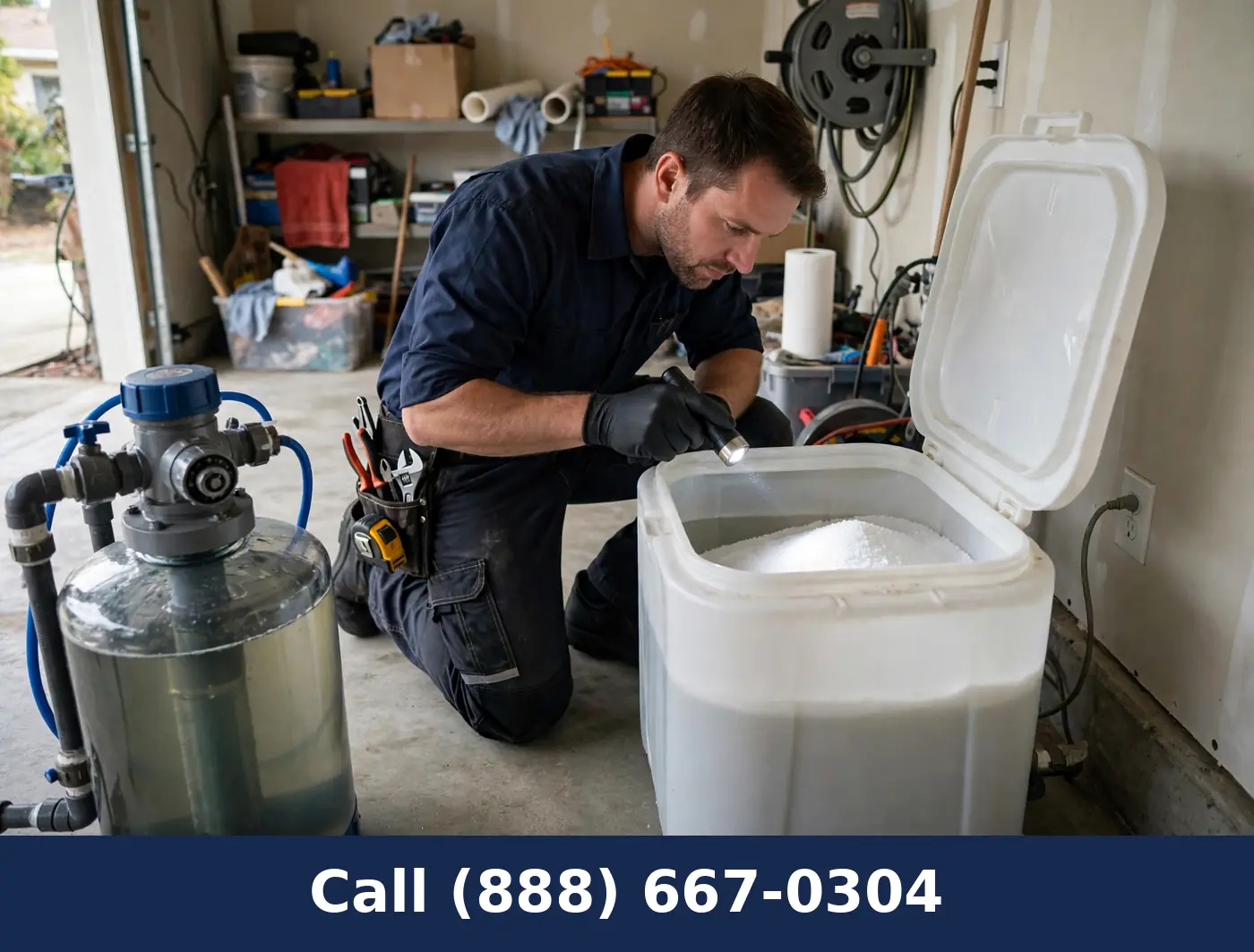
The most common cause is a salt bridge. In humid conditions or with certain salts, the salt in the brine tank can harden into a crust spanning the tank, with a hollow gap underneath. The system looks full of salt, but the water below cannot reach it, so no brine forms and regeneration does nothing. The fix is to carefully break the crust with a broom handle or similar tool, taking care not to crack the tank, then let the salt settle into the water. The opposite problem is salt mushing, where low-quality salt dissolves into a thick sludge at the bottom of the tank that clogs the brine draw. That calls for draining the tank, cleaning it out, and refilling with clean, high-purity salt. If the salt level never drops and there is no bridge, the injector or brine line may be clogged, which is a different repair.
• A salt bridge is a hard crust with a hollow gap beneath it. • Salt mushing is sludge at the tank bottom from low-quality salt. • Both stop brine from forming, so regeneration does nothing.
What happens when the resin wears out?
The resin beads do the actual softening, and they do not last forever. In typical residential service they last many years. Iron in the water fouls them, chlorine in city water slowly degrades standard resin, and years of poor regeneration let hardness bake in. The signs are unmistakable: water tests hard even though the system regenerates, salt use looks normal, and no setting change helps. Sometimes fine sand-like particles appear in the resin tank, which means beads are breaking apart. Resin cleaner run through a regeneration can help mildly fouled beds. But once resin is truly exhausted or physically breaking down, replacement is the fix. The old resin is vacuumed out, the tank is inspected and cleaned, fresh resin goes in, and the system is reprogrammed and regenerated. It is involved work, and it restores the softener to full capacity.
What goes wrong with the control valve?
The control valve is the brain and the muscle of the softener, directing water through service, backwash, brine draw, rinse, and refill. Its motor drives the valve through those stages on schedule. When the motor fails, the valve can stick mid-cycle, leaving the system running water to drain endlessly or never regenerating at all. Seals and spacers inside the valve wear and start leaking internally, which shows up as water to the drain when the unit should be in service. The injector and venturi, small parts that create the suction to draw brine, clog with sediment and kill the brine draw. Error codes on digital heads point to specific faults. Plumber Modesto Pros diagnoses the valve before replacing parts, because a clogged injector and a failed motor look similar from the outside but cost very differently to fix.
Why is my brine tank full of water?
A brine tank should hold a few inches of water at the bottom, not a tankful. Too much water usually traces to the same suspects. A salt bridge or mush can prevent proper brine draw. A float valve stuck or misadjusted lets the refill run too long. A clogged injector cannot pull brine out during regeneration, and a restricted drain line backs the cycle up. Diagnosis works through them in order, checking the simplest causes first. Running the system with an overfilled brine tank dilutes each regeneration and lets hardness slip through, so it is worth fixing promptly rather than living with it.
What does a maintenance visit include?
A maintenance visit starts with a hardness test of the treated water to confirm the system is performing. The brine tank is inspected for bridging, mushing, and sludge, and cleaned if needed. Salt is topped up to the proper level with the right type. The control valve settings are checked against your current water hardness and household size, since both can change over the years. The drain line is checked for kinks and restrictions, and the system is run through a manual regeneration while the technician watches each stage complete. Water pressure at the unit is noted too, since low pressure can make regeneration sluggish. Small adjustments made during a maintenance visit prevent most of the failures that turn into repair calls.
What affects the cost of softener repair or maintenance?
A maintenance visit with cleaning and salt is the lightest service. Breaking up a severe bridge or cleaning a badly sludged tank takes more time. Control valve work depends on the fault: cleaning an injector is quick, while a motor or seal rebuild is more involved. Resin replacement is the largest common repair, since it means emptying and refilling the tank plus reprogramming. The age and brand of the unit matter for parts availability. For an exact figure, call (888) 667-0304 and describe what the system is doing.
Why have Plumber Modesto Pros service your water softener?
A softener is a small chemical plant in your garage, and it rewards knowledgeable care. Plumber Modesto Pros diagnoses from the symptoms instead of guessing, fixes the actual cause, and leaves the system tested and correctly programmed. Whether it is a salt bridge, tired resin, or a valve that will not cycle, you get the repair the system actually needs. A maintenance routine set up during the visit keeps it softening for years. Call (888) 667-0304 to get your soft water back.
Features
- Salt bridge detection and careful breakup without tank damage
- Brine tank draining, cleaning, and refilling with fresh salt
- Resin bed inspection and replacement when exhausted
- Injector and venturi cleaning for proper brine draw
- Float valve and brine line checks and adjustments
- Control valve diagnosis, from motors to seals
- Hardness and capacity settings reprogrammed correctly
Benefits
- Soft water restored without replacing the whole system
- Salt bridges and mush cleared so regeneration works
- Worn resin replaced to bring capacity back
- Valves and injectors cleaned or rebuilt for reliable cycles
- Settings corrected to your actual water hardness
- Small problems caught before they ruin the resin bed
- A maintenance routine that keeps the system efficient