Water Quality Testing Near Me
Starting price: Call for pricing
Water quality testing measures exactly what is in your water, from hardness and pH to iron, chlorine, and total dissolved solids. Plumber Modesto Pros tests at your tap with calibrated equipment and explains what each result means for your plumbing and health. Testing first means any treatment system you buy is sized to real numbers, not guesses.
Why test your water instead of just buying a filter?
Most water problems have more than one possible cause, and the wrong equipment purchase is an expensive lesson. Brown water could be iron, manganese, or rust from old pipes, and each one calls for a different fix. A chlorine smell needs carbon, but low pH needs neutralizing media.
Without testing, homeowners often buy a softener for a filtration problem or a filter for a hardness problem, and the original complaint never goes away. Testing takes the guesswork out by putting real numbers on paper first. Every treatment recommendation that follows is then matched to measured conditions rather than hunches.
What does a standard water quality test measure?
A standard in-home panel covers the parameters that drive most treatment decisions. Hardness is measured in grains per gallon from calcium and magnesium, the minerals behind scale and soap problems. Total dissolved solids, or TDS, gives the overall mineral load in parts per million. pH shows whether the water is acidic or alkaline, which affects corrosion and taste.
Iron and manganese readings explain staining and metallic taste. Chlorine or chloramine residual shows how much disinfectant is left from municipal treatment, which decides how much carbon a filter needs. A visual and odor check rounds out the picture, catching sulfur smells and cloudiness that instruments alone might miss.
What extra testing do private wells need?
Private wells are not covered by the Safe Drinking Water Act, so testing is the owner's responsibility. Beyond the standard panel, well owners should check for nitrate and nitrite, which can come from agricultural runoff and fertilizers common in farming regions. Bacteria testing for coliform and E. coli requires a lab sample with proper collection technique.
Lead and copper testing matters in homes with older plumbing, since these metals leach from pipes and solder rather than coming from the source. Arsenic occurs naturally in some aquifers and needs lab analysis to detect. A comprehensive well panel gives a complete baseline that guides every treatment choice afterward.
How is the testing done at your home?
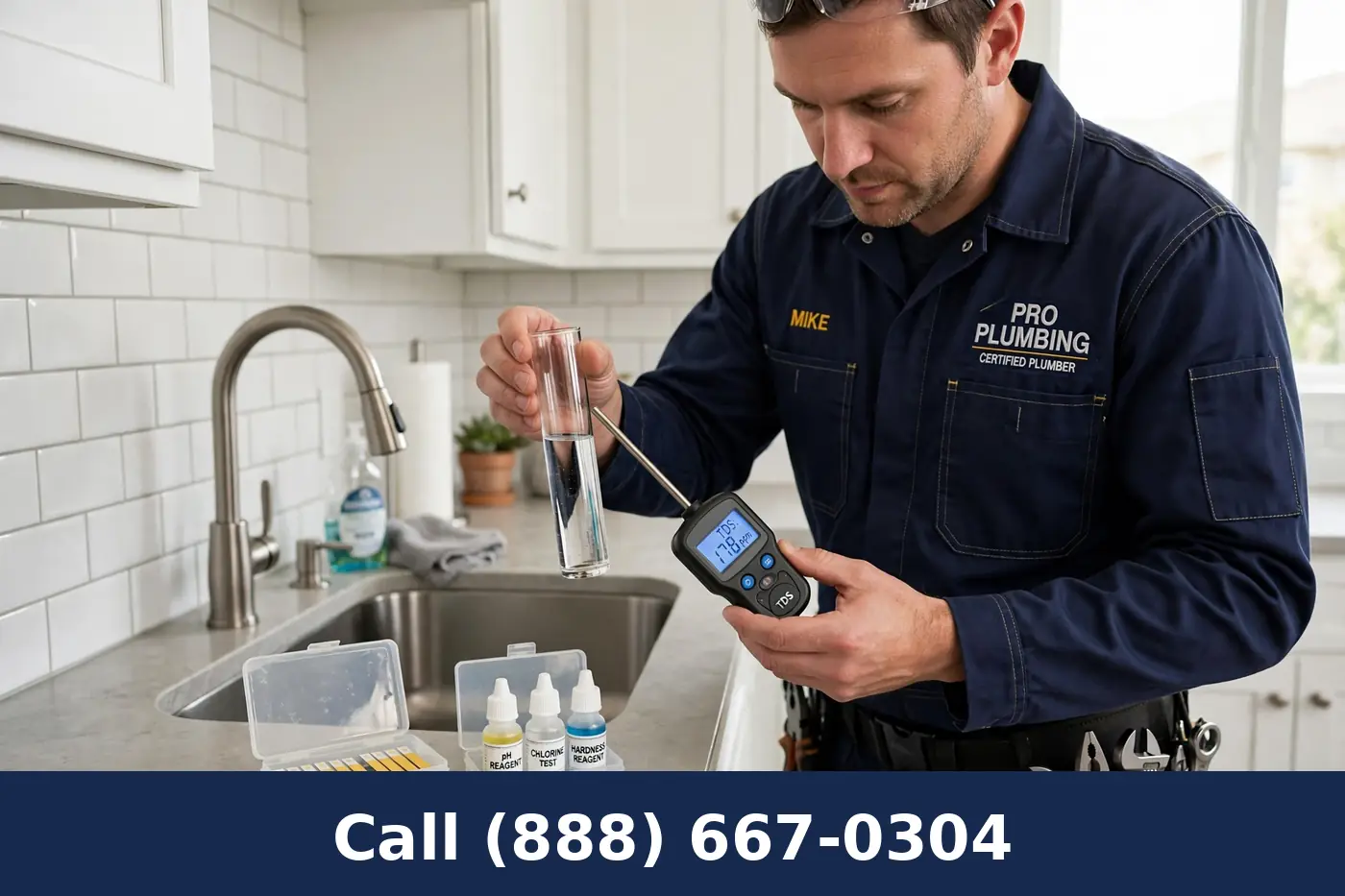
The technician collects samples directly from your taps, usually starting at the kitchen sink where you drink and cook. On-site instruments give readings on the spot for hardness, TDS, pH, iron, and chlorine, so you see the numbers as they are measured. Samples that need lab analysis, such as bacteria or heavy metals, are collected in sterile containers following proper chain-of-custody steps.
Lab results typically come back within several business days. You receive a written report with each result explained in plain language, plus recommendations for treatment if any parameter is outside the ideal range. The whole in-home visit usually takes under an hour.
How do test results lead to the right equipment?
Each result points toward a specific solution, which is why the numbers matter. High hardness in grains per gallon sizes the softener's resin capacity and salt settings precisely. Elevated TDS with good taste might need nothing, while high TDS with off flavors points toward reverse osmosis for drinking water. Iron above aesthetic thresholds calls for an iron filter or oxidizing stage rather than a standard softener.
Chlorine residual determines how much carbon a whole-home filter needs to do its job. Low pH suggests a neutralizing filter to protect copper pipes from corrosion. When the numbers are known, the equipment quote is built around them, and there are no surprises after installation.
When should you have your water tested?
Any persistent change in taste, odor, or appearance is a reason to test. Brown or yellow water, rotten-egg smells, new staining on fixtures, or a sudden drop in soap lather all signal that something shifted. Homes on new wells should establish a baseline right away, and existing wells deserve retesting every year or two since aquifers change.
If you are considering a softener, filter, or RO system, test first so the equipment is sized correctly. Buyers of rural properties often test as part of the purchase process. After any treatment installation, a follow-up test confirms the system is doing what it promised.
What does a water test cost, and what affects it?
The scope of the panel is the main factor. A basic in-home panel with hardness, TDS, pH, iron, and chlorine is the simplest visit. Expanded panels that add lab work for bacteria, nitrate, lead, or arsenic cost more because of laboratory fees and sample handling.
Well water panels run broader than city water panels for this reason. Some companies apply the test visit toward a treatment installation if you move forward. For exact pricing on the panel your situation needs, call (888) 667-0304 and describe your water source and concerns.
How does Plumber Modesto Pros handle testing in this area?
Plumber Modesto Pros performs water quality testing for homes on both municipal supplies and private wells across the Modesto area and nearby Central Valley communities. Local knowledge matters here: the team understands the hard water, agricultural influences, and well chemistry common in this region. Results are explained in plain terms, with no pressure to buy equipment you do not need. If treatment makes sense, the recommendation is built from your numbers. To find out what is really in your water, call (888) 667-0304 and schedule a test.
What do lab results tell you that a strip test cannot?
Home test strips are handy for a quick pH or chlorine check, but they cannot quantify what matters for treatment decisions. A laboratory test reports exact concentrations. It covers hardness in grains per gallon, iron in parts per million, pH to a tenth of a point, and the presence or absence of coliform bacteria.
Those numbers decide which equipment your home actually needs and how it should be sized. A strip that says hard water does not tell you whether you need a smaller or larger softener. An exact hardness number does.
We sample from the right points for the question being asked. A raw sample at the pressure tank shows what the well produces, while a sample at the kitchen tap shows what the current treatment delivers. Comparing the two reveals whether existing equipment is doing its job or coasting past its capacity. Bacteria sampling gets special care, since a contaminated sample produces a false alarm.
We sterilize the tap, run the line, and fill the lab's sterile bottle exactly as the lab specifies. Clean sampling means the results describe your water, not the spigot. When the lab report comes back, we walk through it line by line and translate each result into a clear recommendation. You get the full picture, not just a sales pitch for a filter.
Features
- On-site testing for hardness in grains per gallon
- Total dissolved solids (TDS) measured with a calibrated meter
- pH, iron, and chlorine or chloramine residual readings
- Visual and odor assessment of water at the tap
- Expanded lab panels for wells: nitrate, lead, bacteria, arsenic
- Written results with plain-language explanations
- Treatment recommendations matched to your actual test numbers
Benefits
- Know exactly what is in your water instead of guessing
- Treatment equipment sized to real measurements, not averages
- Spot problems early before they damage pipes and appliances
- Clear answers about taste, odor, and staining causes
- Documentation useful for home sales and well records
- Avoid buying the wrong filter or softener for your water
- Confidence that your drinking water meets your expectations