
Water Pressure Regulator Installation Near Me
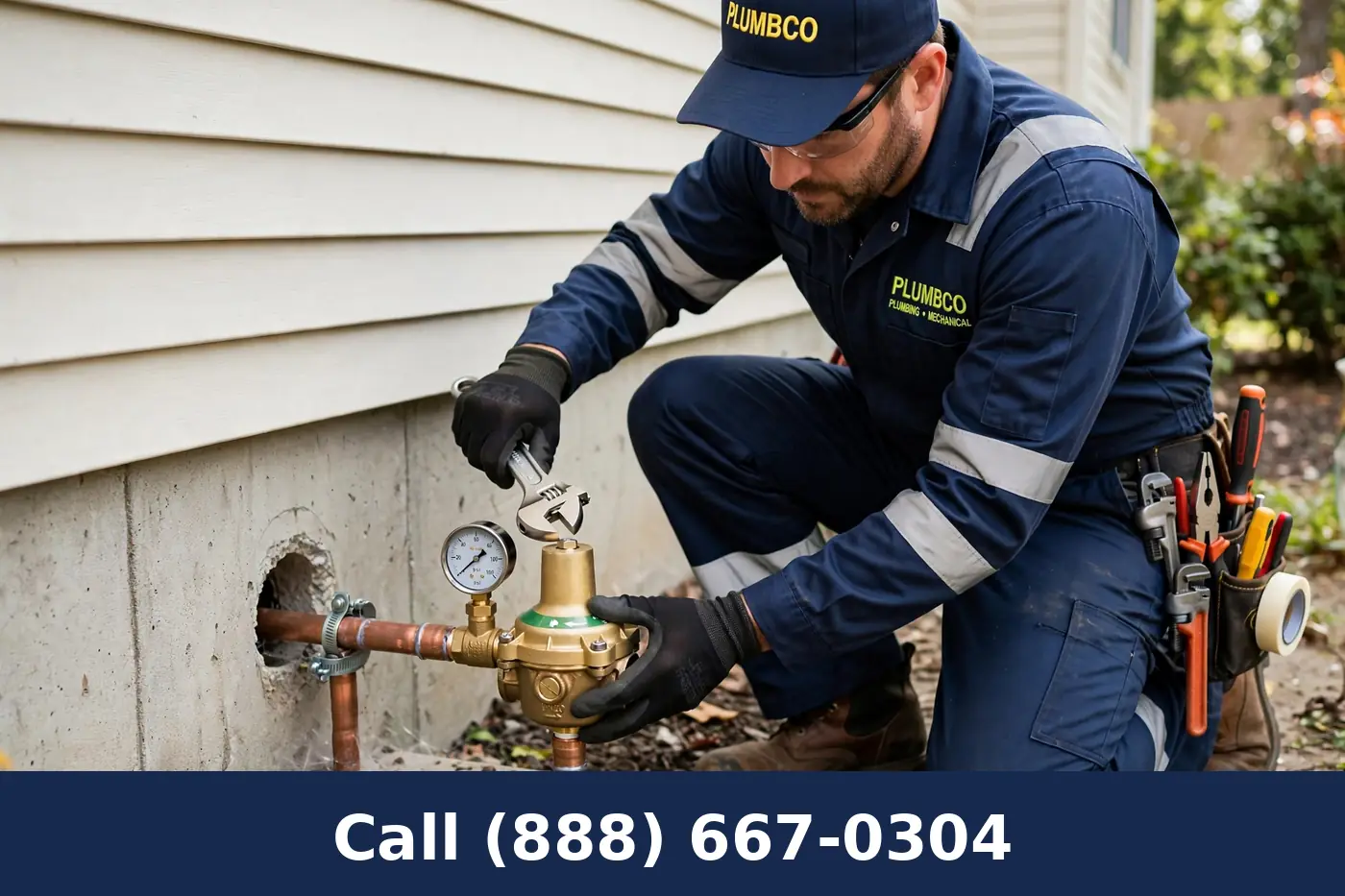
Starting price: Call for pricing
A water pressure regulator, also called a PRV, is a bell-shaped valve on the main line that holds incoming municipal pressure down to a safe level for your plumbing. Plumber Modesto Pros installs and replaces pressure reducing valves set to protect pipes, fixtures, and appliances. If your pressure tests above 80 PSI, a regulator is what stands between your plumbing and constant stress.
What does a water pressure regulator do?
Municipal water mains often carry pressure well above what residential plumbing is designed to handle. A pressure regulator valve, or PRV, sits on the main line where water enters the home and throttles the incoming pressure down to a safe, steady level. Inside the brass bell-shaped body, a spring and diaphragm mechanism constricts the flow just enough to hold downstream pressure constant, even when the street pressure fluctuates. Most homes perform best between 50 and 70 PSI. Plumbing codes treat anything above 80 PSI as excessive, and sustained high pressure quietly damages everything downstream.
How do you know your pressure is too high?
High pressure rarely announces itself with a single dramatic event. Faucets spray aggressively and splash when opened. Toilets run on their own or fill valves fail repeatedly. Pipes bang or hum when a faucet shuts off, the classic water hammer. Fixtures develop drips, and supply hoses show stress. Appliances like dishwashers and washing machines wear out sooner than expected. The definitive check is simple: a pressure gauge threaded onto an outdoor hose bib gives a reading in seconds. If it shows above 80 PSI, the house needs regulation. Many homes built before the mid-1990s never got a PRV, because installers assumed the municipal supply would stay stable.
What damage does unregulated pressure cause?
Constant high pressure works on plumbing the way constant overinflation works on tires. Pipe joints and soldered connections weaken over time, leading to pinhole leaks and sudden bursts. Faucet cartridges, O-rings, and washers wear down sooner, causing the drip-drip-drip that wastes water around the clock. Toilet fill valves and supply hoses live under strain, and appliance solenoid valves can fail outright. Water heaters take extra stress at every heating cycle. Slab leaks and hidden wall leaks often trace back to years of excessive pressure that nobody measured. A regulator is a small device that prevents a whole category of expensive failures.
How is a pressure regulator installed?
The technician starts by testing the incoming pressure at a hose bib to confirm the reading. The main water supply is shut off and the line is drained. The new PRV is installed on the main line after the main shut-off valve, with the flow arrow pointing toward the house. Unions or threaded connections go on both sides so the valve can be serviced later without cutting pipe. Water is restored slowly and every joint is checked for leaks. Using a gauge, the technician adjusts the valve's screw to the target pressure. The usual range is 50 to 60 PSI, verified steady with fixtures running and idle. The adjustment point is left accessible for future fine-tuning.
What are the signs a regulator is failing?
Like any mechanical device, a PRV wears out over years of service. Sediment buildup, corrosion, and spring fatigue take their toll. The classic symptom is water hammer returning: loud banging when faucets close. Pressure may fluctuate noticeably, strong one moment and weak the next. Fixtures start dripping again despite recent repairs. In some cases the valve sticks and pressure creeps back up toward street levels, which a gauge reading will reveal. A failing regulator often gets misdiagnosed as a series of unrelated fixture problems, when one valve is the real culprit. Replacement follows the same process as a new installation and restores steady pressure.
Does a regulator lower water pressure too much?
This is a common worry, and the answer is no when the valve is sized and set correctly. A PRV only trims excessive pressure; it does not restrict normal flow. Showers and fixtures are designed around moderate pressure, and most people notice the difference only in the disappearance of hammering and splashing. If pressure feels weak after installation, the setting may need a small upward adjustment. There may also be a separate restriction elsewhere, such as a clogged aerator or a failing valve. The technician verifies comfortable pressure at multiple fixtures before leaving.
What affects the cost of installing a pressure regulator?
Valve size and quality are the first variables, since the valve must match the main line diameter and expected flow. Accessibility of the main line affects labor: an exposed line near the meter is straightforward, while a buried or hidden line takes more work. If the home has a closed system, a thermal expansion tank at the water heater may be needed alongside the regulator. Replacement of an existing valve is usually simpler than a first-time installation that requires cutting into the line. For an exact quote on your home, call (888) 667-0304 and mention your current pressure reading if you have one.
How does Plumber Modesto Pros handle pressure problems in this area?
Plumber Modesto Pros tests, installs, and replaces pressure regulators for homes across the Modesto area, where municipal pressure varies by neighborhood and elevation. Every visit starts with an actual gauge reading, not a guess, so the recommendation is based on measured pressure. Installations are set to a safe range and verified at multiple fixtures. If your pipes bang, your fixtures drip, or your gauge reads high, call (888) 667-0304 and get the pressure under control.
What happens inside a pressure regulator as demand changes?
A pressure regulator is a spring-loaded valve that constantly adjusts itself to keep downstream pressure steady. When no water is flowing, the spring holds the valve nearly closed against the supply pressure. Open a faucet and the pressure downstream drops, letting the spring push the valve open wider to admit more flow. Close the faucet and the valve throttles back down, preventing the pressure spike that would otherwise hit your pipes and appliances. That dynamic response is why a regulator feels invisible when it works and obvious when it fails.
A failed regulator usually fails in one of two ways. The spring weakens or scale jams the moving parts, and pressure creeps up toward the full street pressure, stressing hoses, valves, and water heater relief valves. Or the valve sticks partially closed, starving the house of flow even at a normal gauge reading. We diagnose which failure mode you have before recommending a replacement, because a sticking valve and a weak spring call for the same part but different follow-up checks. After installation, we set the outlet pressure to your household target and verify it under both static and flowing conditions. That two-point check confirms the regulator holds steady across real demand.
Features
- Brass pressure reducing valve installed on the main water line
- Pressure testing before and after to confirm the setting
- Valve calibrated to a safe residential range for your plumbing
- Placement after the main shut-off for easy future service
- Thermal expansion tank pairing where the system needs one
- Replacement of failed regulators showing hammer or fluctuation
- Adjustment screw access left clear for future fine-tuning
Benefits
- Steady, safe pressure protecting every pipe and joint
- Fewer leaks from stressed supply lines and connections
- Longer life for dishwashers, washers, and water heaters
- Quieter plumbing with less banging and humming
- Less wear on faucet cartridges, washers, and toilet valves
- Lower water waste from dripping fixtures and running toilets
- Pressure that meets code requirements for residential systems