
Water Heater Replacement Near Me
Starting price: Call for pricing
Water heater replacement means removing a worn-out or inefficient tank and installing a new unit matched to your household, with all code items brought current. Plumber Modesto Pros evaluates whether your unit should be repaired or replaced, then handles the removal, installation, and testing in one visit.
How do you know a water heater needs replacing?
Age is the first clue. A conventional tank water heater typically lasts 8 to 12 years, and hard water pushes many toward the lower end of that range. The manufacture date is printed on the rating plate, so you do not have to guess. A unit past its tenth birthday deserves a plan, even if it still works today.
Rusty or discolored hot water tells a more urgent story. If the cold tap runs clear but the hot side shows a reddish or murky tint, the inside of the tank is corroding. Rumbling or popping sounds during heating point to sediment baked onto the tank bottom, forcing the burner or elements to work through a mineral layer. Water pooling at the base means the tank itself is weeping, and that only gets worse.
Rising energy bills without a change in usage can also signal decline. An aging tank with thick sediment and worn insulation heats less efficiently every year. Running out of hot water sooner than you used to is another classic sign. When several of these symptoms appear together, replacement is usually the sensible path.
Should you repair or replace your water heater?
The answer depends on the unit's age, its condition, and what the repair involves. A six-year-old tank with a failed thermostat or a worn heating element is often worth fixing. The part is replaceable, the tank has years left, and the repair costs far less than a new unit. A technician can confirm the tank shell is sound before recommending this route.
A leaking tank is a different matter. Once the steel shell corrodes through, no repair restores it. The same goes for a unit over a decade old that needs its third service call in a year. At that point, continued repairs buy little time and the money is better applied to a new, efficient heater. Corrosion at the tank seams or a relief valve that no longer seats properly also point toward replacement.
A professional assessment removes the guesswork. The technician checks the tank's age, tests the components, and inspects for corrosion and leaks. You get a straight explanation of both options with their tradeoffs. The decision stays yours, informed by what the equipment actually shows.
What does the replacement process look like?
The visit starts with confirming the diagnosis and the size and fuel type of the new unit. Gas or power is shut off, and the old tank is drained through a hose to a suitable drain or the outdoors. The technician disconnects the water lines, the gas line or electrical wiring, and the vent for gas models. Corroded fittings and damaged valves in the area are noted while everything is accessible.
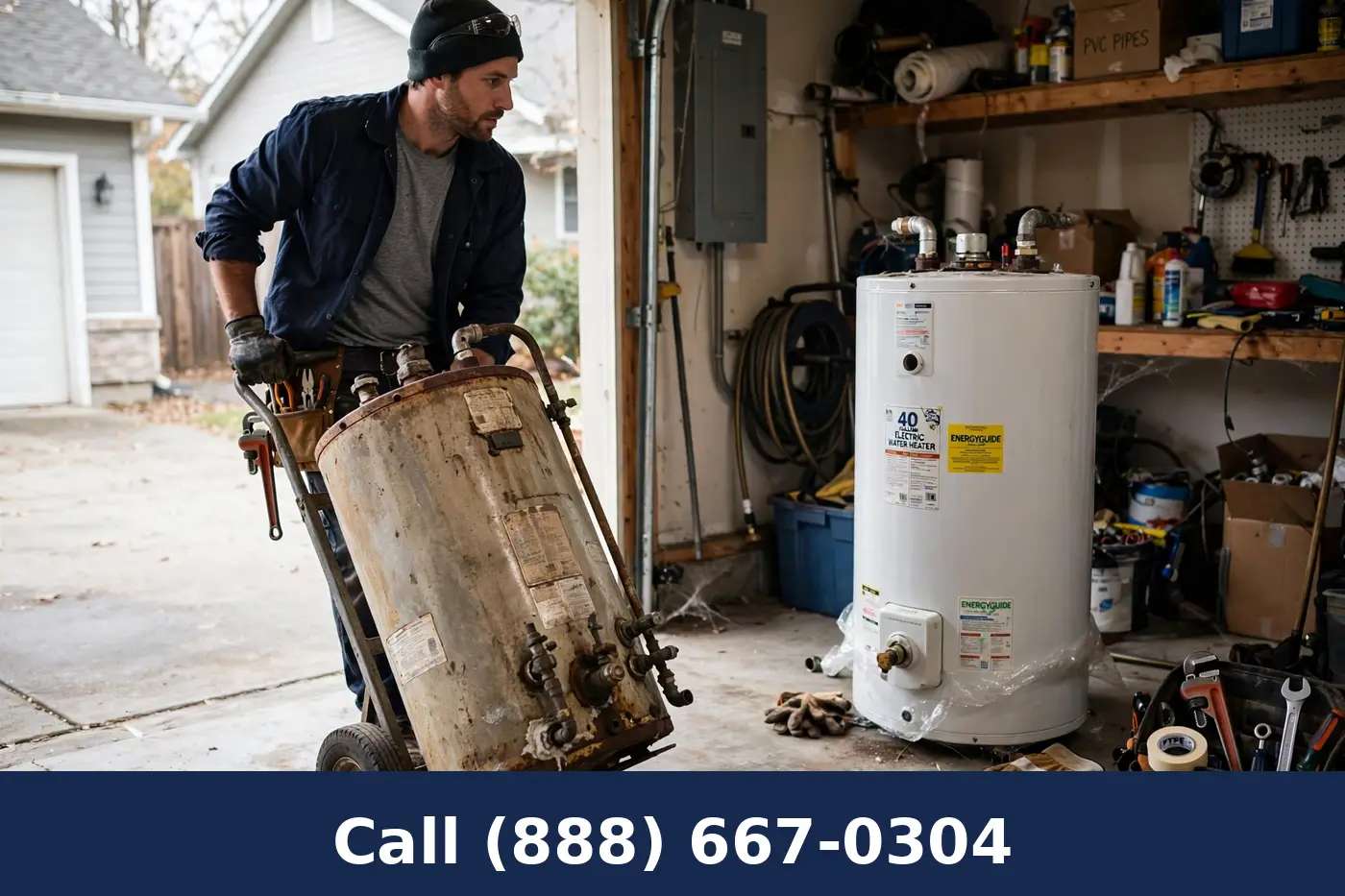
The old tank is wheeled out and loaded for recycling. The new unit goes into a fresh drain pan and is leveled and strapped to the wall framing per California seismic requirements. Water connections go on with a new shutoff valve on the cold side, and the temperature and pressure relief valve gets discharge piping routed to an approved drain. Closed plumbing systems receive an expansion tank if one is not already present.
Gas connections are remade with a sediment trap, and the vent is checked for proper slope and clearance. Electric units are wired to a correctly rated breaker. The tank fills completely before the burner or elements come on. Then the system runs through a full heating cycle while the technician checks every joint for leaks and confirms the thermostat holds its setting.
Why do replacements often reveal extra work?
Water heaters sit in one place for a decade, and the parts around them age too. Shutoff valves seize, supply lines corrode, and gas connectors reach the end of their rated life. Drain pans crack or were never installed. Vent connectors develop rust. None of this is unusual, and all of it is easier to address while the old tank is out of the way.
Bringing code items current is part of a quality replacement. Older installs may lack an expansion tank, have undersized relief discharge piping, or rely on strapping that would not pass today. Updating these items during the swap costs less than a return visit. Your technician explains anything they find and gets your approval before adding it to the work.
What should you consider when choosing the new unit?
Start with capacity. Your household may have changed since the old tank went in, so the previous size is a reference, not a rule. The technician reviews occupants, fixtures, and peak-hour habits to confirm the right gallon size and First Hour Rating. Getting this right is the difference between a heater that keeps up and one that runs out.
Fuel type usually follows what the home already has, but a replacement is a good moment to reconsider. Gas offers quick recovery where service is available. Electric fits spaces where venting is impractical. Efficiency ratings have improved across the board, so a new unit of either type will outperform the one it replaces. Your installer lays out the options in plain terms.
What affects the cost of a water heater replacement?
The unit's size and fuel type set the baseline, and the condition of the existing connections shapes the rest. A like-for-like swap in an accessible garage is the simplest job. Relocating the unit, upsizing the gas line, or correcting venting adds scope. Discoveries such as a rotted platform, a seized main shutoff, or a damaged flue liner are addressed with your approval.
Timing matters too. Planning a replacement beats reacting to a failure, because an emergency leaves no room to compare options or schedule conveniently. If your unit is past ten years and showing symptoms, a planned replacement gives you control over the timing. The technician can also coordinate the work around your schedule.
How does Plumber Modesto Pros handle replacements in Modesto?
Plumber Modesto Pros replaces water heaters throughout Modesto and nearby Central Valley neighborhoods. The team serves homeowners, landlords, and property managers with the same careful process every time: diagnose honestly, size correctly, install to code, and test thoroughly. You will know exactly what was done and why before the technician leaves.
Call (888) 667-0304 if your water heater is aging, leaking, or underperforming. A technician will assess the unit, explain your repair and replacement options, and schedule the work that fits your situation.
Features
- Removal and recycling of the failed or aging tank
- Honest repair-versus-replace assessment based on age and condition
- Right-sized replacement using current household demand
- Seismic strapping and code items updated during the swap
- New temperature and pressure relief valve and discharge piping
- Gas line, venting, and electrical connections inspected and corrected
- Full system test including a complete heating cycle before sign-off
Benefits
- A replacement decision based on your unit's condition, not sales pressure
- Reliable hot water restored without repeated repair visits
- Modern efficiency that trims energy use compared to an aging tank
- Code compliance brought current while the unit is out
- No mess left behind, with the old tank hauled away
- Clear guidance on the new unit's operation and upkeep
- Protection against the slow leaks that damage floors and walls
Frequently asked questions
Is it worth replacing a 10-year-old water heater that still works?
Often yes, because a planned replacement lets you choose the unit and the timing instead of reacting to a failure. A failing tank can release dozens of gallons into your home without warning. If yours is past ten and showing any symptoms, start the conversation now.
Can a leaking water heater be repaired?
No. A leak from the tank shell means the steel has corroded through, and that damage cannot be repaired. Leaks from fittings or the relief valve are different and may be fixable. A technician identifies the source before recommending anything.
What happens to my old water heater?
The technician drains it, disconnects it, and hauls it away for recycling. Steel tanks are widely recycled, keeping the bulk of the unit out of the landfill. You do not need to arrange disposal yourself.
Will the new water heater fit where the old one was?
Usually yes. Tanks come in standard footprints, and the new unit is selected to match your space. If the area is tight or you want a different size, the technician confirms clearances and venting before installation day.