
Water Heater Repair Near Me
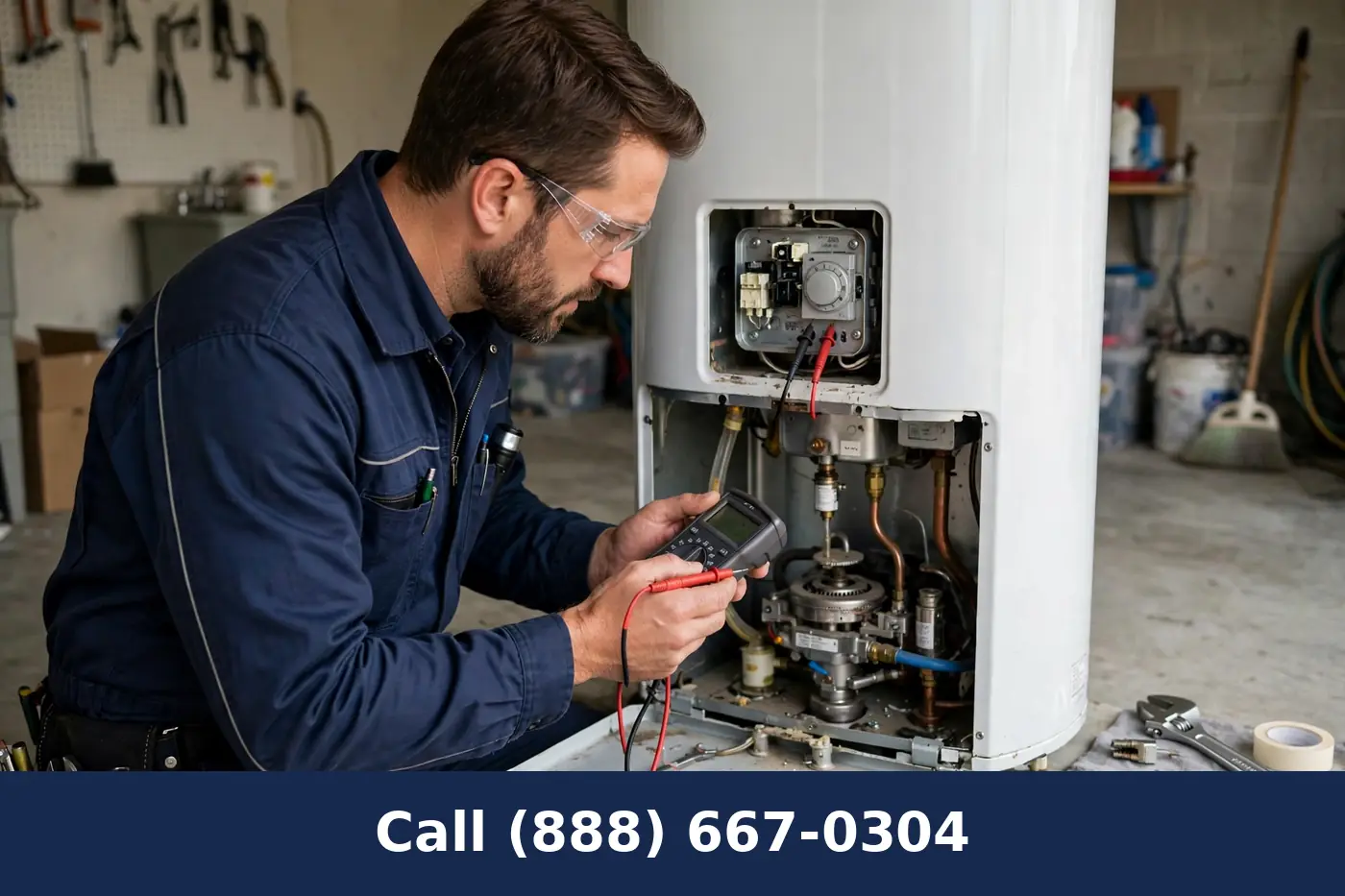
Starting price: Call for pricing
No hot water, strange rumbling, or water pooling at the tank base all signal a water heater in trouble. Plumber Modesto Pros diagnoses the real cause before replacing a single part. We service gas and electric tank heaters: thermostats, elements, pilot assemblies, thermocouples, dip tubes, anode rods, and relief valves. Call (888) 667-0304 and get hot water back with a repair that lasts.
What are the most common water heater problems?
No hot water tops the list. On an electric heater, the culprits are usually a tripped breaker, a burned-out heating element, or a failed thermostat. On a gas heater, it is often a pilot light that went out, a thermocouple that no longer senses the flame, or a gas control valve that has given up. The symptom is identical, a cold shower, but the diagnosis and the fix are completely different, which is why proper testing matters more than guessing.
Running out too quickly is the next complaint. Sediment Blanketing the bottom of the tank insulates the water from the burner or elements, shrinking the effective capacity. A broken dip tube lets incoming cold water mix at the top of the tank instead of being delivered to the bottom for heating. An undersized or aging unit simply cannot keep up with household demand anymore. Rumbling or popping noises almost always mean sediment: water trapped under mineral layers flashes to steam and the sound is the tank telling you it needs flushing.
Discolored or smelly hot water points to the anode rod or bacteria. Rusty water suggests the sacrificial anode rod is spent and the tank lining is next in line for corrosion. A rotten-egg odor comes from bacteria reacting with the anode in warm water, a problem with known remedies. Leaks demand prompt attention: water at the base of the tank can mean a failed fitting, a weeping relief valve, or a tank wall that has rusted through. Only the first two are repairable.
How does a Plumber Modesto Pros diagnostic visit work?
The technician starts with the symptom and works backward to the cause. For no-hot-water calls on electric units, that means checking the breaker, testing both thermostats and both elements with a meter, and pressing the high-limit reset. For gas units, it means inspecting the pilot assembly, testing the thermocouple, checking gas supply and venting, and reading any error codes on newer electronic models. Nothing is replaced until testing identifies the failed part.
Water quality complaints get a different workup. The technician draws hot and cold samples separately to determine whether the issue lives in the heater or the supply piping. The anode rod is pulled and inspected: a rod worn to a thin wire explains rusty water and predicts tank failure, while a healthy rod points the investigation elsewhere. Sediment is assessed by draining a sample and by listening to the tank under load. By the end of the visit you know exactly what failed, what it costs to fix, and whether repair or replacement is the sensible path.
What parts fail most often, and what does fixing them involve?
Heating elements on electric heaters burn out like oversized light bulbs, and replacement means draining the tank, swapping the element, and refilling. Thermostats fail less dramatically but just as completely, leaving elements permanently on or permanently off; both get tested with a meter before replacement. On gas units, the thermocouple is the classic wear item. This small sensor shuts off the gas when the pilot goes out, and when it weakens, the pilot will not stay lit. Cleaning or replacing it restores normal operation.
Dip tubes crack or disintegrate with age, and replacement restores proper cold-water delivery to the tank bottom. Anode rods are consumable by design, sacrificing themselves to corrosion so the tank does not have to. And replacing a spent rod is the highest-value maintenance a tank heater can receive. Temperature-and-pressure relief valves are safety devices that must open at their rated pressure; a valve that weeps constantly or will not lift on test gets replaced without debate.
When should a water heater be repaired, and when replaced?
Age and tank condition draw the line. A ten-year-old tank with a failed thermocouple is a repair. A fifteen-year-old tank with rust streaking down its side and a damp base is a replacement waiting for a flood. The rule professionals use is simple: repair the components, replace the vessel. Valves, elements, thermostats, thermocouples, dip tubes, and anode rods are all serviceable. A tank wall that has rusted through is not, and no additive or patch changes that.
Plumber Modesto Pros gives you the verdict straight. The technician shows you the failed part, explains the tank's overall condition, and tells you whether the repair buys years or months. If replacement is the honest recommendation, you will hear why in plain terms: the tank's age, visible corrosion, or a history of problems that signal the end of reliable service. The decision stays yours, made with full information.
What affects the cost of water heater repair?
The failed part sets the baseline: a thermocouple costs less than a gas control valve, and an anode rod replacement takes more labor than a thermostat swap. Accessibility matters, since heaters tucked into tight closets or attic platforms take longer to service than units standing in an open garage. Draining and refilling the tank adds time to any repair that requires it, and severely sedimented tanks drain slowly.
Emergency timing adds cost for after-hours calls, which is worth weighing against the urgency: no hot water is miserable but rarely an emergency unless the tank is actively leaking. If the diagnostic reveals a tank that should be replaced rather than repaired, the technician will quote both paths so you can compare. For an exact quote on your situation, call (888) 667-0304 and describe the symptoms.
How do we serve your area?
Plumber Modesto Pros repairs water heaters in homes and businesses across the communities we serve. Residential calls cover the full range. That includes family homes where the morning shower went cold, rentals where the landlord needs the unit back in service, and older homes with original heaters showing every classic symptom. We stock common elements, thermostats, thermocouples, and anode rods on the truck so most repairs finish in a single visit.
Commercial water heating has higher stakes. Restaurants, salons, laundromats, and small hotels depend on hot water for operations, and we prioritize getting them running with clear communication about timelines. Property managers get documented diagnostics suitable for owner records. Whatever the building, the approach is identical: test, identify, repair, verify, and explain.
How do you get more life out of a water heater?
Flush the sediment annually, or at least every couple of years in hard-water areas. Sediment is the slow killer: it insulates the tank bottom, forces longer burner cycles, overheats the steel, and produces the rumbling that precedes failure. Check the anode rod every few years and replace it when it is heavily corroded; this single maintenance item can add years to a tank's life. Keep the temperature at a sensible setting, test the relief valve yearly by lifting its lever briefly, and keep the area around the heater clear for airflow and access.
Watch for the early warnings. Hot water that runs out faster than it used to, new tank noises, moisture around the base, or rusty tinges in the hot water all deserve a service call. Call while they are still minor. A heater that gets attention at the first symptom lasts longer and fails less dramatically than one that is ignored until it quits.
Why call Plumber Modesto Pros for water heater trouble?
Because hot water problems have specific causes and specific fixes, and the distance between a thirty-minute thermocouple replacement and an unnecessary new heater is an accurate diagnosis. Plumber Modesto Pros tests before replacing, explains in plain language, and tells you honestly when repair beats replacement and when it does not.
Call (888) 667-0304 at the first sign of trouble: cold showers, rumbling tanks, rusty water, or moisture where it should not be. We will find the cause, fix it right, and leave you with hot water you can count on.
Features
- Full diagnostic of gas and electric tank water heaters
- Heating element and thermostat testing and replacement
- Pilot assembly, thermocouple, and gas valve service
- Dip tube inspection and replacement for uneven heating
- Anode rod inspection and replacement to fight tank corrosion
- Temperature-and-pressure relief valve testing and replacement
- Sediment flush and efficiency assessment on every repair visit
Benefits
- Hot water restored without replacing the whole unit
- Correct diagnosis so you pay for the failed part, not guesses
- Sediment and scale addressed to improve efficiency
- Gas components serviced with proper safety checks
- Small problems caught before they become tank failures
- Clear verdict on repair versus replacement, honestly given
- Water quality issues traced to their real source