
Water Heater Maintenance & Flushing Near Me
Starting price: Call for pricing
Water heater maintenance and flushing is the annual service that drains sediment from the tank, checks the anode rod, and tests the safety valve. Plumber Modesto Pros performs this preventive visit for Modesto homeowners, extending tank life and keeping efficiency from sliding year after year.
What happens inside a water heater between services?
Every gallon of Modesto tap water carries dissolved minerals. When water heats inside the tank, calcium and magnesium settle out and collect on the bottom as sediment. Over a year, that layer grows thick enough to matter. It insulates the water from the burner or elements below, forcing longer heating cycles and higher energy use.
Sediment also creates the rumbling and popping sounds many homeowners notice. Water trapped beneath the mineral layer superheats and bursts through as steam bubbles, hammering the tank bottom with each cycle. That mechanical stress, combined with the extra heat needed to push through the insulation, shortens the tank's life. A yearly flush removes the accumulation before it hardens into a stubborn crust.
Meanwhile, the anode rod sacrifices itself to protect the steel tank. This magnesium or aluminum rod corrodes preferentially, drawing the electrochemical attack away from the tank walls. It depletes over three to five years in hard water, sometimes faster. Once it is gone, the tank itself becomes the target, and internal rust follows. Checking the rod at each service visit is how you catch depletion in time.
What does a maintenance visit include?
The technician starts with a visual inspection before touching a valve. Rust streaks at fittings, moisture at the base, a corroded vent connector, or a cracked drain pan all get noted. The thermostat setting is checked, and the unit is observed through part of a heating cycle to listen for abnormal sounds and confirm normal operation.
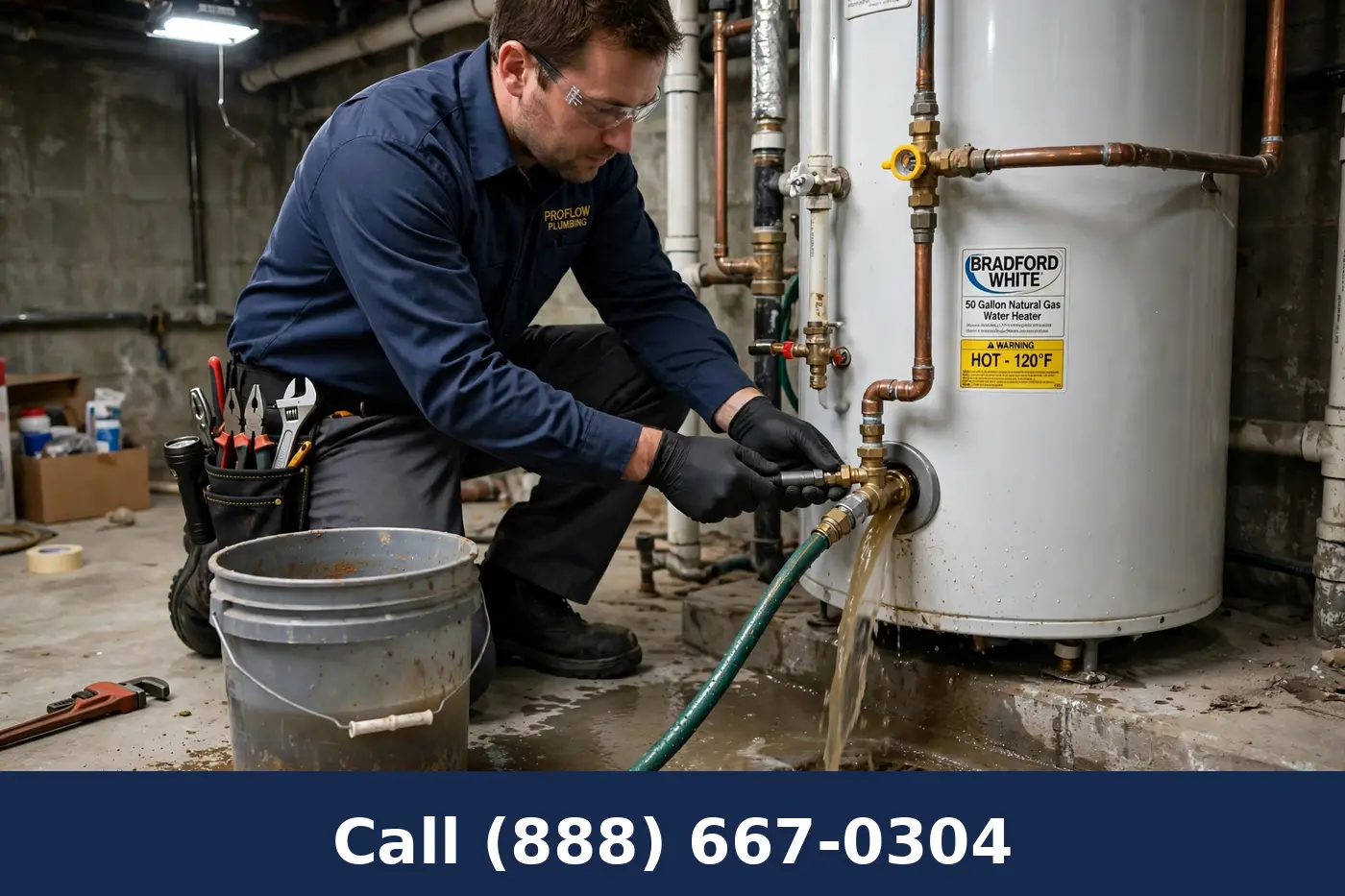
Then the tank is prepared for flushing. Power or gas is shut off, the cold water inlet is closed, and a hose is attached to the drain valve. The tank drains, and the technician watches what comes out: the color, the grit, the volume of sediment. A cold-water stir, briefly opening the inlet to agitate the bottom, loosens stubborn deposits. Flushing continues until the water runs clear.
With the tank empty or partially drained, the anode rod is inspected where access allows. The technician measures how much of the rod remains and looks for heavy pitting. A rod reduced to a thin wire or coated in calcium needs replacement. The temperature and pressure relief valve is tested by lifting its lever, confirming it discharges and reseats cleanly. A valve that drips afterward or will not open needs replacement, since it is the tank's primary overpressure protection.
The drain valve itself gets attention too. Older plastic drain valves sometimes refuse to seal after being opened, and a valve that will not close fully becomes a slow leak. Replacing a failing drain valve during the visit prevents a nuisance drip from becoming a service call. Finally, the tank refills, the burner or elements restart, and the system is checked for leaks at every touched connection.
Why is the anode rod so important?
The rod is the cheapest life-extending component in the entire water heater. Replacing a depleted rod restores corrosion protection for a fraction of the cost of a new tank. Yet it is the most neglected part, because it hides inside the tank where nobody sees it. Most homeowners never know it exists until a plumber mentions it.
In the Central Valley's mineral-heavy water, rods deplete faster than national averages suggest. A three-year inspection interval is prudent, with replacement whenever the core wire shows through or the rod is heavily pitted. Some homes benefit from powered anode rods, which use a small electrical current instead of sacrificial metal and never need replacement. Your technician can explain whether that upgrade suits your situation.
What about the relief valve?
The temperature and pressure relief valve is a safety device, not a maintenance convenience. If the thermostat fails and the tank overheats, or pressure builds beyond safe limits, this valve opens and dumps water to prevent a rupture. Mineral scale can seize it shut over the years, which is why testing matters.
The test is simple: lift the lever briefly and let it snap back. Water should discharge, then stop cleanly when the lever reseats. If nothing comes out, the valve may be blocked. If it keeps dripping, the seat is compromised. Either condition calls for replacement. Industry guidance suggests replacing relief valves every five to seven years regardless of appearance, since internal springs weaken with age and heat exposure.
How does maintenance affect energy use?
A flushed tank heats water with less fuel. The difference is measurable: studies of neglected tanks show efficiency losses that grow each year the flush is skipped. Elements and burners cycle longer, thermostats satisfy later, and the household pays for heat that goes into warming mineral deposits instead of water.
The anode rod plays an indirect role too. A protected tank maintains its internal glass lining longer, which keeps heat transfer surfaces cleaner. Thermostat accuracy also matters; a thermostat caked in scale reads poorly and overheats the water. Each of these small degradations compounds, so the annual visit pays for itself in both longevity and operating cost.
When does maintenance reveal a replacement need?
Sometimes the inspection finds a tank past saving. Active rust on the shell, a seam that weeps, or an anode rod long gone with visible internal corrosion all signal that replacement planning should begin. A tank over ten years old with no service history falls in the same category. The technician will tell you honestly rather than sell you another flush on a dying unit.
This is actually one of the visit's greatest values. Learning that replacement is coming in a year or two lets you plan the expense and the timing. Discovering it at midnight with water spreading across the garage gives you no such luxury. The written condition report from each visit builds a timeline you can act on.
How does Plumber Modesto Pros handle maintenance in Modesto?
Plumber Modesto Pros provides water heater maintenance and flushing across Modesto and the surrounding Central Valley. Each visit follows a structured checklist covering the flush, the anode rod, the relief valve, and the full inspection, and you receive a written report of what was found. The team services all major brands of gas and electric tank heaters.
Call (888) 667-0304 to schedule your annual water heater service. A technician will flush the sediment, check the components that matter, and give you a straight answer on your tank's condition.
Features
- Complete tank drain and sediment flush until water runs clear
- Anode rod inspection with remaining-life assessment
- Temperature and pressure relief valve function test
- Thermostat setting check and heating cycle observation
- Gas burner or electric element condition inspection
- Fittings, supply lines, and drain pan leak inspection
- Written condition report with replacement planning guidance
Benefits
- Years added to the tank's service life
- Heating efficiency preserved instead of lost to sediment
- Safety valve confirmed working before it is ever needed
- Small problems caught while they are still inexpensive
- Quieter operation as sediment-related rumbling is eliminated
- Energy use kept in check instead of creeping upward
- A documented service history for your records
Frequently asked questions
How often should a water heater be flushed?
Once a year is the right baseline for most Modesto homes, given the mineral content of local water. Homes with a water softener can sometimes stretch the interval, but the annual inspection of the anode rod and relief valve remains worthwhile regardless.
What does it mean when my water heater rumbles?
Rumbling usually means sediment has built up on the tank bottom and water is superheating beneath it. A flush typically quiets the tank. If rumbling persists after flushing, the technician checks the elements or burner and the thermostat.
How long does a maintenance visit take?
A standard flush and inspection takes about an hour to 90 minutes. Tanks that have gone years without service take longer, since heavy sediment drains slowly and components need closer inspection. Annual service keeps each visit quick.
Does professional maintenance affect my manufacturer coverage?
Most manufacturers expect reasonable maintenance, and documented annual service supports any coverage claim. Neglect, such as never flushing in hard water, can work against you. Keep your service records with the unit's paperwork.