
Water Heater Installation Near Me
Starting price: Call for pricing
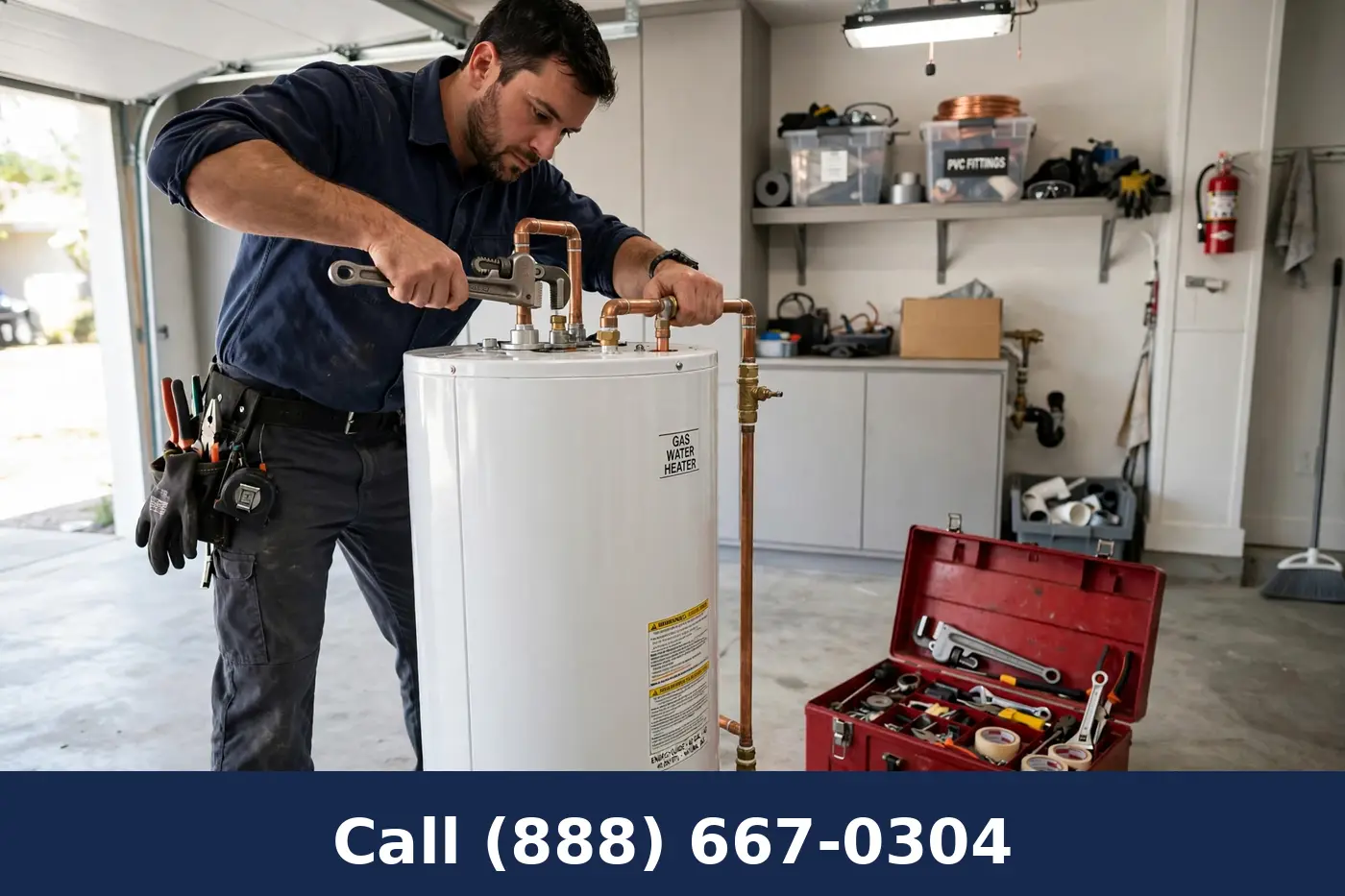
Professional water heater installation in Modesto means a technician sizes a new gas or electric tank to your household's hot water demand and installs it with code-compliant venting, seismic strapping, and connections. Plumber Modesto Pros removes the old unit and completes the full hookup, so your home has reliable hot water from day one.
What does professional water heater installation include?
Installing a new water heater is much more than swapping one tank for another. A proper installation starts with an assessment of your household's hot water habits, the fuel available at your home, and the space where the unit will sit. From there, the technician selects a tank with the right capacity and recovery characteristics, brings the setup up to current code requirements, and connects it safely. The visit ends with the old unit removed from your property and the new one tested under load.
Most Modesto homes connect to natural gas, which makes gas-fired tank heaters a common choice for their quicker recovery times. Electric models fit homes without a gas supply or where a simpler installation matters more. Your installer confirms the electrical circuit or gas line can support the new unit before work begins. Water quality also enters the conversation, since the mineral content of Central Valley water affects how quickly sediment collects inside a tank.
How is the right size water heater chosen?
Sizing starts with counting the people in your household and the fixtures that draw hot water at the same time. Two morning showers, a running dishwasher, and a load of laundry can overlap in ways that surprise homeowners. Plumbers translate that peak demand into a First Hour Rating, which tells you how many gallons the unit delivers in its busiest hour. Matching that number to your routine is what keeps the last shower warm.
As a rough guide, households of one or two people usually do well with a 30 to 40 gallon tank. Families of three or four typically need 40 to 50 gallons. Larger households or homes with big soaking tubs often move into the 60 to 80 gallon range. These are starting points, not rules. A home with teenagers who shower back to back needs more capacity than the headcount suggests. Your technician walks through the numbers with you so the choice fits real life, not just a chart.
Gas or electric: which tank fits your home?
Gas water heaters heat water quickly and generally cost less to run where natural gas service is affordable. They need proper combustion air, a correctly sized gas line, and a vent that carries exhaust safely out of the home. The installation takes a bit more planning, but the payoff is strong recovery during heavy use. Many Modesto households already have gas lines serving a previous tank, which simplifies the job.
Electric water heaters are quieter and simpler to install, with no venting to plan around. They fit compact utility closets and interior spaces where a gas vent would be difficult to route. Recovery is slower than gas, so sizing matters even more for larger families. Homes without gas service often choose electric for this reason.
Both types benefit from modern insulation and higher Uniform Energy Factor ratings than units built a decade ago. Setting the thermostat to 120 degrees cuts standby losses and reduces scalding risk. Insulating the first few feet of hot water pipe helps too. These small choices add up over the years the tank serves your home.
What happens on installation day?
The technician arrives with the new unit, a drain pan, fittings, and the code-required accessories for your setup. Gas or power is shut off first, and the old tank is drained before anything is disconnected. The surrounding area is checked for water damage or corroded fittings that should be addressed while the wall is exposed. Old tanks are loaded out for recycling.
The new unit is set level in the drain pan and anchored with seismic straps attached to wall framing. California code calls for straps in the upper and lower third of the tank, and garages require the ignition source to sit at least 18 inches above the floor. Water connections are made with a shutoff valve on the cold inlet and a temperature and pressure relief valve piped to a safe drain. On closed plumbing systems, an expansion tank absorbs the pressure that builds as water heats.
For gas units, the installer connects the gas line with a sediment trap, verifies combustion air, and routes the vent with the clearances the code requires. Electric units get a properly sized circuit and breaker. The tank is filled completely before the burner or elements are energized, since firing a dry tank damages it. Every connection is checked for leaks, and the burner or elements are observed through a full heating cycle.
What code requirements shape the installation?
California homes fall under plumbing and building codes that set clear minimums for water heater work. Seismic strapping is required in our region, and the straps must fasten to framing with lag screws, not just drywall. The temperature and pressure relief valve needs a discharge pipe that runs to an approved drain and terminates between 6 and 24 inches above the finished grade. A shutoff valve on the incoming cold water line is mandatory.
Homes on closed plumbing systems, which is most homes with a pressure regulator or check valve at the meter, need a thermal expansion tank. Without one, heated water has nowhere to expand, and pressure spikes stress the tank and the home's piping. Gas installations add venting and combustion air rules that depend on the unit's BTU rating and where it sits. Your installer handles these details as part of the job, and you receive a unit that meets the standards an inspector would check.
What affects the cost of a water heater installation?
The biggest factors are the tank's size, the fuel type, and whether the new unit drops into the footprint of the old one. Moving a water heater to a new location, upsizing the gas line, or adding a new electrical circuit adds labor and materials. Homes that need an expansion tank, new venting, or drain pan routing for the first time see those items in the scope too. Access matters as well: a garage install goes faster than one tucked into a tight crawl space.
Older homes sometimes reveal corroded shutoff valves, damaged flue liners, or water-damaged platforms that need attention before the new tank goes in. Catching these during installation beats discovering them later. A thorough technician flags what they find and explains your options before proceeding. The goal is a system that works safely for its full service life, not just on day one.
How does Plumber Modesto Pros serve Modesto homes?
Plumber Modesto Pros installs water heaters across Modesto and the surrounding Central Valley communities. The team works in single-family homes, duplexes, rentals, and light commercial spaces such as small restaurants and offices. Every installation follows the same methodical process: assess, size, install to code, test, and clean up. You get a walkthrough of the new unit's controls, the thermostat setting, and the simple maintenance that keeps it running well.
Call (888) 667-0304 to discuss your water heater installation. A technician will review your household's needs, confirm the right size and fuel type, and schedule the work at a time that suits you.
Features
- On-site sizing using household demand and First Hour Rating calculations
- Gas and electric tank models from 30 to 80 gallons
- Seismic strapping anchored to wall framing in the upper and lower third of the tank
- Temperature and pressure relief valve with discharge piping to an approved drain
- Thermal expansion tank installed on closed plumbing systems
- Code-compliant venting and combustion air for gas-fired units
- Removal and responsible recycling of the old water heater
Benefits
- Hot water matched to your peak-hour usage instead of cold surprises
- Lower energy use from a correctly sized modern tank
- An installation that meets California plumbing code requirements
- Less risk of tank tipping or venting problems in an earthquake
- A clean work area left behind after the old unit is hauled away
- Equipment installed to manufacturer specifications
- A walkthrough of the new unit's controls and basic care
Frequently asked questions
How long does a water heater installation take?
Most straightforward replacements are finished in a few hours, including draining and removing the old tank. Installations that add a gas line, relocate the unit, or upgrade electrical service take longer. Your technician confirms the expected timeline before work begins.
Can I keep the same size tank I have now?
You can, but it is worth checking whether the old size still matches your household. Families grow, routines change, and an undersized tank causes the cold showers you are trying to leave behind. A quick demand review points to the right capacity.
Do I need to be home during the installation?
Someone should be there to grant access and approve any findings, such as a corroded valve that needs replacing. The technician handles everything else and walks you through the finished job. Most homeowners go about their day nearby.
What maintenance does a new water heater need?
An annual sediment flush and a periodic check of the anode rod and relief valve keep a tank running efficiently. Modesto's mineral-heavy water makes the yearly flush especially worthwhile. Plumber Modesto Pros offers maintenance visits to handle it for you.