
Underground Water Line Leak Repair Near Me
Starting price: Call for pricing
The buried supply line between your water meter and your house works hard every day. When it springs a leak, the symptoms are easy to misread: soggy patches in the yard, a meter that spins with every tap off, or water pressure that quietly fades. Plumber Modesto Pros locates the break with acoustic and pressure-testing methods, then repairs the line through a targeted excavation that keeps the rest of your yard intact.
What is the underground water line, and why does it leak?
The underground water line is the buried pipe that carries water from the meter at your property line to your house. In most Modesto-area homes it runs a few feet below the surface across the front yard. This line is under constant pressure, day and night, which means even a small crack loses water around the clock. Over the years, soil movement, root growth, and simple aging wear the pipe down. Older galvanized or copper lines corrode from the outside; older plastic can crack where the ground has shifted. When it fails, the water has nowhere to go but into the surrounding soil.
What are the signs your buried supply line is leaking?
- A soggy, sunken, or perpetually muddy patch in the yard
- Grass that grows noticeably greener and faster in one strip
- Your water meter dial turning with every fixture and tap off
- Water pressure that fades gradually over weeks or months
- The sound of running water near the meter or along the line path
- A water bill that climbs with no change in your household usage
- Cracks or settling in a walkway or driveway above the line route
The tricky part is that each of these signs has an innocent explanation too. A wet patch could be a sprinkler issue; a high bill could be a running toilet. That is why the first step is always testing, not digging.
How is the leak located before anyone digs?
Location starts with proof. We shut off the house side and watch the meter: if it still moves, water is escaping somewhere between the meter and the house. Pressure testing the line confirms the loss and can narrow it to a section. Then acoustic equipment traces the line's path, listening for the distinct sound of pressurized water jetting into soil. The technician marks the loudest point on the surface. In many cases the leak is found within a small area, which means the excavation that follows is a single focused hole rather than a trench across the yard.
How does the repair work?
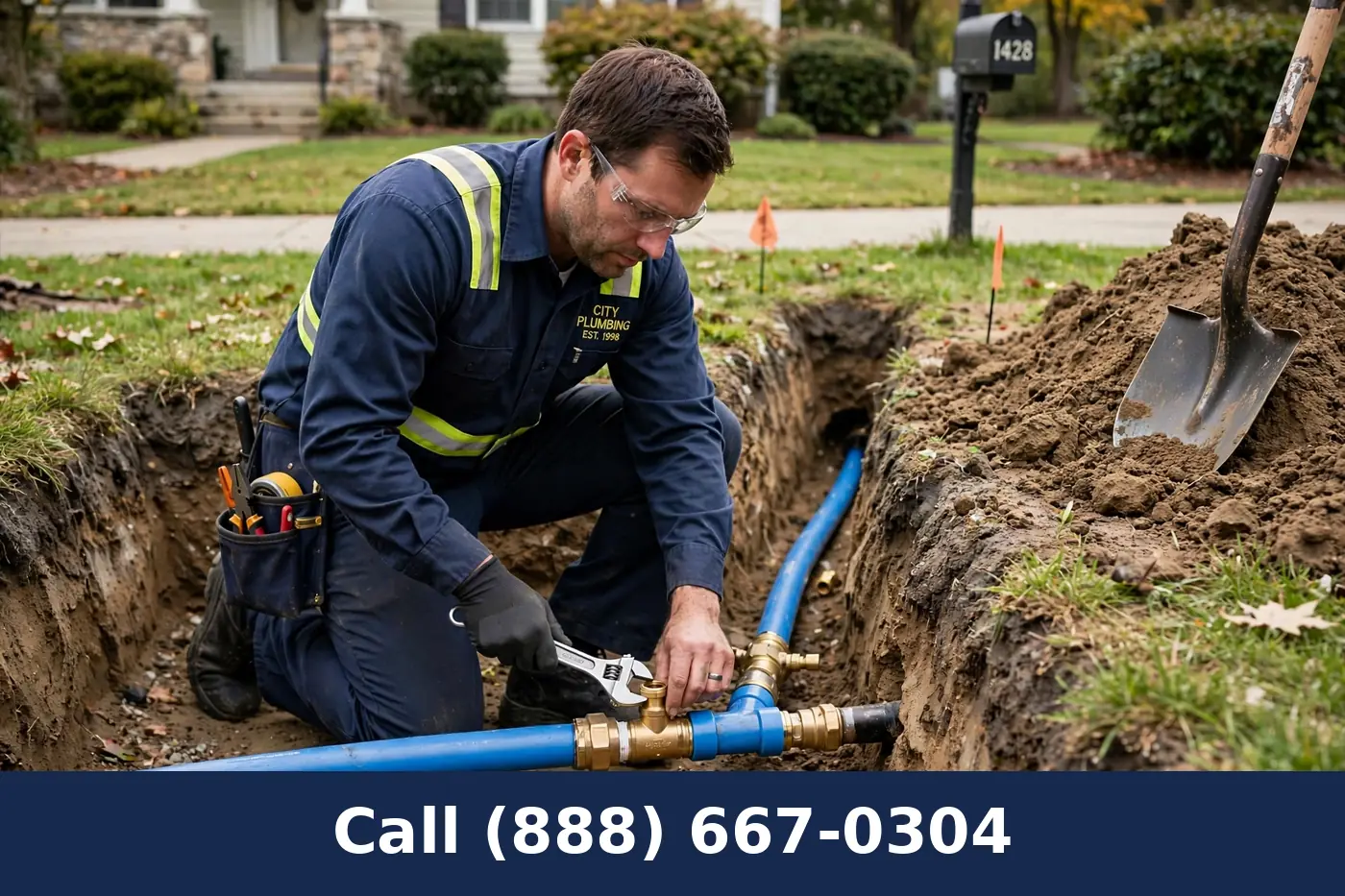
Once the leak is marked, the excavation opens the ground directly above the failed section. The damaged pipe is exposed, cut out, and replaced with new pipe rated for direct burial. The new section is joined with fittings suited to the pipe material and the soil conditions. Before the hole is closed, the line is pressure tested to prove the repair holds. Then the pipe is bedded in clean material, backfilled in layers, and compacted so the ground settles evenly instead of sinking later. The surface is restored as close to its original condition as possible.
Should you repair the section or replace the whole line?
A single clean break in an otherwise sound line is a straightforward section repair. But if the line is old galvanized pipe with visible corrosion, pressure testing may reveal weakness along its length. In that case, replacing the full run from meter to house can be the better long-term call. The evidence at the excavation makes the case either way. The deciding evidence comes from the condition of the exposed pipe and the line's overall test results. We show you what we found at the excavation and lay out both options honestly. Nobody benefits from repairing one section of a line that will spring its next leak a few feet away.
What does the excavation mean for your yard?
Targeted excavation keeps the disruption small by design. The hole is only as wide as the repair needs, and we set aside sod or landscaping material to put back afterward. Underground utilities are located before any digging starts, so sprinkler lines and wiring are protected. Most repairs disturb an area you can cover with a sheet of plywood. The backfill is compacted in layers to prevent the sunken scar that a hastily closed hole leaves behind. Your yard should look like itself again within days.
What affects the cost of an underground line repair?
Depth and soil type are the main labor factors — rocky or compacted soil takes longer to excavate than soft loam. The length of pipe that must be replaced matters, as does the pipe material and the fittings it requires. Obstacles along the line route, such as a driveway crossing or mature tree roots, add complexity. If the full meter-to-house run needs replacement instead of a section repair, the scope grows accordingly. Call (888) 667-0304 with your symptoms and we will quote the job after locating the leak.
What should you check before calling about a suspected line leak?
Rule out the easy explanations first, because they cost nothing to check. Read your water meter, then make sure no toilet is running and no fixture is dripping, and read it again after an hour with everything off. Walk the yard and look for the wettest areas, noting whether they sit along the likely path from the meter to the house. Check whether your irrigation system has a stuck valve, since a sprinkler zone can mimic a line leak. If the meter still moves with everything off, the evidence points underground, and that is when a professional locate is the right move.
Why does a small underground leak matter so much?
Because the line is pressurized, even a pinhole moves a meaningful volume of water over days and weeks. That water saturates the soil around the pipe, and saturated soil loses its ability to support weight, which is how walkways settle and sinkholes begin. In winter, saturated ground around a shallow line also exposes the pipe to colder conditions. The water bill is usually the first alarm, but the soil damage is the expensive part. Finding and fixing the break early protects both your wallet and your yard.
How does Plumber Modesto Pros help with buried line leaks around Modesto?
Plumber Modesto Pros repairs underground water lines for homes across Modesto and the nearby Central Valley communities. We know the local soil, the typical meter-to-house routes, and the aging pipe materials found in each neighborhood's building era. Our trucks carry acoustic locating gear and the fittings for copper, PEX, and PVC service lines. From the first meter check to the final backfill, the work is done with your yard in mind.
Features
- Acoustic locating of the leak along the buried supply line
- Pressure testing that proves which section has failed
- Targeted excavation limited to the damaged area
- Durable replacement pipe rated for direct burial
- Proper bedding and backfill to protect the new line
- Meter-to-house line evaluation during the same visit
- Yard restoration of the excavated area after repair
Benefits
- Find the break without digging up the whole yard
- Stop the constant water loss feeding your bill
- Restore full water pressure to every fixture
- Protect landscaping, driveways, and walkways from saturation
- Get a buried line built to handle soil and load
- Know the rest of the line was checked while we were there
- Avoid the sinkholes and soil erosion a leak can cause
Frequently asked questions
How do you find a leak in a buried water line?
We pressure test the line to confirm the loss, then use acoustic listening equipment to trace the sound of escaping water along the pipe's path. The leak is located before any digging starts, so the excavation stays small.
What are the signs of an underground supply line leak?
Soggy or sunken spots in the yard, a water meter that moves with everything off, unexplained lush patches of grass, and gradually falling water pressure. In some cases the only sign is a bill that keeps climbing.
Will you have to dig up my whole yard?
No. Once the leak is located, we excavate only the section that needs repair. The rest of the yard, driveway, and landscaping are left alone.
What causes underground water lines to fail?
Age is the main factor, along with soil movement, root pressure at joints, and corrosion of older metal pipe. Shifting ground after wet winters can stress rigid lines at their weakest points.