
Toilet Repair Near Me
Starting price: Call for pricing
A toilet that runs, leaks, rocks, or clogs keeps telling you something is wrong inside the tank or under the bowl. Plumber Modesto Pros diagnoses toilet problems accurately and repairs them with the right parts, from fill valves to wax rings. Call (888) 667-0304 and stop living with a toilet that will not behave.
Why does my toilet keep running?
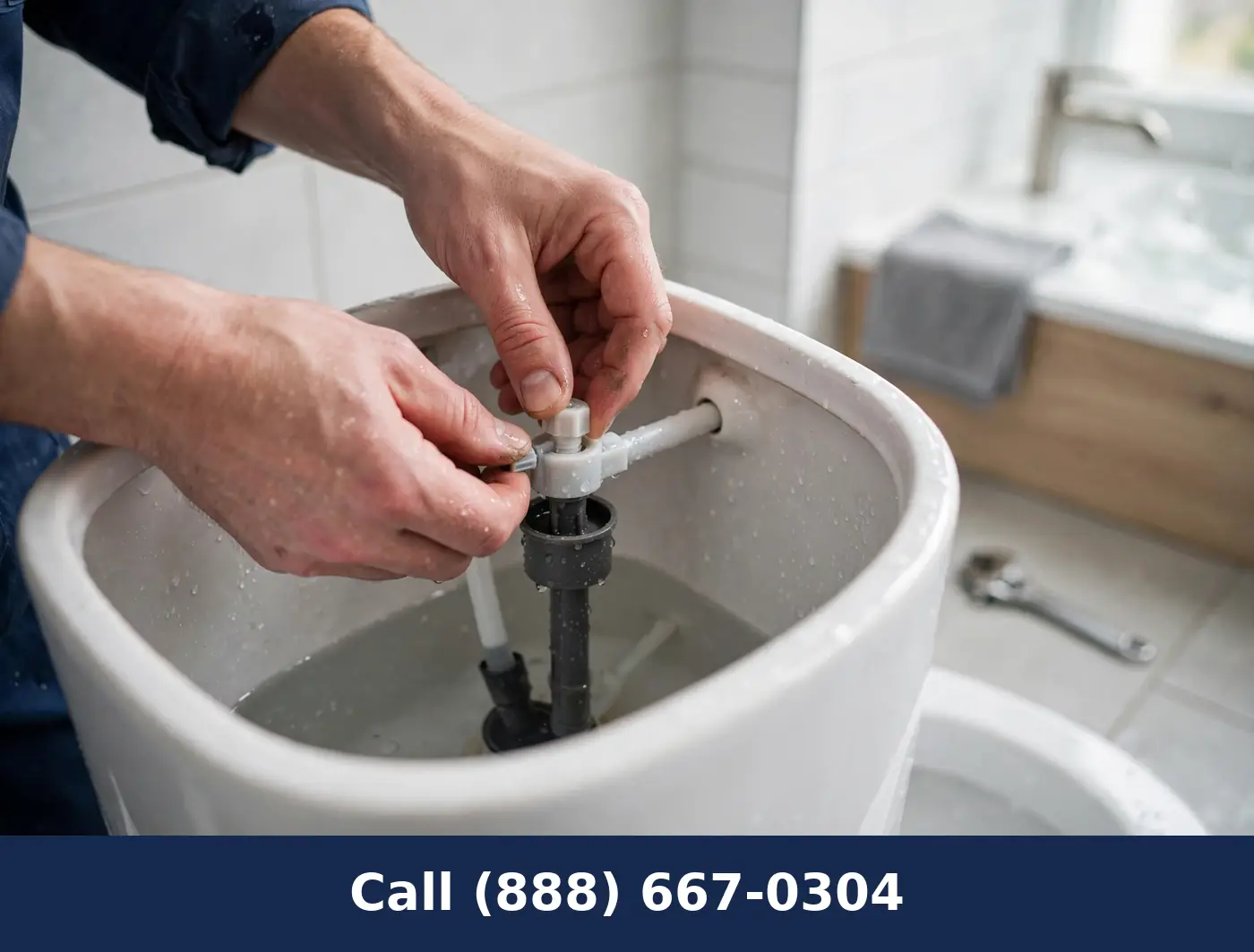
A running toilet is the most common toilet complaint, and the cause is almost always inside the tank. The two usual suspects are the flapper and the fill valve. The flapper is the rubber seal that lifts when you flush and then settles back down to hold water in the tank. When it warps, stiffens, or gets coated with mineral deposits, water leaks past it into the bowl, and the fill valve keeps refilling the tank to compensate. The fill valve is the device that refills the tank after a flush. When it wears out or its float is set too high, water runs constantly, sometimes spilling into the overflow tube.
The chain that connects the flush handle to the flapper causes its share of trouble too. A chain with too little slack holds the flapper slightly open, and a chain with too much slack can slide underneath the flapper and break its seal. A simple test tells you where the leak is: put a few drops of food coloring in the tank, wait without flushing, and see whether color appears in the bowl.
Color in the bowl means water is leaking past the flapper or the flush valve seal. No color but a running sound points toward the fill valve or the water level setting.
What causes a toilet to rock or leak at the base?
A toilet that rocks is not just annoying; it is a leak waiting to happen. Toilets are held to the floor by closet bolts through the flange, and the wax ring between the toilet and the flange keeps water and sewer gas sealed in. When bolts loosen, the flange cracks, or the floor underneath softens, the toilet starts to move. Even small movement breaks the wax seal, and once that seal is broken, every flush can push a little water under the toilet where you cannot see it.
Water staining around the base, a musty smell in the bathroom, or a floor that feels soft near the toilet all suggest the seal has been compromised. The repair involves lifting the toilet, inspecting the flange and the subfloor, installing a new wax ring, and reseating the toilet so it sits solid. If the flange is cracked or sits too low relative to the finished floor, that has to be addressed too, or the new seal will fail the same way. This is one repair where doing it properly the first time saves the floor.
How do you fix a toilet that clogs all the time?
An occasional clog is normal, but a toilet that clogs repeatedly is signaling a deeper issue. The first thing a plumber checks is whether the flush itself is weak. A partially blocked rim jet, a low tank water level, or a flapper that closes too soon all reduce the force of the flush. Sometimes the fix is as simple as adjusting the water level or cleaning mineral buildup from the rim jets under the bowl rim.
If the flush is strong and the toilet still clogs, the problem may be in the trapway inside the toilet or in the drain line beyond it. Objects that should never have been flushed, such as wipes, cotton products, or toys, can lodge in the trapway and catch everything that follows. Further down the line, a partial blockage, a root intrusion, or a sagging pipe section can slow the drain enough that the toilet cannot clear. A toilet auger reaches into the trapway without scratching the bowl, and a camera inspection can check the line beyond when needed.
What parts usually wear out inside the tank?
Toilet tanks are simple machines with a handful of parts that wear on a predictable schedule. Flappers typically last a few years before the rubber degrades, especially in water with heavy chlorine or mineral content. Fill valves wear too, developing a hiss, a slow fill, or an inability to shut off completely.
The chain stretches and corrodes, the trip lever handle gets sloppy, and the tank-to-bowl gasket hardens over time. Dual-flush toilets add canister gaskets and flush towers to the list, and those seals wear just like flappers do.
Replacing these parts is straightforward work, but matching them matters. Toilets come in many designs, and a flapper or fill valve that almost fits can cause the same running problem you were trying to fix. Bringing the old part along, or identifying the toilet brand and model, helps get an exact match. Plumber Modesto Pros carries common replacement parts on the truck so most tank repairs are finished in a single visit.
When is it worth repairing instead of replacing?
Most running, leaking, and rocking problems are worth repairing because the fix is small and the toilet itself is sound. A tank repair usually restores a toilet to normal operation for years. Replacement starts to make sense when the porcelain is cracked, the trapway is chronically troublesome, or parts are discontinued for an old model. It also makes sense when the toilet uses far more water per flush than current models and you want to cut water use. A toilet that needs its third repair in a year is also telling you something.
Age alone is not the deciding factor. A well-made older toilet with available parts can serve reliably for decades, while a cheap newer toilet with a poor flush design can be a constant headache. The honest answer depends on the specific toilet in front of you: its condition, its parts availability, and what the repair would cost relative to a replacement. That is a conversation worth having before spending money either way.
What does a typical toilet repair visit look like?
The visit starts with you describing the symptom: running, leaking, rocking, weak flush, or repeated clogs. The plumber then inspects the tank internals, the base, the supply line, and the shutoff valve, and runs a few flushes to see the problem in action. Many diagnoses take only a few minutes once the tank lid is off. The findings are explained plainly, along with what the repair involves and what parts are needed.
Once you agree to the repair, the water is shut off, the failed part is replaced, and everything is tested with several flush cycles. For base leaks, the toilet is lifted, the flange is inspected, a new seal is installed, and the toilet is reset and leveled. Before leaving, the plumber checks for leaks at every connection and makes sure the toilet flushes, fills, and sits solidly. Call (888) 667-0304 to get a toilet that works the way it should.
Features
- Running-toilet diagnosis: flapper, fill valve, chain, and float adjustment
- Fill valve and flush valve replacement with matched parts
- Flapper, canister gasket, and tank seal replacement
- Wax ring replacement and leak repair at the toilet base
- Rocking and loose toilet reseating and re-anchoring
- Stubborn clog removal without damaging the bowl
- Handle, trip lever, and dual-flush mechanism repair
Benefits
- A toilet that fills quietly and stops when it should
- No more water wasted by a constantly running tank
- Leaks at the base fixed before they damage the floor
- Secure, rock-solid seating you can trust
- Clogs cleared properly instead of pushed deeper
- Clear explanation of what failed and why
- Repair recommendations based on the toilet's real condition
Frequently asked questions
What is the food coloring test for a running toilet?
Add a few drops of food coloring to the tank water and wait about 20 minutes without flushing. If the bowl water takes on color, the tank is leaking into the bowl, and a worn flapper or flush valve seal is the usual source.
Why does my toilet run for a few seconds every few minutes?
That is called a phantom flush, and it means water is slowly leaking from the tank into the bowl. The water level drops until the fill valve kicks on briefly to top it up. A worn flapper is the usual cause.
Is a sweating toilet tank a problem?
Condensation on the outside of the tank is common in humid weather and is not the same as a leak. But constant moisture can drip onto the floor and damage it over time, so it is worth mentioning during a service visit.
Can a running toilet really affect my water bill?
Yes, a toilet that runs constantly can waste a surprising amount of water over a month. Fixing a worn flapper or misadjusted fill valve is one of the simplest ways to bring water use back to normal.
Should I use a plunger or an auger on a stubborn clog?
A plunger works well for soft clogs near the bowl. A toilet auger reaches deeper into the trapway and is the better tool when plunging does not clear it. Avoid chemical drain cleaners, which can damage the toilet and pipes.