Thermal Imaging Plumbing Inspection Near Me
Starting price: Call for pricing
Water damage often starts where you cannot see it — inside walls, under floors, and behind cabinets. Thermal imaging plumbing inspection uses an infrared camera to read surface temperatures and reveal the cool or damp patterns of hidden leaks, missing insulation, and vulnerable pipe runs. Plumber Modesto Pros scans your home without opening a single wall, then confirms anything suspicious with a moisture meter.
What is a thermal imaging plumbing inspection?
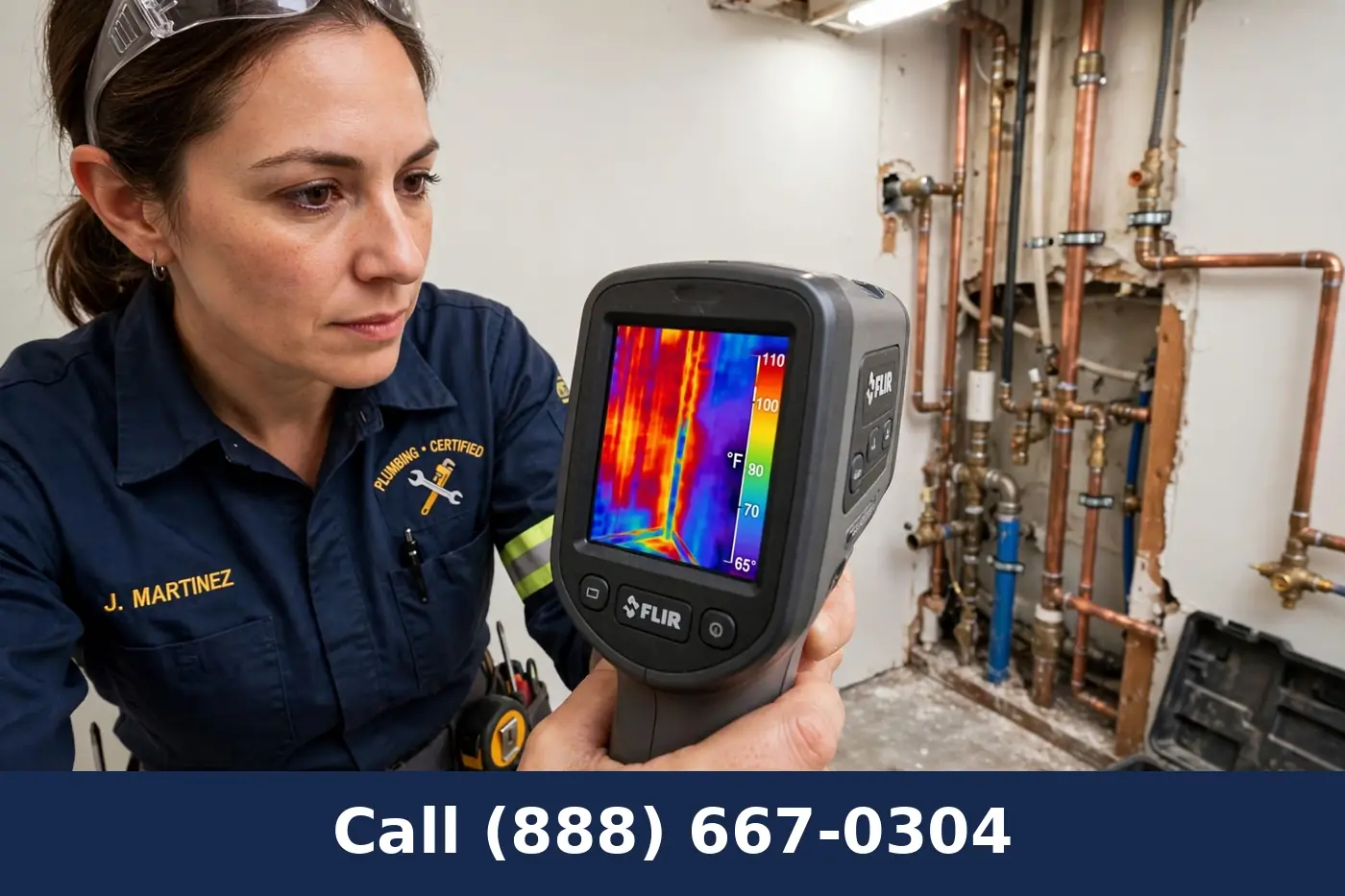
A thermal imaging plumbing inspection is a diagnostic scan of your home's plumbing using an infrared camera. The camera detects the infrared energy that every surface naturally gives off and turns it into a color-coded image of temperature patterns. Warm areas glow in reds and oranges, cool areas show in blues and purples. A trained technician reads these patterns for the signatures of plumbing trouble. Damp spots suggest hidden leaks, cold streaks point to missing insulation, and warm bands trace a hot-water line. The camera never touches your walls and nothing gets opened.
What can thermal imaging reveal that your eyes cannot?
A slow supply-line leak inside a wall can soak insulation and framing for months before a stain ever appears on drywall. An infrared camera picks up the evaporative cooling of that damp area long before it becomes visible. The same scan finds pipe runs with missing or compressed insulation, which matters most heading into winter when a cold snap can split an unprotected line. It can also map how hot-water lines run through walls and slabs, which helps plan reroutes and repairs without exploratory cutting. Where water heater or laundry connections hide behind cabinetry, the scan checks for seepage that never reaches the eye.
When should you schedule a thermal plumbing inspection?
- You smell a musty odor but cannot find any visible moisture
- One room or wall feels oddly cold, and you wonder about insulation gaps
- Your water bill rose without any change in your habits
- You are buying an older home and want to check for hidden water damage
- Winter is approaching and you want vulnerable pipe runs identified
- A previous leak was repaired, and you want to confirm the area is dry
- You hear water running faintly when every fixture is off
Thermal imaging is at its strongest during the cool months, when the contrast between indoor surfaces and cold pipe runs makes problems stand out. In the Central Valley, a winter scan is an ideal way to find insulation gaps before the coldest nights.
How does the inspection process work?
We start by walking through the home with you and noting any concerns you already have. Then the technician scans wall by wall, moving room to room with the infrared camera while the plumbing system sits in its normal state. Ceilings below bathrooms and kitchens get extra attention, as do exterior walls where pipe runs are exposed to cold air. Crawl spaces and accessible attic areas are scanned for bare pipe runs and insulation voids. Any pattern that suggests moisture or a leak is then checked with a pin or pinless moisture meter, which gives an actual reading rather than just a picture. You receive a report with the thermal images and the confirmed findings.
What happens if the scan finds a problem?
A suspicious thermal pattern is a clue, not a diagnosis, so we verify it before recommending anything. Moisture-meter readings tell us whether the material is actually wet or just cold. If a leak is confirmed, the report shows exactly where it is, which helps a repair plumber open the smallest possible area. If the finding is missing insulation around a pipe run, the fix is usually straightforward insulation work before winter arrives. If the scan finds nothing, that is valuable information too — you get documented evidence that your hidden plumbing looks dry and well insulated.
What affects the cost of a thermal inspection?
The size of the home is the main factor, since a larger house means more wall area to scan and more images to review. Homes with crawl spaces or large attics take longer because those areas are scanned by hand with the camera. A focused scan of one or two problem areas costs less than a full whole-home survey. If moisture-meter confirmation is needed in many locations, that adds time as well. For an exact quote for your home, call (888) 667-0304 and describe what you want checked.
What are the limits of a thermal plumbing inspection?
Thermal imaging is a powerful screening tool, but it has honest limits. It reads surface temperatures, so a leak buried deep in a thick wall or a slab may not produce a visible pattern if the surface has not changed temperature. Sunlight hitting an exterior wall can create warm patterns that have nothing to do with plumbing. Cold-water pipes behind drywall can look similar to damp areas, which is exactly why every suspicious reading gets confirmed with a moisture meter. The camera does not replace pressure testing or acoustic listening when a leak is already confirmed. It is the most efficient way to find the general area and rule out dry zones. Knowing these limits is what keeps the inspection honest and useful.
What does your thermal inspection report include?
You receive a written report with the thermal images from each area we scanned. Every image that raised a concern is paired with the moisture-meter reading that confirmed or ruled it out. The report explains what each finding means in plain language and lists practical next steps. That may mean insulating a pipe run, opening a small area for a confirmed leak, or watching a spot through winter. The images themselves are the most useful part, because you can see the cool patterns and bare runs with your own eyes. We keep copies of the report on file, so if a future issue comes up we can compare new scans against the original baseline.
Where does Plumber Modesto Pros offer thermal imaging inspections?
Plumber Modesto Pros brings thermal inspection to single-family homes, duplexes, and rental properties throughout Modesto and the nearby Central Valley towns. Our technicians know the common weak points of local construction: thin insulation over slab-edge pipe runs, uninsulated walls in older ranch homes, and long crawl-space runs in raised-foundation houses. We document everything in plain language with the thermal images attached, so you can see what we saw. Whether you are chasing a mystery odor or doing winter prep, the scan gives you answers without a single hole in the wall.
Features
- High-resolution infrared camera that maps surface temperature patterns
- Non-invasive scanning of walls, ceilings, and floors
- Moisture-meter confirmation of every suspicious thermal reading
- Detection of missing or compressed insulation around pipe runs
- Identification of hot-side and cold-side supply line anomalies
- Thermal documentation included with every inspection report
- Crawl space and attic pipe routing evaluation
Benefits
- Find hidden leaks before they rot framing or feed mold
- Spot poorly insulated pipes that are vulnerable in winter cold
- See the evidence yourself before authorizing any repair
- Avoid cutting into walls until a problem is confirmed
- Catch slow leaks that never leave a visible stain
- Make repair decisions from measured readings, not guesses
- Document your plumbing's condition for maintenance planning
Frequently asked questions
How does thermal imaging find a plumbing leak?
The camera reads infrared radiation coming off surfaces and displays it as a color-coded heat map. Moisture cools a surface through evaporation, so a damp area behind drywall appears as a cooler pattern that a trained technician can recognize.
Can a thermal camera see through walls?
No, it reads temperature patterns on the surface of materials rather than looking through them. That is why every suspicious pattern is confirmed with a moisture meter before any wall is opened.
When is thermal imaging most effective for plumbing?
It works best when there is a meaningful temperature difference between the pipe and its surroundings. Cool weather makes insulation gaps and cold-water leaks stand out clearly against the rest of the wall.
Do I need to prepare my home for a thermal inspection?
Keeping your home at its normal temperature for a few hours before we arrive gives the clearest results. You do not need to move furniture or open anything up; the scan itself is completely non-invasive.