
Sump Pump Repair & Maintenance Near Me
Starting price: Call for pricing
Sump pump repair and maintenance keeps the pump ready for the storms it exists for, addressing float switches, power issues, clogs, and worn components. Plumber Modesto Pros services sump pumps across Modesto, diagnosing failures and performing the annual maintenance that prevents them.
Why do sump pumps fail when they are needed most?
Sump pumps fail on storm day for painfully ordinary reasons. The float switch tangles on the power cord or wedges against the pit wall, so the rising water never triggers the pump. The GFCI outlet tripped during the last power surge and nobody noticed. The discharge line iced over or clogged at the exterior outlet, and the pump burned out pushing against the blockage. The impeller clogged with silt because the pit was never cleaned.
Age plays its role too. A pump that has cycled thousands of times over seven to ten years wears at its seals, bearings, and switch. It may still run, but weaker, slower, and less reliably. Homeowners rarely notice the decline because the pump only works during storms, and nobody watches it work. The first sign of trouble is often water on the floor.
Lack of testing is the thread connecting most failures. A pump that sits idle for eight dry months can seize, clog, or lose its prime without any outward sign. Pouring a bucket of water into the pit twice a year takes five minutes and reveals most problems. Professional maintenance goes further, catching the issues a bucket test cannot.
What does a repair visit diagnose first?
Power comes first, because it is the simplest cause and the most common. The technician checks that the pump is plugged in securely, tests the outlet, and resets any tripped GFCI or breaker. A breaker that tripping again without delay signals a motor or wiring problem that needs deeper investigation. The power cord is inspected for damage where it enters the pit.
Next is the float switch, the single most failure-prone component. The technician lifts it manually to confirm the pump engages, then checks its travel for obstructions. Tethered floats get their cords untangled and secured away from the pit wall. Vertical floats get their guide rods cleaned. A switch that moves freely but still misbehaves is replaced with one rated for the pump.
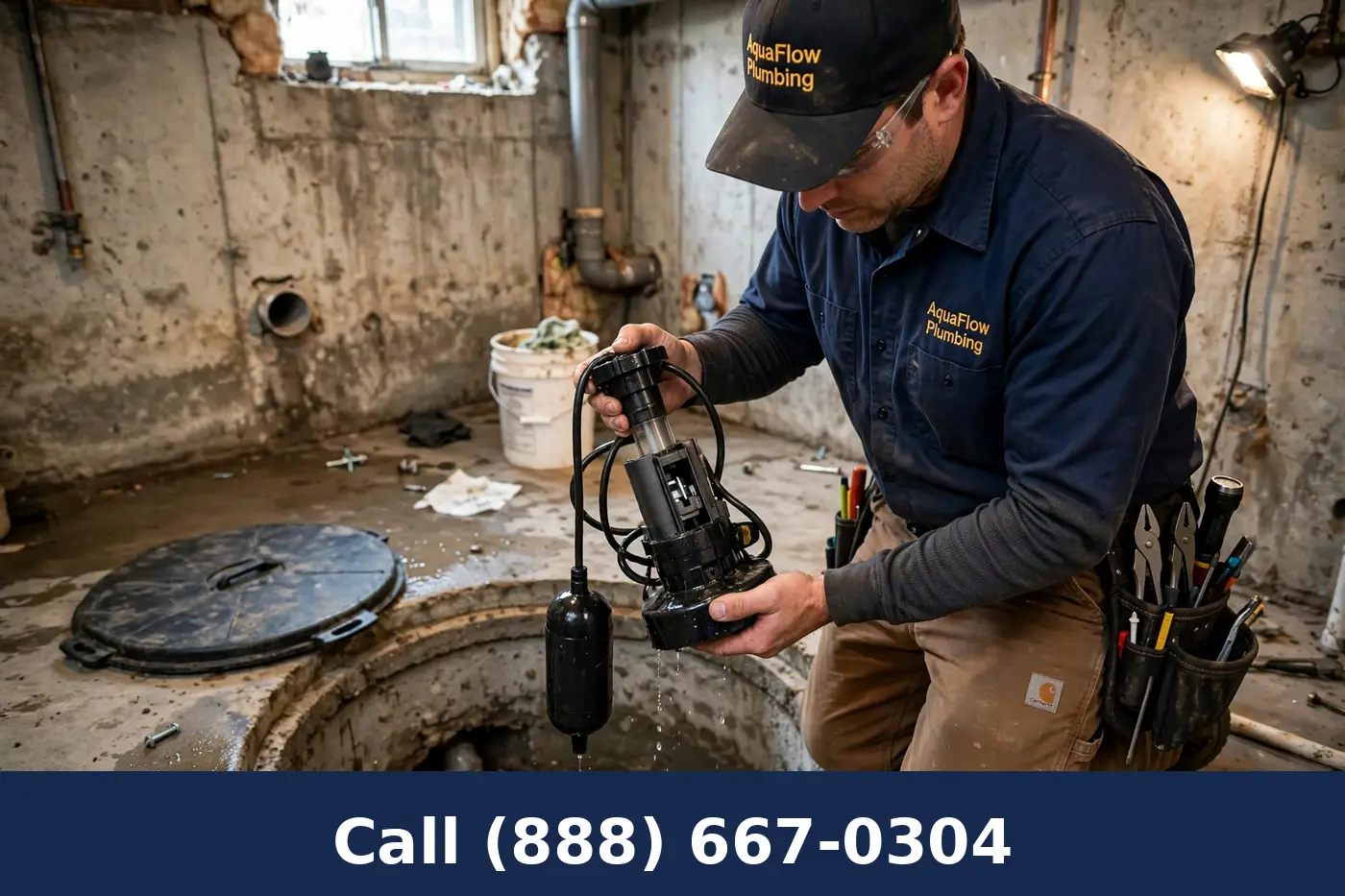
The pump itself is lifted from the pit and inspected. The intake screen is cleared of debris, the impeller is checked for damage or clogging, and the housing is examined for cracks. The check valve is tested by observing whether water drains back into the pit after a cycle. The discharge line is traced to the exterior outlet, which is checked for blockages, ice, and proper grading away from the foundation.
What repairs are most common?
Float switch replacement leads the list. Switches wear out from constant cycling in damp conditions, and a new switch restores reliable activation for a modest cost. Check valve replacement is nearly as common: a valve that no longer seats lets the discharge column drain back, causing rapid cycling that wears the pump prematurely.
Impeller cleaning resolves many weak-pumping complaints. Silt, small stones, and debris wrap the impeller or block the intake, and the pump moves a fraction of its rated capacity. Clearing it restores full flow. Discharge line clearing addresses exterior blockages from leaves, mud, or ice. In some cases the line needs regrading or an ice-relief fitting added.
Electrical repairs range from replacing a damaged cord to addressing a failing motor. A pump that hums but does not turn often has a seized motor or a failed start capacitor. At that point the technician compares the repair cost against the pump's age and usually recommends replacement for units past their prime.
What does annual maintenance include?
A maintenance visit is a physical for the whole system. The pit is cleaned of silt and debris, the pump is removed and inspected, the float switch is tested through full travel, and the check valve is verified. The discharge line is checked end to end, including the exterior outlet. The backup system, if present, is tested by simulating a power outage.
The technician also reviews the installation itself. Pits settle, discharge pipes shift, and covers crack over the years. Small corrections during maintenance prevent the gradual degradation that leads to failure. You receive a report on each component's condition and an honest assessment of remaining pump life, so replacement can be planned rather than sprung on you.
How can homeowners test their own pump?
Pour a five-gallon bucket of water into the pit slowly. The float should rise, the pump should activate, and the pit should empty with water visibly leaving the exterior discharge. Listen for grinding or rattling, which suggests impeller damage. Watch whether water drains back into the pit after the pump stops, which indicates a failed check valve.
Test twice a year: once before the rainy season and once mid-season. Also test after any power outage, since surges trip the protective devices these pumps depend on. If the pump fails your test, call for service rather than waiting for the next storm. A failed bucket test is the warning you want.
When should a pump be replaced instead of repaired?
Age and repair cost decide. A pump over eight years old with a failed motor or a cracked housing is a replacement candidate. So is a unit that needs its third repair in two years. Newer pumps with a single failed switch or a clogged impeller are worth fixing every time.
Replacement is also the moment to reconsider the system. If the old pump struggled to keep up, the new one should be upsized. If power outages are common in your area, add the battery backup you skipped last time. A technician sizes the replacement to what the home has taught you about its water.
What affects the cost of sump pump service?
Diagnostic time, parts, and accessibility set the price of a repair visit. A float switch or check valve replacement is quick work. Pulling a pump from a deep, narrow pit in a cramped crawl space takes longer. Maintenance visits are the most economical service because they prevent the emergency calls that cost more and happen at the worst times.
Emergency service during an active storm carries a premium everywhere, which is another argument for pre-season maintenance. A pump serviced in autumn rarely needs a technician in January. The math favors prevention, and so does your peace of mind.
How does Plumber Modesto Pros keep Modesto pumps ready?
Plumber Modesto Pros repairs and maintains sump pumps across Modesto and the surrounding Central Valley. Technicians arrive with common parts on the truck, diagnose systematically from power to discharge, and explain what they find in plain terms. Maintenance visits follow a full checklist and leave you with a written condition report.
Call (888) 667-0304 before the rains arrive, or any time your pump sounds wrong or fails a bucket test. A technician will get your system back to reliable and keep it that way.
Features
- Complete system diagnosis from power supply to discharge outlet
- Float switch testing, adjustment, and replacement
- Impeller and intake cleaning to restore pumping capacity
- Check valve inspection and replacement when it leaks back
- Discharge line clearing and exterior outlet check
- Pit cleaning to remove silt, gravel, and debris
- Operational test with documented pass or fail on each component
Benefits
- A pump that activates reliably when water rises
- Float switch problems fixed before the next storm
- Full pumping capacity restored from a cleaned impeller
- No wasted cycling from a failed check valve
- Discharge path confirmed clear to the exterior
- Early warning of a pump nearing the end of its life
- Confidence heading into the rainy season
Frequently asked questions
How often should I test my sump pump?
Pour water into the pit twice a year: before the rainy season and midway through it. Test again after any power outage, since surges can trip the outlet or breaker the pump depends on. A professional maintenance visit once a year covers what the bucket test cannot.
Why does my sump pump run constantly?
A stuck float switch, a failed check valve letting water drain back, or a high water table keeping inflow constant are the usual causes. Constant running wears the pump quickly, so it deserves prompt attention. A technician identifies which cause applies to your system.
My pump hums but does not pump. What is wrong?
The impeller is likely clogged or the motor has seized. Unplug the pump and call for service rather than letting it hum, since a stalled motor overheats. The technician will clear the impeller or advise replacement if the motor has failed.
Should I replace my pump before it fails?
If it is past eight to ten years old, planning a replacement is smart. A proactive swap costs less than an emergency call during a storm, and it lets you add backup protection at the same time. Your maintenance report will flag when that time approaches.