
Sump Pump Installation Near Me
Starting price: Call for pricing
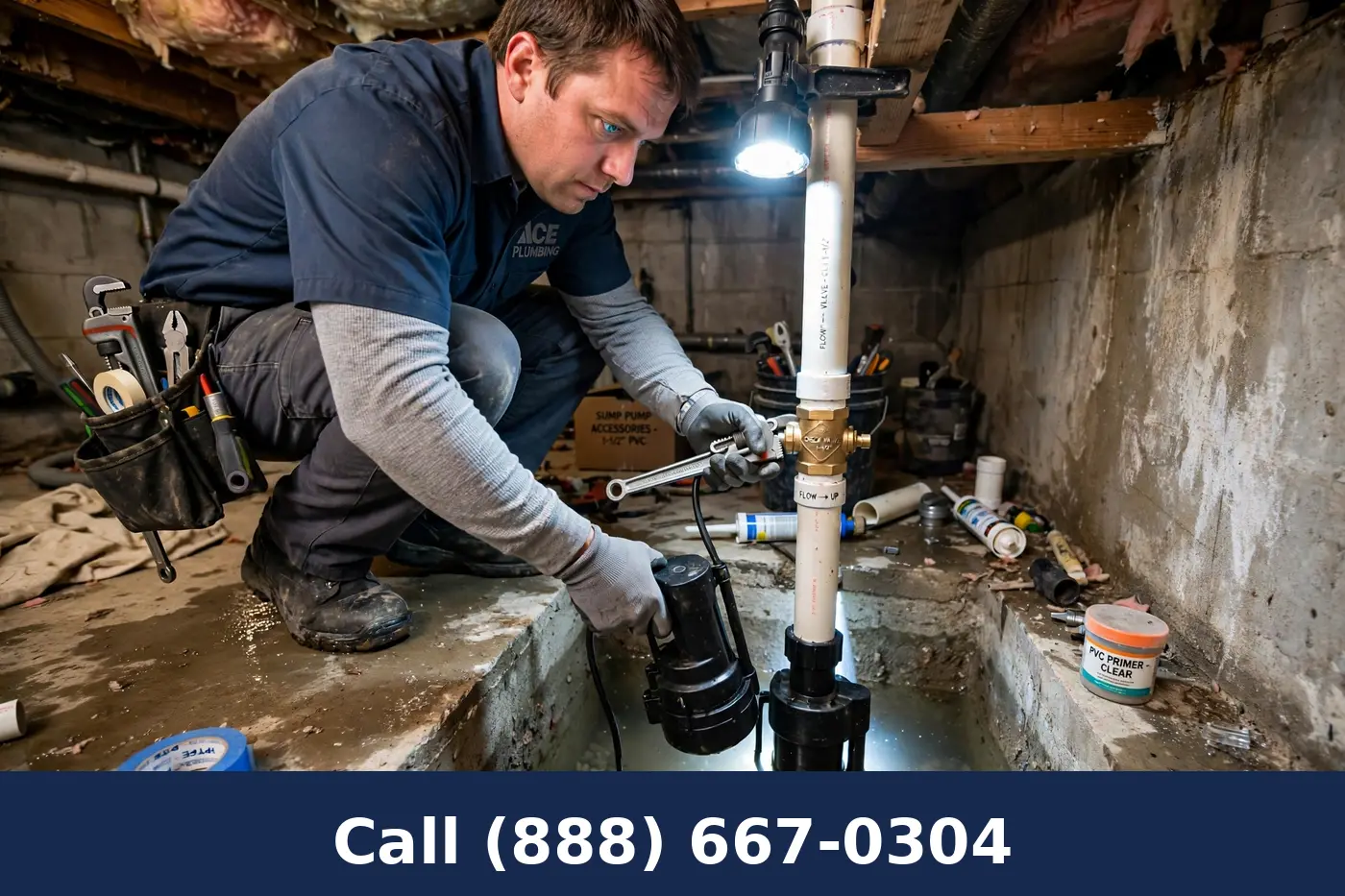
Sump pump installation places a pump in a basement or crawl space pit to collect groundwater and send it away from the foundation before it floods the home. Plumber Modesto Pros installs sump pump systems in Modesto-area homes, sizing the pit and pump to the property and routing discharge safely away from the structure.
What is a sump pump and how does it protect a home?
A sump pump sits in a pit, called a sump basin, dug into the lowest part of a basement or crawl space floor. Groundwater that seeps through the soil collects in the pit instead of spreading across the floor. When the water reaches a set level, a float switch activates the pump, which pushes the water up through a discharge pipe and out away from the house. The cycle repeats automatically as long as water keeps arriving.
In the Central Valley, the risk concentrates in the rainy season. Winter storms can saturate the soil around a foundation in hours, and homes with high water tables or poor exterior grading feel it first. A sump pump is the last line of defense when exterior drainage is overwhelmed. It does not stop water from reaching the foundation, but it removes the water that gets inside before damage starts.
Homes without basements still benefit. Crawl spaces collect water just as readily, and standing water under a home breeds mold, attracts pests, and rots wooden framing. A sump system in a crawl space keeps that area dry through the wet months. Property owners with finished basements have the most at stake, since a single flooding event can ruin flooring, drywall, and everything stored there.
Submersible or pedestal: which pump fits your home?
Submersible pumps sit inside the pit, sealed against water, with the motor cooled by the surrounding liquid. They run quietly and handle higher volumes, which makes them the default choice for most installations. Because the whole unit lives below the pit cover, they stay out of sight and out of the way. Their sealed design also tolerates the damp environment without complaint.
Pedestal pumps keep the motor on a long column above the pit while only the pump intake sits in the water. The motor stays dry, which simplifies some maintenance, and the visible float switch makes operation easy to observe. They suit narrow pits that cannot fit a submersible unit, and they typically cost less. The tradeoff is noise: an exposed motor hums louder than a submerged one.
Your installer recommends the type based on pit dimensions, expected inflow, and where the pit sits relative to living space. A finished basement with a proper pit almost always gets a submersible. A tight crawl space or a budget-driven retrofit may favor a pedestal. Either type protects the home when it is sized and installed correctly.
How is the pit sized and placed?
The pit goes at the lowest point of the floor, where water naturally gathers. For pedestal pumps, an 11-inch diameter pit up to 24 inches deep is typical. Submersible pumps with a tethered float need more room to swing, so an 18-inch diameter pit is the minimum. Vertical float switches fit narrower pits. Getting this right matters because a float that catches on the pit wall either runs constantly or never starts.
In new construction or unfinished spaces, the pit is formed during the concrete work. In existing homes, the installer cuts through the slab, excavates, sets a prefabricated basin, and seals the edges. Interior drain tile, perforated pipe laid alongside the footings, can feed the pit from around the entire foundation perimeter. That addition turns a single-point solution into a whole-perimeter system for homes with widespread seepage.
The pit needs a solid, level base so the pump sits upright and the float travels without obstruction. Gravel beneath the basin aids drainage into the pit. A sealed cover goes on top, with grommets for the discharge pipe, the power cord, and any backup pump lines. The cover cuts evaporation into the home, quiets operation, and keeps debris and small objects out of the pit.
What does the discharge setup involve?
The discharge pipe carries water from the pump up and out of the home. A check valve in that pipe is essential. Without it, the water standing in the vertical pipe drains back into the pit every time the pump stops. That forces the pump to re-pump the same water and wears it out early. The valve sits above the pump, accessible for future replacement.
Outside, the pipe must terminate well away from the foundation, ideally ten feet or more, on ground that slopes away from the house. Dumping water right at the foundation wall just recycles it back into the pit. In winter, the exterior termination needs protection against ice blockage, since a blocked outlet can burn out a pump. Some installations add a secondary outlet or an ice-relief fitting for that reason.
Underground discharge to a storm drain or dry well is an option where local rules allow it. Your installer knows the local requirements and routes the line accordingly. The exterior work is planned to avoid utility lines and to keep the discharge from creating a nuisance for neighboring properties.
What electrical provisions does a sump pump need?
A sump pump needs a dedicated, grounded outlet on its own circuit. Sharing the circuit with other basement loads risks tripping the breaker during a storm, which is exactly when the pump must run. The outlet should sit above the likely flood line, never at floor level where rising water can reach it.
A ground fault protected outlet is standard in damp locations, though nuisance tripping is a known concern with motors. Your installer or electrician selects the protection approach that balances safety and reliability for the location. An alarm on the pit cover, either audible or connected to a smart monitor, alerts you if the water rises past the pump's normal range. That early warning is inexpensive insurance.
Battery backup deserves discussion at installation time. Storms that flood basements also knock out power, and a primary pump without electricity is decoration. A backup system with its own battery and secondary pump takes over automatically. Adding it during the initial install costs less than a return visit, and many homeowners choose that peace of mind.
What happens on installation day?
The technician confirms the pit location, marks utilities, and protects the surrounding area from dust. Cutting the slab and excavating the pit is the messiest phase, and a professional contains it with barriers and cleanup. The basin is set, leveled, and sealed, and any interior drain tile is tied in.
The pump goes in, the discharge pipe is run with its check valve, and the exterior termination is completed. Electrical connections are made to the dedicated outlet, the pit cover is sealed, and the system is tested by pouring water into the pit until the float activates the pump. The technician verifies the pump empties the pit, the check valve holds, and water exits at the planned discharge point. You get a demonstration of the test procedure so you can check the system yourself before each rainy season.
What affects the cost of a sump pump installation?
Breaking concrete and excavating in an existing home is the biggest labor factor. New construction or a home with an existing pit is simpler. Adding interior drain tile around the footings expands the scope but transforms protection for homes with perimeter seepage. The pump's horsepower and type, the discharge routing distance, and electrical work round out the variables.
A battery backup system adds to the project but addresses the most common failure mode: power loss during storms. Discuss it as part of the initial scope rather than an afterthought. The installer prices each component so you can decide what fits your risk and budget.
How does Plumber Modesto Pros serve Modesto homeowners?
Plumber Modesto Pros installs sump pump systems across Modesto and the surrounding Central Valley communities. The team assesses each property's water patterns, recommends the right pump and pit configuration, and installs the complete system from excavation through testing. Battery backup options are explained for every installation.
Call (888) 667-0304 to protect your basement or crawl space before the rainy season. A technician will evaluate your property, explain your options, and install a system sized for your home.
Features
- Site assessment of water entry points and drainage patterns
- Properly sized sump pit excavated or fitted to the space
- Submersible or pedestal pump matched to inflow and lift height
- Check valve on the discharge line to stop backflow
- Discharge piping routed well away from the foundation
- Sealed pit cover to reduce moisture, noise, and debris entry
- Full operational test with water poured into the pit
Benefits
- Basement and crawl space protected during heavy winter rains
- Groundwater redirected before it reaches floors and stored belongings
- Pump sized to the home so it keeps up with real inflow
- Quiet, out-of-sight operation in a sealed pit
- Less humidity and musty odor in below-grade spaces
- A system you can test yourself with a bucket of water
- Foundation and slab shielded from repeated water exposure
Frequently asked questions
Does my Modesto home need a sump pump?
If your basement or crawl space takes on water during winter rains, if you see efflorescence on foundation walls, or if the water table sits high on your property, a sump pump is worth considering. A technician can assess your drainage patterns and tell you whether one is warranted.
How long do sump pumps last?
A quality primary pump typically serves 7 to 10 years with basic maintenance. Pumps that cycle constantly in high-water-table areas wear faster. Annual testing and a clean pit help any pump reach the long end of its range.
Can I install a sump pump myself?
The pump swap itself is manageable, but cutting a slab, setting a basin, routing discharge to code, and wiring a dedicated circuit are professional tasks. Mistakes in pit sizing or discharge routing cause the failures the system is meant to prevent.
Where should the discharge water go?
Well away from the foundation, on ground sloping away from the house, or to an approved storm drain or dry well. Never into a septic system or toward a neighbor's property. Your installer routes it to comply with local requirements.