
Sump Pump Battery Backup Installation Near Me
Starting price: Call for pricing
Sump pump battery backup installation adds a secondary DC-powered pump and battery that take over automatically when the power fails or the primary pump cannot keep up. Plumber Modesto Pros installs backup systems in Modesto homes, so the pit keeps emptying through the outages that arrive with the worst storms.
Why does a sump pump need battery backup?
The cruelest irony of basement flooding is timing. The storms that overwhelm drainage and saturate the soil are the same storms that knock down power lines. A primary sump pump without electricity is a very expensive paperweight, sitting silent while water rises around it. Utility data consistently shows outage risk peaking exactly when pumping demand peaks.
A battery backup system exists for that overlap. It pairs a secondary 12-volt DC pump with a deep-cycle battery and a controller that watches the primary pump and the household power. When the power fails, or when the primary pump cannot keep up with inflow, the backup pump engages automatically. No one needs to be home, awake, or aware. The system simply takes over.
This is not a rare scenario in the Central Valley. Winter storm systems bring the heaviest rain of the year along with wind that downs lines. Outages lasting several hours are common during major events. A backup system sized for that window keeps the basement dry through the exact conditions that defeat an unprotected pump.
How does the system work?
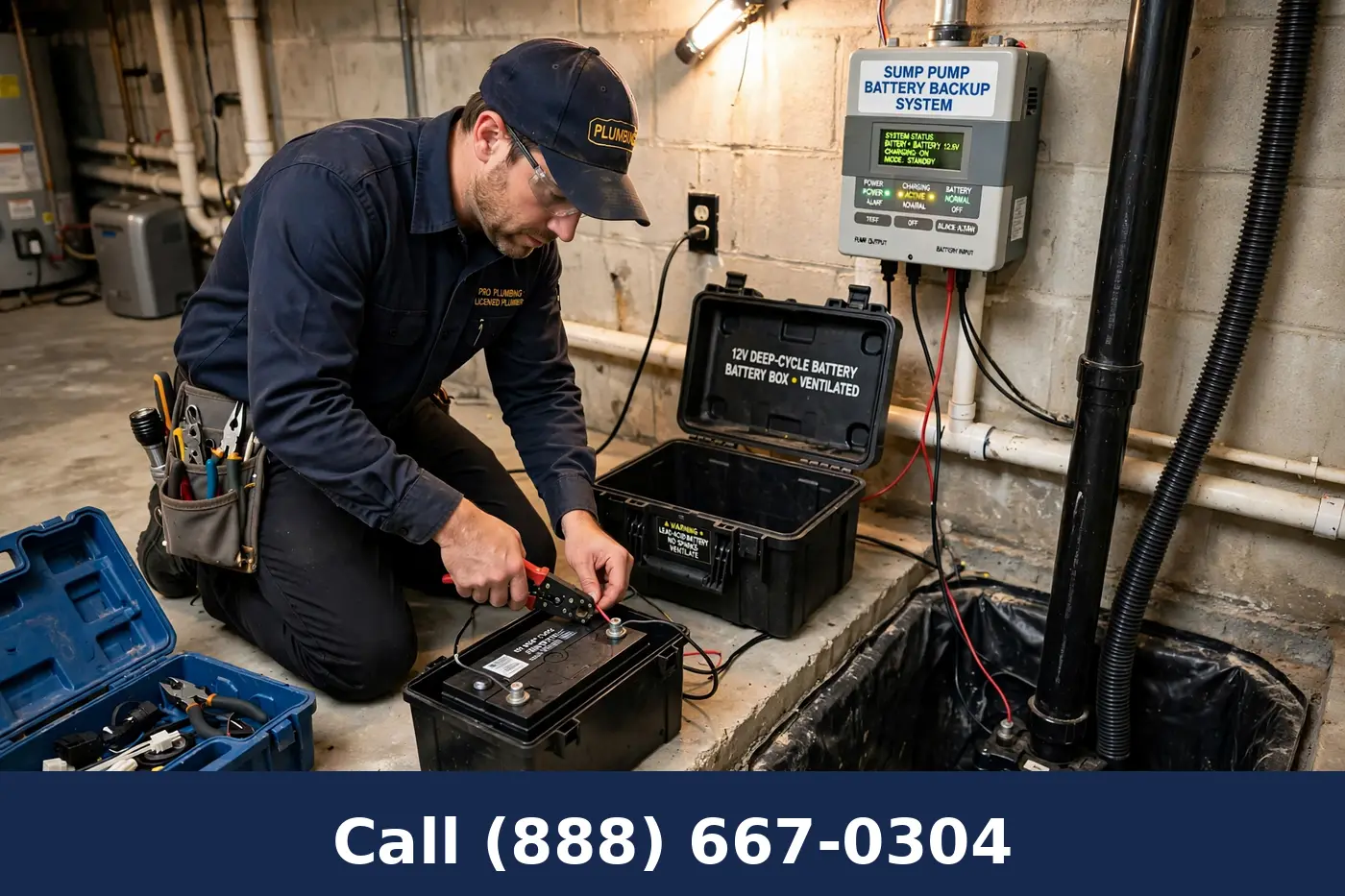
The backup pump mounts in the same pit as the primary, usually on a bracket or beside it. Its own discharge connection ties into the primary's discharge line above the check valve. Its float switch sits slightly higher than the primary's, so it stays idle during normal operation. It only engages when water rises past the primary's range or the primary has no power.
The controller is the brain. It keeps the battery at full charge from a plug-in charger, monitors AC power, and watches for primary pump activity. When it detects an outage or a primary failure, it switches the backup pump to battery power instantly. Indicator lights and alarms report the system's state: normal, on battery, pump running, or battery fault.
Runtime depends on the battery's capacity and how hard the pump works. A typical deep-cycle AGM battery delivers many hours of intermittent pumping. That matches how backup pumps actually run, cycling on and off as water arrives rather than running continuously. That cycling stretches the charge across the duration of most outages. Larger battery banks extend the window further for homes with heavy inflow.
AGM or lithium: which battery is right?
AGM, or absorbed glass mat, batteries are the traditional choice. They are sealed, spill-proof, and affordable, needing no routine upkeep, with a service life of three to five years. A quality AGM battery in the 75 to 100 amp-hour range suits most residential backup pumps. Replacement is straightforward and inexpensive when the time comes.
Lithium batteries cost more upfront but last eight to ten years, weigh far less, and recharge faster. Over a decade, the total cost lands close to replacing AGM batteries twice, with less maintenance attention in between. Homeowners who dislike thinking about the system tend to prefer lithium. Your installer can price both and explain the tradeoff for your situation.
Either way, the battery lives in a protective case near the pit, in a dry location with ventilation. Terminals stay clean and tight, and the controller's charging circuit keeps the battery topped up without overcharging. Battery replacement is the system's main recurring maintenance, and the controller's alerts tell you when capacity drops.
What happens during installation?
The technician assesses the pit for space: the backup pump, its float, and the battery case all need room alongside the primary pump. Most standard pits accommodate the addition, but cramped basins may need reconfiguration. The discharge tie-in is planned so both pumps share the exterior line without interfering with each other's check valves.
The backup pump is mounted and its discharge is connected. The battery case is placed, the battery is installed and wired to the controller, and the controller is plugged into a dedicated outlet. Float switches are adjusted so the primary handles normal duty and the backup waits at its higher setpoint. Alarms are configured and tested.
Then comes the outage simulation, the most important part of the visit. The technician unplugs the primary pump or cuts its power and pours water into the pit, watching the backup engage, pump the pit down, and report correctly on the controller. You see the whole sequence and learn what each alarm means. The system leaves tested, not just installed.
What maintenance does a backup system need?
Test the system twice a year by simulating an outage: unplug the primary pump, add water to the pit, and confirm the backup runs and the alarms sound. This takes ten minutes and verifies the entire chain from float to battery to pump. Do it before the rainy season without fail.
Check the battery's age and the controller's status lights during the same test. AGM batteries approaching five years deserve a load test or proactive replacement, since a battery that reads full voltage at rest can still collapse under load. Keep the battery case dry and the terminals clean and protected from corrosion. Your installer notes the battery's install date on the case so the age is never a mystery.
Can a backup system help when the primary pump works fine?
Yes. The backup's higher float setting means it assists during extreme inflow that overwhelms the primary pump alone. Two pumps moving water together handle surge conditions that would defeat either one solo. The controller logs these assist events, so you learn that your primary is undersized before it becomes a crisis.
The alarms add value even in normal times. A high-water alarm that sounds while the primary runs tells you the primary is struggling. A power-loss alarm tells you the outage started, even if you are asleep upstairs. For homeowners who travel, Wi-Fi-connected controllers send these alerts to a phone, turning the backup system into a remote monitoring station.
What affects the cost of a battery backup installation?
The pump and controller unit, the battery type and capacity, and the pit's existing configuration drive the scope. Adding backup to a roomy pit with a modern primary pump is straightforward. Tight pits, corroded discharge plumbing, or an aging primary pump that should be replaced at the same time add work. Lithium batteries raise the initial price while reducing long-term maintenance.
Consider the cost against the alternative. A single basement flooding event damages flooring, drywall, and belongings far beyond the price of a backup system. Insurance may cover some of it, but deductibles, disruption, and uncovered items remain yours. The backup system is inexpensive protection measured against that risk.
How does Plumber Modesto Pros install backup systems in Modesto?
Plumber Modesto Pros installs sump pump battery backup systems across Modesto and the surrounding Central Valley. Every installation includes proper float staging, alarm configuration, and a live outage simulation so you watch the system prove itself. Battery options are explained with honest numbers on life expectancy and replacement cost.
Call (888) 667-0304 to add battery backup to your sump pump system. A technician will evaluate your pit, recommend the right configuration, and leave you protected through the next outage.
Features
- Secondary 12-volt DC pump mounted alongside the primary
- Deep-cycle AGM battery sized to the pump and expected runtime
- Smart controller that monitors power and primary pump status
- Automatic switchover with no homeowner action required
- Audible and visual alarms for power loss and pump activation
- Independent float switch set above the primary's activation level
- Full outage simulation test before the technician leaves
Benefits
- Continuous pumping through power outages
- Backup activation if the primary pump fails mechanically
- Hours of protection on a single battery charge
- Alerts that tell you the system engaged while you were away
- No manual intervention needed during a storm
- Extended life for the primary pump by sharing heavy demand
- Documented test results proving the system works
Frequently asked questions
How long will the battery backup run during an outage?
It depends on inflow and battery size. A typical AGM battery provides many hours of intermittent cycling, which covers most storm-related outages. Homes with very heavy inflow or longer outage histories can add battery capacity for a wider margin.
Does the backup pump need its own discharge line?
No. The backup pump ties into the existing discharge line above the primary's check valve, with its own check valve to prevent backflow between the pumps. The installer verifies the shared line handles the combined flow during surge conditions.
What happens when the battery runs down?
The controller alarms well before the battery is exhausted, giving you warning while the pump still runs. Once power returns, the charger replenishes the battery automatically. If outages outlast the battery, that is the signal to consider larger capacity.
Can I add battery backup to my existing sump pump?
In most cases, yes. The technician checks pit space, discharge configuration, and the primary pump's condition. If the primary is aging, replacing it during the same visit is often the smart move, since the pit is already open and the labor overlaps.