
Sink Installation Near Me
Starting price: Call for pricing
A new sink has to mount securely, drain cleanly, and connect to supply lines and traps that will not leak. Plumber Modesto Pros installs kitchen, bathroom, and utility sinks with new drains, strainers, traps, and supply connections, tested under running water. Call (888) 667-0304 to schedule your sink installation.
How do you choose between top-mount and undermount sinks?
The mounting style changes both the look and the installation. Top-mount, or drop-in, sinks rest on the countertop with a visible rim; they are simpler to install and work with any countertop material, including laminate. Undermount sinks attach beneath the countertop so the counter surface flows straight into the bowl, which makes wiping crumbs into the sink easy and gives a clean, modern look. Undermount installation needs a solid-surface or stone countertop, because the sink hangs from clips and brackets anchored to the counter material.
Farmhouse or apron-front sinks are a third option, with the deep front panel exposed. They need a cabinet cut to fit and careful support underneath because they are heavy, especially in cast iron or fireclay. The choice affects the plumbing too. Deeper bowls leave less room under the sink for the trap, and the drain location relative to the wall pipe determines how the trap arm has to run. Plumber Modesto Pros checks the cabinet space and drain position before the sink is set, so there are no surprises underneath.
What connects a new sink to the drain system?
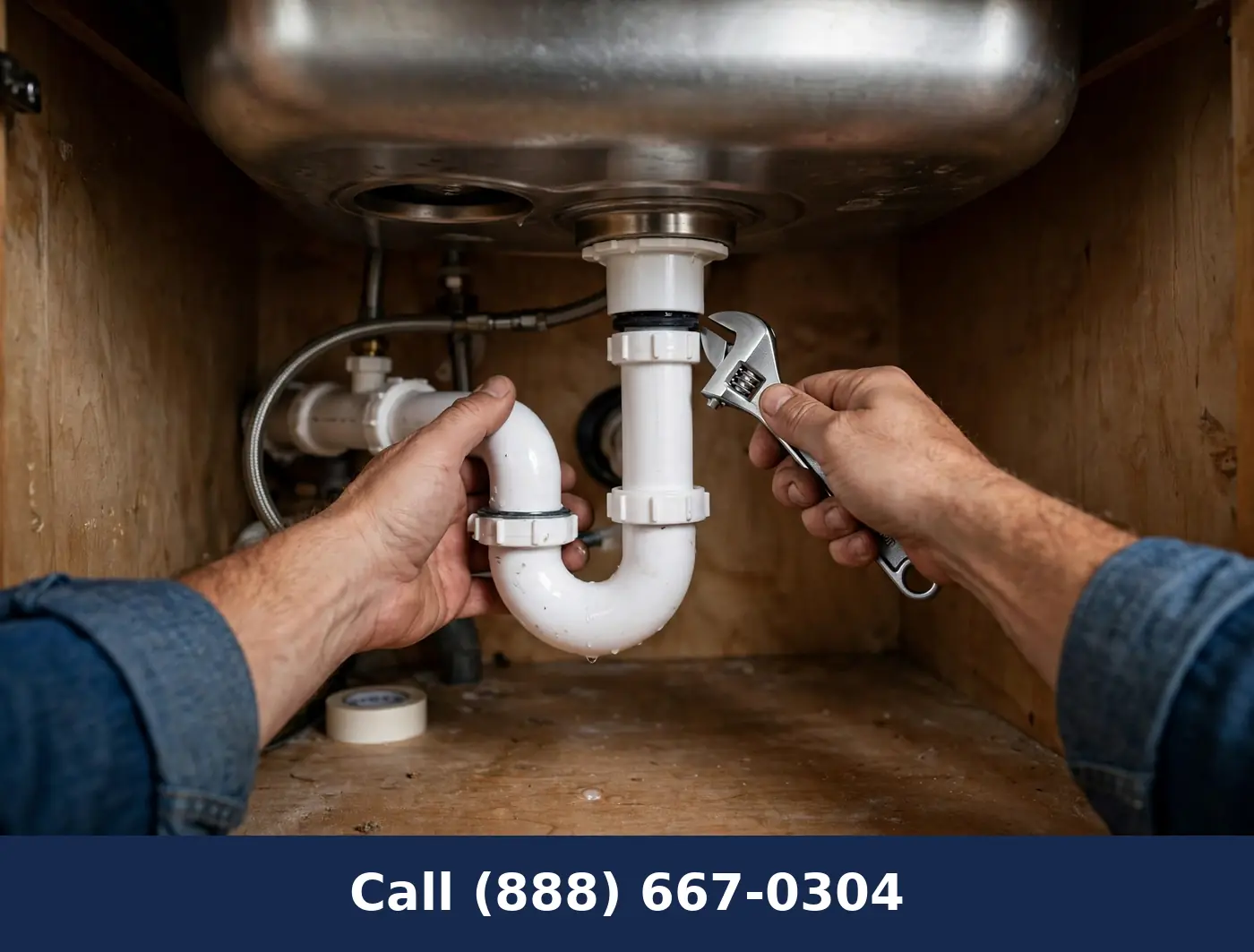
Under the sink, a chain of parts carries water from the bowl to the wall. The basket strainer or drain assembly seals to the sink opening with plumber's putty or silicone. Below it, the tailpiece drops down to the P-trap, the curved fitting that holds a plug of water to block sewer gas from entering the home.
The trap connects to the trap arm, which runs into the drain pipe in the wall. Each joint uses a slip nut and washer that has to be aligned straight and tightened firmly without cracking.
Alignment is the part that takes skill. The tailpiece has to meet the trap squarely, and the trap arm has to enter the wall at the right height and angle. If the new sink is deeper than the old one, the wall drain may sit too high relative to the trap, which causes slow drainage and gurgling.
In that case the trap arm or the wall connection needs adjustment so the trap weir sits below the sink outlet. Getting this geometry right is what separates a sink that drains silently from one that gurgles and backs up.
How do garbage disposals and dishwashers hook up?
When a disposal is part of the installation, it mounts to the sink's drain flange and its outlet connects into the drain assembly. It usually connects with a baffle tee that keeps disposal discharge from shooting up into the other basin. The dishwasher drain hose connects to the disposal's dishwasher inlet or to a separate tailpiece branch. And the hose has to rise in a high loop or connect through an air gap so dirty sink water cannot siphon back into the dishwasher. These details are small but they prevent real problems.
The electrical side needs coordination too. A new disposal needs a switched outlet under the sink, and if the old setup was hardwired, that has to be addressed properly. Plumber Modesto Pros handles the plumbing connections and coordinates with the existing electrical setup so the disposal and dishwasher drain correctly and safely.
Why does the tailpiece and trap alignment matter?
Drainage works on gravity, and gravity is unforgiving of bad angles. The trap arm needs a slight downward slope toward the wall, roughly a quarter inch per foot, so water flows out without leaving the trap dry. Too flat and water sits and slows; too steep and the water can rush past without maintaining the trap seal. Slip-joint connections also have to be straight: a nut tightened onto a crooked pipe will weep no matter how hard it is turned.
Material choice matters under the sink as well. Plastic tubular traps and tailpieces are standard in most homes and resist corrosion, while chrome-plated brass is used where appearance counts, like a pedestal sink with exposed plumbing. The right washers for the right joints, beveled or flat as each connection requires, complete the assembly. Every joint is checked under running water, because a slow drip under the sink can go unnoticed for months.
What does the installation visit involve?
The old sink is disconnected and removed first, with the water shut off and a bucket ready for the trap's standing water. The mounting area is cleaned and inspected: the countertop cutout is checked for damage, and the cabinet is checked for water staining that might indicate an old leak. The new sink is test-fit before any sealant goes on, because discovering a fit problem after the silicone is down wastes time and material.
Then the sink is set with its sealant, secured with clips or brackets. And the drain assembly is built up from the strainer down through the tailpiece, trap, and wall connection. Supply lines are connected, the water is turned on, and every joint is flow-tested with the basin filled and drained. The disposal and dishwasher connections are tested with a full cycle. Call (888) 667-0304 and get a sink installed that drains and seals like it should.What is different about bathroom sink installations?
Bathroom sinks bring their own set of considerations. Pedestal sinks hide their plumbing in the pedestal column, which looks clean but leaves little room for the trap and supplies, so the rough-in positions have to be precise. Wall-hung sinks need a carrier or solid blocking inside the wall to hold the weight, and the drain and supplies must land exactly where the sink expects them. Vessel bowls sit above the counter and need taller faucets plus drains designed for sinks without overflows.
The drain assembly differs from kitchen sinks as well. Bathroom sinks typically use a pop-up drain operated by a lift rod or a push-to-close stopper. And the pop-up mechanism has to be adjusted so it seals fully and opens completely. Sinks with overflows need a drain with an overflow slot; vessel bowls without overflows need a drain without one, or water will seep where it should not.
Vanity cabinets add the final variable. The cabinet interior has to accommodate the trap and supplies without forcing sharp bends, and the back panel sometimes needs a cutout for the drain. Plumbing is roughed in to standard heights, but older bathrooms often deviate, so the existing positions are always verified before the new sink is ordered.
Features
- Kitchen sink installation: top-mount, undermount, and farmhouse styles
- Bathroom vanity and pedestal sink installation
- Utility and laundry sink installation
- New basket strainers, pop-up drains, and tailpieces
- P-trap and drain arm connection and alignment
- New braided supply lines and shutoff valve check
- Garbage disposal and dishwasher drain hookup coordination
Benefits
- A sink mounted solid with even, sealed edges
- Drains assembled to hold their seal for years
- Proper trap alignment for smooth, quiet drainage
- Fresh supply lines and working shutoffs
- Disposal and dishwasher connected correctly
- Caulked and finished edges that resist moisture
- Everything flow-tested before the job is done
Frequently asked questions
Can you install an undermount sink on my existing countertop?
Undermount sinks need a solid-surface or stone countertop that can anchor the mounting hardware. On laminate counters, a top-mount sink is the practical choice. The countertop material decides the mounting style.
Will my deep new sink work with the existing drain?
Often yes, but deeper bowls leave less vertical room for the trap, and the wall drain height has to work with the new geometry. The drain position is checked during the visit, and the trap arm is adjusted if needed.
Do you cut the countertop for the new sink?
Plumbers do not cut stone or solid-surface countertops on site; that work belongs to the countertop fabricator. The sink installation assumes the cutout is already correct, which is confirmed during test-fitting.
Should the shutoff valves be replaced with a new sink?
If the existing valves turn smoothly and shut off completely, they can stay. Valves that are stuck, corroded, or weeping are replaced while everything is disconnected, since access will never be easier.
How do I keep the new sink drain from leaking?
Most under-sink leaks come from loose slip nuts or dried-out washers. Checking under the sink occasionally for moisture and not overtightening plastic nuts during any DIY work keeps the assembly sound. Any persistent drip deserves a service call.