
Shower Repair Near Me
Starting price: Call for pricing
A shower that swings hot and cold, drips all day, or barely trickles has a valve or cartridge problem that only gets worse. Plumber Modesto Pros repairs shower valves, cartridges, diverters, and trim to restore steady temperature and proper flow. Call (888) 667-0304 to fix your shower.
Why does my shower swing hot and cold?
Temperature swings almost always trace back to the shower valve's mixing cartridge. Most modern showers use a pressure-balance cartridge: a spool inside the valve senses the pressure of the hot and cold supplies and adjusts the mix to hold the temperature steady. When someone flushes a toilet or the washing machine fills, cold pressure drops, and a healthy cartridge compensates instantly. When the cartridge wears out or clogs with mineral deposits, it cannot react, and you feel the full swing.
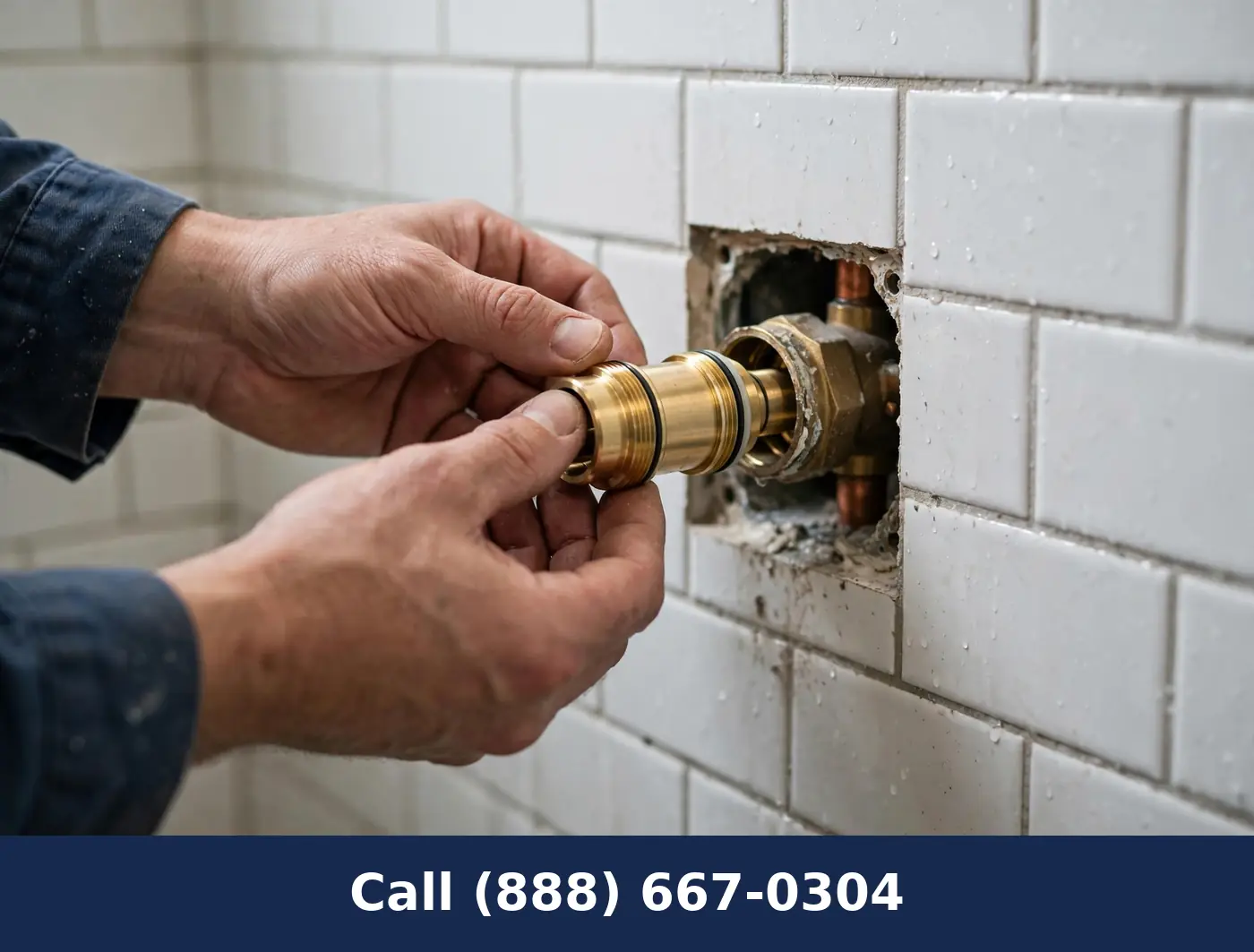
Thermostatic valves work differently, using a wax or bimetallic element that expands and contracts with temperature to hold a set point. They control temperature more precisely but have their own wear items: the thermostatic element can seize if it sits at one setting for years, and inlet screens can clog. Either way, the cartridge is a serviceable part designed to be replaced from the finished side of the wall. Plumber Modesto Pros identifies the valve brand and model, then installs the matching cartridge so the temperature holds steady again.
What causes low shower pressure?
Low flow at the showerhead has several possible sources, and they are checked in order from simplest to deepest. The showerhead itself is first: mineral scale clogs the nozzles, and the flow restrictor or inlet screen can collect debris. Soaking the head in vinegar or replacing it resolves a surprising number of pressure complaints. Next is the cartridge, which has small inlet ports and screens that catch sediment from the supply lines.
If the head and cartridge are clear, attention turns to the supplies. Old galvanized pipes corrode from the inside and narrow over decades, a partially closed shutoff or a failing pressure regulator affects the whole house. And debris from water heater work can lodge in the valve body. A plumber checks whether the problem is isolated to the shower or affects other fixtures, because that distinction points to the right fix. Whole-house pressure problems and single-fixture problems are solved very differently.
How do you fix a shower that drips constantly?
A shower that drips between uses is leaking past the cartridge seals or the valve seats, the same basic failure as a dripping faucet but inside the wall. The repair starts at the trim: handle off, escutcheon plate off, and the cartridge retaining clip or nut removed. The old cartridge slides out, the valve body is inspected and cleaned of scale, and the new cartridge goes in with fresh lubricant on its seals.
This is trim-side work, which means no tile comes off and no wall is opened. The key detail is matching the cartridge exactly, because valve bodies are brand-specific and a close-enough cartridge will leak or bind. When the valve body itself is cracked or the seats are too damaged, the valve has to be replaced. That does involve opening the wall from the shower side or, preferably, from the access panel or closet behind it.
What is a temperature limit stop?
Nearly every modern shower valve has a temperature limit stop: an adjustable ring or tab inside the valve that caps how far the handle can turn toward hot. It is a scald-protection feature, and it is commonly set during installation based on the household's water heater setting. In homes with small children or elderly residents, setting the limit conservatively is a sensible precaution.
Adjusting it is a trim-side job that takes minutes once the handle is off. The stop is rotated to allow more or less hot water into the mix. Then the handle goes back on and the temperature is checked with a thermometer at the showerhead. If your shower never gets hot enough or runs dangerously hot, the limit stop is the first thing to check. Check it before assuming the water heater or the valve is at fault.
When is the cartridge enough versus replacing the valve?
The cartridge solves the great majority of shower problems: temperature swings, drips, stiff handles, and diverter issues on single-handle models. Valve replacement enters the picture when the brass body is cracked, the internal seats are destroyed, or the valve is an obsolete model with no available cartridges. It also makes sense when the homeowner wants to change valve type during a remodel. A valve that has been leaking inside the wall also deserves replacement, since hidden moisture damages framing.
Replacing a valve means opening the wall, cutting out the old valve, and soldering or pressing in the new one with the correct depth for the finished wall. Access from behind, through a closet or bedroom wall, keeps the tile intact. This is bigger work than a cartridge swap, and it is worth doing when the valve body itself has failed. Call (888) 667-0304 for a diagnosis that tells you which repair your shower actually needs.How do you stop a shower arm or head connection from leaking?
Leaks where the shower arm meets the wall or where the head meets the arm are common and usually simple. The shower arm threads into a drop-ear elbow inside the wall, and that threaded joint relies on thread seal tape or pipe dope to stay watertight. When the tape deteriorates or the arm works loose, water seeps down the wall behind the trim plate. Removing the arm, cleaning the threads, and resealing with fresh tape wrapped in the correct direction fixes it.
A cracked or corroded shower arm needs replacement rather than resealing. The new arm is threaded in by hand first to avoid cross-threading, then snugged with a wrench using a cloth to protect the finish. The trim plate, the decorative cover where the arm exits the wall, is sealed to the finished wall with silicone so water running down the tile cannot slip behind it.
The head-to-arm connection gets the same treatment: fresh tape, a clean washer in the head's swivel nut, and firm but not excessive tightening. After reassembly, the shower runs while the wall joint is watched for any sign of moisture. These joints are small, but a leak inside the wall feeds mold and rots framing silently, so they are always verified under full pressure.
Features
- Pressure-balance and thermostatic cartridge replacement
- Shower valve repair and complete valve replacement
- Temperature limit stop adjustment for scald protection
- Diverter repair for tub-spout and shower switching
- Dripping showerhead and arm leak repair
- Low-flow diagnosis: cartridge screens, buildup, and supply issues
- Trim, handle, and escutcheon replacement and resealing
Benefits
- Steady water temperature without sudden swings
- Drips stopped so water is not wasted between showers
- Full, even flow restored at the showerhead
- Safer hot water limits for households with kids
- Diverters that switch cleanly between tub and shower
- Repairs done through the trim, no tile demolition
- Clear diagnosis before any wall is opened
Frequently asked questions
Why does my shower get cold when someone flushes?
Flushing drops the cold-water pressure, and a worn pressure-balance cartridge cannot compensate in time. Replacing the cartridge restores the valve's ability to hold the mix steady when other fixtures run.
Can hard water ruin a shower cartridge?
Yes. Mineral scale builds up on the cartridge's moving parts and inlet screens until it sticks or cannot seal. In hard-water areas, cartridges wear out sooner, and cleaning the inlet screens during service extends their life.
Is a dripping showerhead wasting much water?
A steady drip adds up to a meaningful amount of water over weeks and months. It also leaves mineral stains on the tub or shower floor. Replacing the worn cartridge seals stops the drip at its source.
What does the diverter do, and why does it fail?
The diverter sends water to the tub spout or up to the showerhead. Its seals and gate wear with use until water leaks from both outlets at once or the shower only trickles. Most diverters are repaired with a new cartridge or stem.
Will you have to tear out tile to fix my shower valve?
Cartridge, trim, and limit-stop work is all done from the finished side with no tile removal. Full valve replacement needs wall access, which is usually taken from behind the shower through a closet or adjoining room.