
Shower Installation Near Me
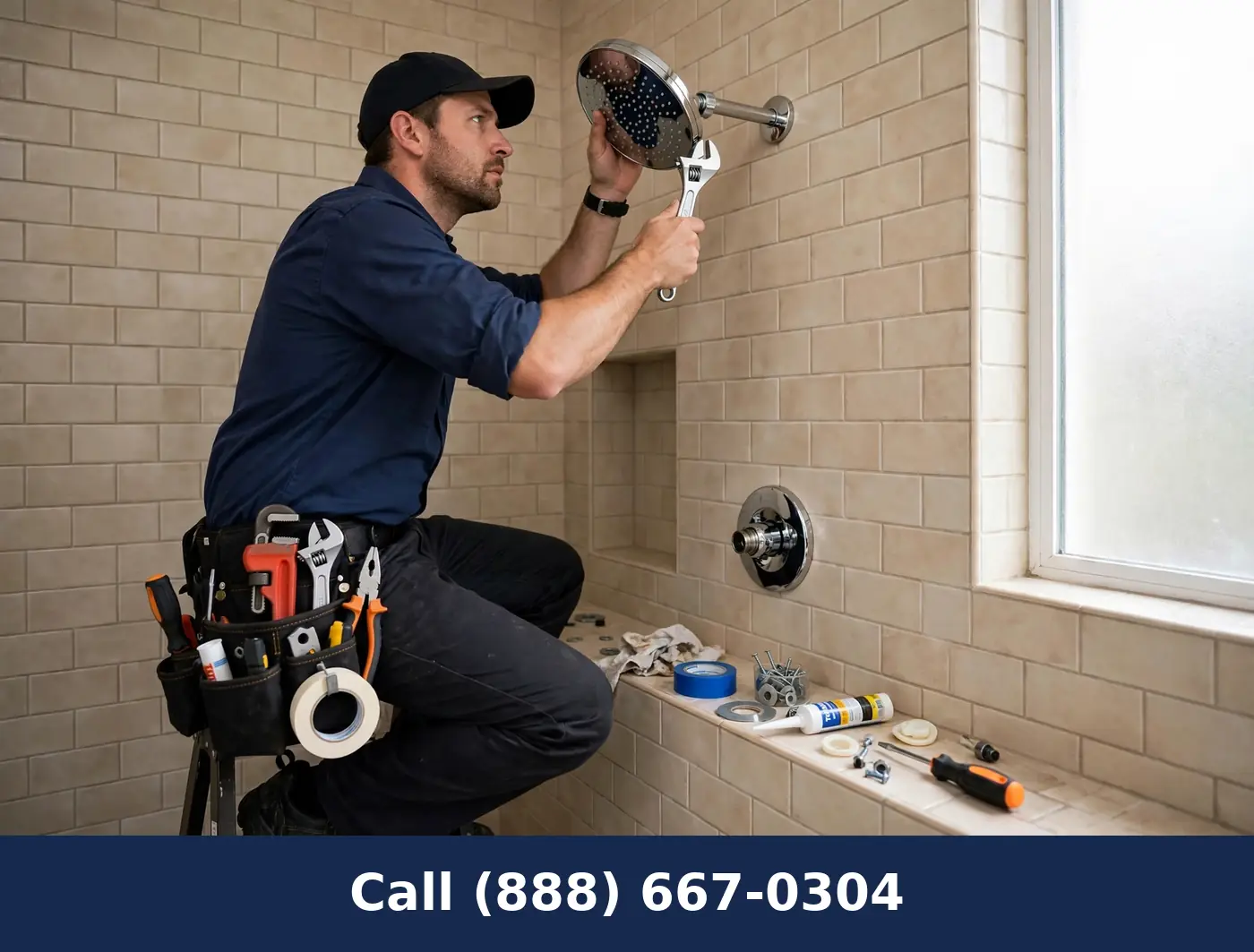
Starting price: Call for pricing
A new shower starts with the right valve set at the right depth, connected to supplies that deliver steady pressure and temperature. Plumber Modesto Pros installs shower valves, trim, showerheads, and complete shower fixtures for remodels and upgrades. Call (888) 667-0304 to plan your shower installation.
Why is the rough-in valve the most important part?
The rough-in valve is the brass body buried in the wall that every visible shower part connects to, and it is the one part you cannot easily change later. Once tile goes up, the valve body is permanent; only the cartridge and trim can be serviced. Choosing a quality valve from a manufacturer with long-term parts availability protects you for decades, because cartridges and trim styles for major brands remain available far longer than off-brand equivalents.
Valve type matters too. Pressure-balance valves guard against temperature swings when other fixtures run, and they satisfy the anti-scald requirements in modern plumbing codes. Thermostatic valves offer more precise temperature control with separate volume and temperature handles. Plumber Modesto Pros installs both types and can explain the practical differences so the choice fits how your household actually showers.
How do we set the valve depth correctly?
Every shower valve has a specified depth range relative to the finished wall surface, and the trim is designed to fit only within that range. Set the valve too deep and the handle will not engage the cartridge properly; too shallow and the escutcheon plate will not sit flat against the tile. The finished wall thickness has to be known before the valve is secured: tile plus backer board adds up differently than an acrylic surround panel.
This is where remodel coordination matters. If the tile choice changes mid-project, the valve depth has to be rechecked. Plaster guards that ship with the valve mark the target finished-wall plane, and the valve is strapped securely to blocking so it cannot shift when the wall is finished. A valve that is solid and at the right depth makes the trim installation straightforward and gives a clean, professional result.
What choices matter during a shower upgrade?
Beyond the valve, the visible choices shape how the shower feels every day. Showerhead styles range from basic fixed heads to rain heads, hand showers on slide bars, and combination setups. Water pressure in the home sets realistic expectations: a rain head on a low-pressure system disappoints, while a well-chosen standard head performs beautifully. Body sprays and multiple heads need larger supply lines and sometimes a bigger water heater to keep up.
Trim finish is the other lasting decision. Chrome, brushed nickel, matte black, and bronze each need to match or complement the other bathroom fixtures. And the finish should be from the same manufacturer as the valve for a proper fit. It is also worth thinking about who uses the shower. A hand shower on a slide bar helps with kids, pets, and cleaning the shower itself, and it is a genuinely useful addition in most households.
How do we protect the new tile and walls?
Plumbing and tile work happen in sequence, and the handoff between them has to be clean. The valve and supply lines are installed, pressure-tested, and inspected before any backer board or tile goes up. The shower arm for the head is capped and the valve is left with its plaster guard in place so tile setters have a clear target. After tiling, the trim goes on and every connection is checked again.
Waterproofing behind the tile is the tile installer's work, but the plumber's penetrations have to cooperate with it. Escutcheon plates are sealed to the finished wall with silicone so water running down the wall cannot get behind them. The shower arm connection is sealed at the wall for the same reason. These small sealing details are what keep a beautiful new shower from developing hidden moisture problems.
What does the installation visit involve?
For a remodel, the old valve and trim come out first and the supply lines are assessed. The new valve is mounted to solid blocking at the correct depth, supplies are connected with the appropriate fittings, and the whole assembly is pressure-tested before the wall is closed. Service stops on the valve, when the model includes them, let future cartridge service happen without shutting off water to the whole house.
For a fixture upgrade keeping the existing valve, the work is trim-side: new handle, escutcheon, shower arm, and head, all sealed and aligned. Either way, the finished shower is run through hot and cold, the temperature limit stop is set, and the flow is checked at every outlet. Call (888) 667-0304 and get a shower installed that performs as good as it looks.What about water pressure and flow for multiple outlets? Adding a second showerhead, body sprays, or a rain head plus hand shower changes what the plumbing has to deliver.
Standard half-inch supply lines serve a single showerhead comfortably, but multiple outlets running at once can exceed what half-inch pipe supplies without a noticeable pressure drop. In those cases, three-quarter-inch supplies run to the valve, or a dedicated loop feeds the extra outlets. Diverters manage which outlets run. A three-way diverter can send water to the main head, the hand shower, or both, while separate volume controls let each outlet be adjusted independently.
The valve and diverter combination has to be planned before the wall is roughed in, because each needs its own position and depth in the framing. The water heater deserves a thought too. Multiple outlets can empty a standard tank faster than a single head, which matters for back-to-back showers. Tankless units are rated by flow, so the combined flow of all planned outlets is checked against the unit's capacity.
Getting the supply sizing, the diverter layout, and the hot water capacity aligned up front is what makes a multi-outlet shower feel luxurious instead of disappointing. How do we test everything before the walls close? Pressure testing is the last step before backer board and tile go up, and it is never skipped. The new valve and all supply connections are pressurized and held while every joint is inspected for weeping.
Shower arms are capped, diverters are cycled through each position, and the valve is run through hot and cold to confirm the cartridge seats properly. Any joint that shows moisture is reworked on the spot, while access is still open. Only a system that holds pressure dry earns its walls.
Features
- Pressure-balance and thermostatic shower valve installation
- Rough-in valve setting with correct depth for finished walls
- Tub-to-shower and shower-to-shower conversions
- Showerhead, hand shower, and slide bar installation
- Valve trim, handles, and escutcheon fitting and sealing
- Service-stop and supply connection with leak testing
- Multi-head and body-spray rough-in coordination
Benefits
- A valve positioned for a perfect trim fit
- Steady temperature from a modern anti-scald valve
- Showerheads and accessories mounted rock solid
- Clean, sealed trim with no gaps or wobble
- Supplies tested under pressure before walls close
- Upgrade options matched to your water pressure
- Work coordinated with your tile or remodel schedule
Frequently asked questions
Can you convert my tub-shower combo to a walk-in shower?
Yes, and it is one of the most requested bathroom upgrades. The tub comes out, the drain and valve locations are adjusted for the new layout, and the new shower valve is roughed in for the finished walls. Drain relocation depends on the existing plumbing layout.
How do I know if my water pressure supports a rain showerhead?
Rain heads need decent pressure and flow to feel right. Static pressure is measured at a hose bibb, and the home's supply piping is considered. If pressure is marginal, a standard head with good engineering gives a better shower than a rain head that only dribbles.
What is the difference between pressure-balance and thermostatic valves?
Pressure-balance valves react to pressure changes to prevent scalding and are the standard choice. Thermostatic valves sense actual water temperature for more precise control. Both are anti-scald designs; thermostatic models cost more and offer finer adjustment.
Can I add a hand shower to my existing shower?
In most cases yes. A hand shower can replace the existing fixed head using the same shower arm, or mount on a slide bar with a diverter. No wall work is needed when the current valve and arm are in good shape.
How long does a shower valve installation take?
Setting a new rough-in valve with supply connections is typically completed within the visit, including pressure testing. Full remodels span multiple visits coordinated with the tile work, with trim installation after the walls are finished.