
Sewer Line Cleaning & Maintenance Near Me
Starting price: Call for pricing
Your main sewer lateral carries everything from your house to the city line, and roots, grease, and scale build up inside it every year. Routine sewer line cleaning keeps the lateral open so wastewater moves out without backing up into your home. Plumber Modesto Pros cleans and maintains sewer lines on a schedule matched to your home's risk — nearby trees, older pipe, or a history of backups.
What is the main sewer lateral, and why does it need maintenance?
The main sewer lateral is the underground pipe that carries all of your home's wastewater — from every toilet, sink, shower, and appliance — out to the city sewer main. It is the single exit point for your entire plumbing system, which means a blockage here affects everything at once. Unlike a branch drain that serves one fixture, the lateral accumulates buildup from the whole house. Grease from the kitchen, scale from hard water, and roots that find their way in through joints all collect there. Regular cleaning keeps this critical line open so wastewater leaves your property without incident.
What builds up inside a sewer lateral over time?
Three things, mostly, and they reinforce each other. Tree roots enter through tiny joint separations and grow into fibrous masses that snag everything passing by. Grease from kitchen drains coats the pipe walls and hardens, narrowing the opening the way plaque narrows an artery. Mineral scale from hard water roughens the interior surface, giving debris more to cling to. Together they shrink the line's effective diameter year by year. A lateral that flowed freely a decade ago can be half-closed today without any single dramatic event. Maintenance cleaning resets that clock.
What are the warning signs of a restricted sewer lateral?
- Several drains slowing down at the same time
- Gurgling sounds from toilets or drains when water runs elsewhere
- Water backing up in a shower, tub, or floor drain
- Sewage odors inside the home or near the cleanout
- The toilet bubbling when the washing machine drains
- Standing water visible in the main cleanout
- A history of backups that always seem to return
A single slow sink is a branch-line issue. Symptoms that show up across the house, or at the lowest drain, point to the lateral. Standing water in the cleanout is the clearest sign of all.
How does a sewer cleaning and maintenance visit work?
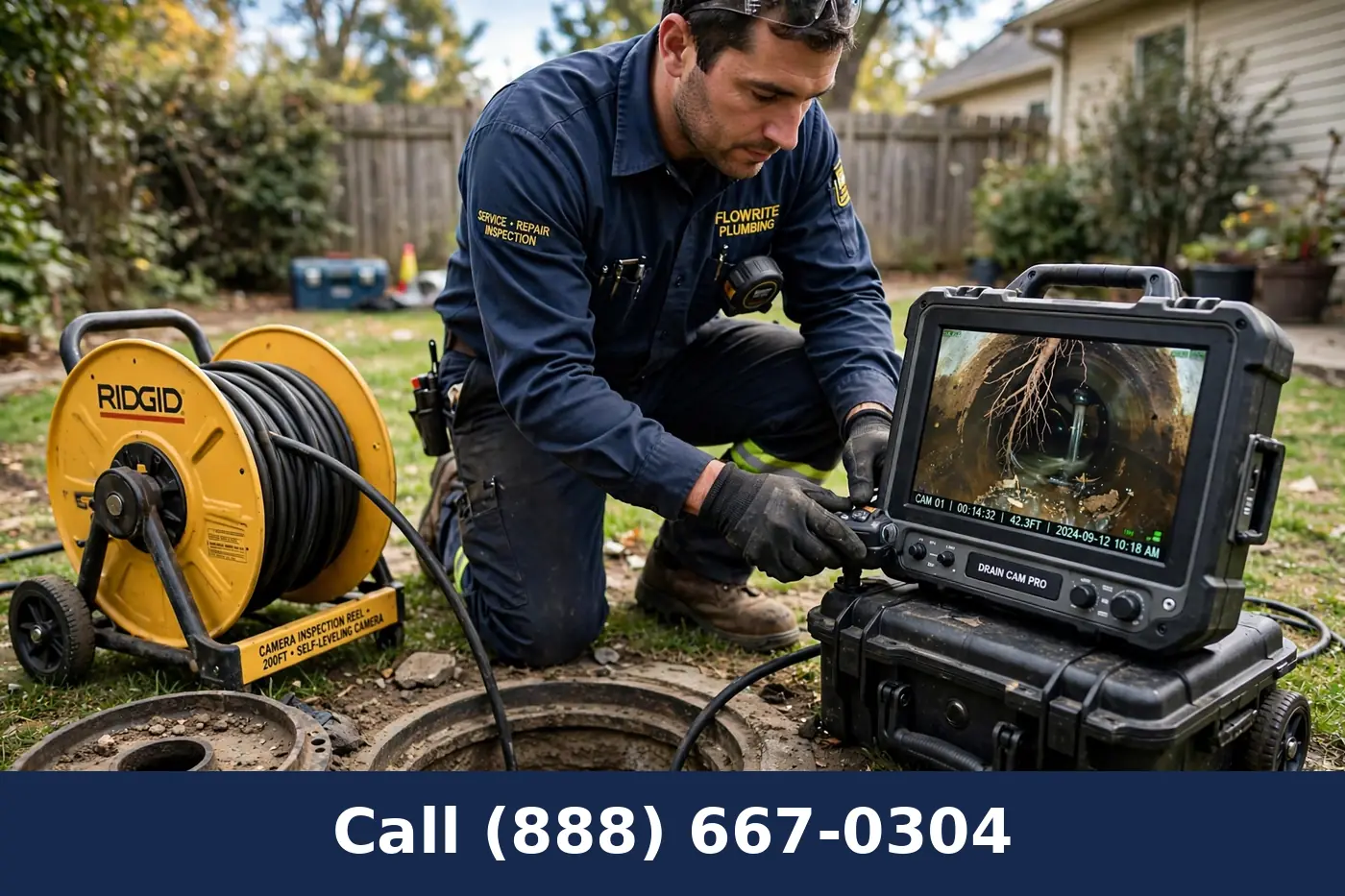
We start at the main cleanout, the access point that leads directly into the lateral. If your home lacks a usable cleanout, we discuss installing one, because proper access makes every future service simpler. A camera inspection comes first on any line we have not seen before. It shows the pipe material, the type and location of buildup, and whether the pipe is sound. Then the line is cleaned with root-cutting cable heads or hydro jetting, depending on what the camera revealed. A final camera pass documents the cleaned line. You get footage of the before and after, plus our recommendation for how often the line should be serviced.
Why does maintenance beat waiting for a backup?
A scheduled cleaning is a controlled, predictable visit. A backup is the opposite: wastewater coming up through the lowest drain in the house, usually at the worst possible time, with cleanup that goes far beyond plumbing. The cost difference is real, but the disruption difference is bigger. Maintenance also gives you information. Each visit's camera footage builds a history of your line's condition, so you see aging or root pressure developing over time instead of discovering it during an emergency. For lines with known risk factors, a maintenance schedule is simply the rational choice.
Which homes need sewer maintenance most?
Older homes with clay tile or cast-iron laterals top the list, since both materials invite root intrusion and internal corrosion. Any home with mature trees near the lateral's path is at risk, because roots actively seek the moisture at pipe joints. Homes with a history of backups have already proven their line's vulnerability. Large households put more volume through the line, which accelerates grease and scale accumulation. If your home checks more than one of these boxes, a camera inspection is the right first step — it turns a vague worry into a concrete maintenance plan.
What affects the cost of sewer line cleaning and maintenance?
Line length and the severity of buildup are the main factors. A short lateral with light root intrusion cleans quickly; a long line with heavy grease and root masses takes multiple passes. The cleaning method matters too — root cutting and hydro jetting are different operations with different time requirements. Access is a factor: a home with a proper two-way cleanout is straightforward to service. Call (888) 667-0304 and tell us your line's history; we will give you a clear, honest quote.
What is a sewer cleanout, and why does it matter?
A cleanout is a capped pipe fitting that gives direct access to the sewer lateral, usually found near the house foundation or at the property line. It is the doorway every cleaning and camera inspection goes through. Homes without a usable cleanout force the plumber to work through a pulled toilet or a roof vent, which is slower and messier. Installing a proper two-way cleanout is one of the smartest upgrades an older home can get: it makes every future maintenance visit faster, cleaner, and less expensive. If your home lacks one, ask us about it during your visit.
How do you know cleaning worked?
You should not have to take our word for it. The post-cleaning camera pass shows the pipe walls after the work, and we walk you through the footage before we leave. Drains throughout the house should run without hesitation, and the gurgling or slow drainage that brought us out should be gone. We also note the line's overall condition in your service record — if sections are aging, you will hear about it now rather than during a backup. Proof, not promises, is how a maintenance visit should end.
How does Plumber Modesto Pros maintain sewer laterals in Modesto?
Plumber Modesto Pros maintains sewer laterals for homes across Modesto and the surrounding Central Valley. Many local homes still run on original clay or cast-iron laterals beneath mature landscaping, and we know exactly how those lines behave. Our maintenance visits combine camera documentation with thorough cleaning, and we keep service records so each visit builds on the last. A maintained lateral is one you never have to think about — and that is the point.
Features
- Main sewer lateral cleaning from house to city connection
- Root cutting and removal at pipe joints
- Grease and scale clearing with cabling or jetting
- Camera inspection documenting the line's condition
- Maintenance scheduling based on your line's risk factors
- Cleanout installation quotes where access is missing
- Service records tracking your line's history over time
Benefits
- Prevent sewage backups into tubs and floor drains
- Stay ahead of root intrusion before it blocks the line
- Keep an aging lateral working instead of failing
- Know your line's condition from real camera footage
- Plan maintenance on a schedule instead of reacting to emergencies
- Protect your home from the mess of a main-line backup
- Extend the service life of your existing sewer lateral
Frequently asked questions
How often should a sewer line be cleaned?
It depends on the line's risk factors. A newer PVC lateral with no nearby trees may go years between cleanings, while an older clay line under mature trees benefits from annual or biennial service. A camera inspection sets the right interval for your specific line.
What are the signs my sewer line needs cleaning?
Multiple drains slowing at once, gurgling when fixtures run, sewage odors, or water backing up in the lowest drain in the house. If the main cleanout shows standing water, the lateral is already restricted.
Can roots be removed without digging up the line?
They can. Root-cutting heads on cabling machines, or hydro jetting, clear root intrusion from inside the pipe through existing access points. Digging is only needed when the pipe itself is broken.
What is the difference between cleaning and repairing a sewer line?
Cleaning removes buildup and roots from inside a sound pipe. Repair fixes a pipe that is cracked, collapsed, or separated. A camera inspection tells us which one your line needs.