
Sewage Ejector & Grinder Pump Installation Near Me
Starting price: Call for pricing
Sewage ejector and grinder pump installation makes below-grade plumbing possible. When a bathroom or laundry sits below the main sewer line, gravity cannot carry waste away, so a pump lifts it up to the drain. Plumber Modesto Pros installs ejector and grinder pump systems sized to your fixtures and layout.
Gravity is the plumber's best friend until your bathroom sits below it. A basement bathroom, a lower-level laundry room, or any fixture installed beneath the main sewer line cannot drain on its own, because wastewater will not flow uphill. That is where sewage ejector and grinder pumps come in. Plumber Modesto Pros installs these pump systems so below-grade plumbing works as reliably as everything upstairs.
This is one of those jobs where the wrong choice haunts you for years. An undersized pump, a missing check valve, or an unsealed basin turns a finished basement into a liability. Done right, you will never think about the pump at all.
What are sewage ejector and grinder pumps?
A sewage ejector pump is a submersible centrifugal pump that sits in a sealed basin below your fixtures. Wastewater flows into the basin by gravity, and when the level rises, a float switch starts the pump. The spinning impeller pushes the waste, solids and all, up through a discharge pipe to the gravity sewer line above. Ejector pumps are high-volume, low-pressure machines that pass solids up to about two inches in diameter without grinding them.
A grinder pump works differently. It is a high-pressure, low-volume pump with a hardened cutter mechanism that shreds everything entering the basin into a fine slurry before pumping it out. That makes grinder pumps the answer when the waste stream includes tougher material or the discharge run is long. They also suit a high vertical lift or waste that must enter a pressurized sewer main. They use smaller discharge piping because the slurry flows easily.
Both types live in a basin, typically eighteen to twenty-four inches in diameter, sealed with a gas-tight cover that keeps sewer gas out of your living space. Both need a check valve on the discharge line so pumped waste cannot fall back into the basin when the pump stops. And both run on a standard household circuit in most residential installations.
When do you need an ejector or grinder pump?
Anytime a fixture sits below the level where your sewer line exits the house. The classic case is a basement bathroom with a toilet, shower, and sink. Laundry rooms, wet bars, and utility sinks in basements need one too. Without a pump, these fixtures simply cannot drain.
Choose an ejector pump for a typical basement bathroom on a municipal sewer where the waste is normal household sewage and the lift is moderate. Choose a grinder pump when the run to the sewer is long or the lift is high. It is also the right call when the property is far from the main or the users cannot be trusted to flush only flushable things. Rental units and homes with teenagers are honest candidates for a grinder.
If your home uses a septic tank and the fixtures are below the tank inlet, an ejector pump moves the waste up to the tank. In that setup, a grinder is worth considering because everything the household flushes passes through the pump on its way to the tank.
Laundry rooms deserve a mention too. A basement washer and utility sink produce a steady flow of gray water that an ejector pump handles easily. Adding them to an existing basin is often simpler than homeowners expect.
What happens during an ejector or grinder pump installation?
Call (888) 667-0304 and describe the project: which fixtures, how far below the sewer line, and whether you are on city sewer or septic. We visit to measure the vertical lift, plan the basin location, and confirm the discharge route.
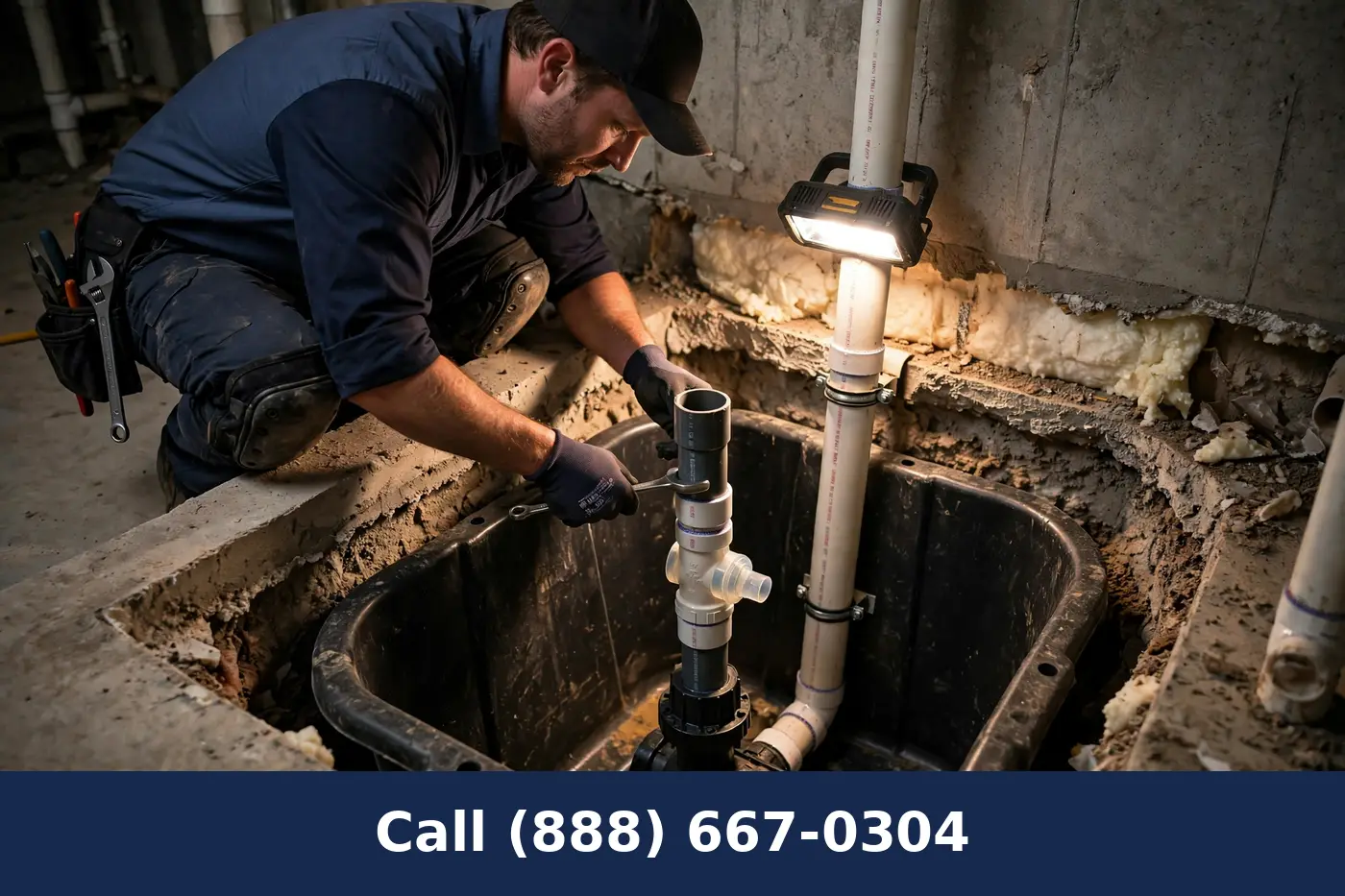
Installation starts with the basin. We set it in a pit below the fixtures, connect the incoming drain lines, and seal it with a gas-tight cover. The pump goes in with its float switch adjusted to the right levels. The discharge pipe rises to tie into the gravity drain above, with a check valve and a shutoff valve in accessible positions.
Venting is part of every proper installation. The basin needs a vent connection so air can move as the level rises and falls, which keeps drainage quiet and prevents trap siphonage. We also install a high-water alarm, a simple float that sounds off if the level ever rises too far, giving you warning long before a backup.
Before we finish, we fill the basin and run full test cycles. We check that the pump starts and stops at the right levels, the check valve holds, and every fixture drains properly. We walk you through the alarm, the shutoff, and the short list of things that should never be flushed.
What factors affect the cost of the installation?
Pump type is the first variable. Grinder pumps generally cost more than ejector pumps because of the cutter mechanism and higher-pressure construction. The right choice depends on your lift, distance, and waste stream, not on saving money upfront.
Site conditions shape the labor significantly. Breaking concrete for a new basin pit in an existing basement is real work, while a new-construction installation goes in before the slab is poured. The length and complexity of the discharge run, the venting route, and the electrical circuit all factor in.
Whether this is a straightforward replacement of a failed pump or a brand-new basement bathroom rough-in changes the scope too. Call (888) 667-0304 with your plans, and we will scope the project honestly and explain every part of it.
How does Plumber Modesto Pros handle below-grade plumbing for local homes?
Plumber Modesto Pros installs ejector and grinder pump systems for homeowners across the area who are finishing basements, adding bathrooms, or replacing a pump that has given up. We see a lot of older installations with unsealed basins, missing check valves, and undersized pumps, and we bring those up to a standard you can trust.
We also work with buyers who discover a below-grade bathroom during a home inspection and want to know whether the pump setup is sound. A professional evaluation answers that question before closing, not after the first backup.
Below-grade plumbing should be invisible in daily life. Call (888) 667-0304 and let Plumber Modesto Pros install the pump system that makes it so.
Features
- Sewage ejector pumps for high-volume below-grade drainage
- Grinder pumps with macerating cutters for tough waste
- Sealed basins with gas-tight covers and float switches
- Check valves preventing backflow into the basin
- Proper venting for quiet, correct drainage
- High-water alarms for early warning of trouble
- Sizing matched to your fixtures and vertical lift
Benefits
- Add a bathroom, laundry, or bar anywhere below the sewer line
- Stop worrying about backups from a below-grade bathroom
- Handle the waste your household actually produces, reliably
- Keep the installation sealed against sewer gas and odor
- Protect finished basements from the costliest kind of flood
- Get the right pump type for your layout, not a compromise
- Know exactly what not to flush to protect your system
Frequently asked questions
What can I safely flush with an ejector or grinder pump?
Only what belongs in a toilet: human waste and toilet paper. Feminine products, wipes, diapers, grease, and harsh chemicals can damage either pump type. A grinder tolerates more abuse, but no pump is a trash can.
How long do these pumps last?
With a quality pump and correct installation, expect many years of service. The basin, check valve, and float switch should be inspected periodically, and we show you what to watch for.
What should I do if the pump alarm goes off?
The alarm means the water level is rising faster than the pump is handling. Stop using the fixtures, check the breaker, and call (888) 667-0304. Do not ignore it, because the next stage is a backup.
Does the installation need a check valve and venting?
Yes. The discharge line needs a check valve so wastewater cannot flow back into the basin, and the basin needs a gas-tight sealed cover. We also verify venting so the system drains quietly and correctly.