
Septic Tank Pumping Near Me
Starting price: Call for pricing
A septic tank collects everything your household sends down the drains, and the heavy solids settle to the bottom as sludge while grease and light material float as scum. Pumping removes those accumulated layers before they rise high enough to escape into the drain field, which is the failure that ruins absorption soil. Most households need pumping every three to five years, and Plumber Modesto Pros serves the rural septic homes across the Modesto area with scheduled pumping visits.
How does a septic tank actually work?
A septic tank is a buried watertight chamber, usually holding around a thousand gallons or more, that gives household wastewater time to separate. Everything from toilets, showers, sinks, and laundry flows in through the inlet, and inside the tank the flow slows enough for physics to do its job. Heavier solids sink to the bottom and form the sludge layer, while grease, oils, and lighter material float to the top as the scum layer. Between them sits a zone of relatively clear liquid, and that liquid flows out through the outlet to the drain field for final treatment in the soil. Baffles or sanitary tees at the inlet and outlet keep the floating scum and settled sludge from escaping with the outgoing liquid. The system works quietly for years as long as the accumulated layers are pumped out before they grow into the clear zone.
Why does pumping matter so much?
The sludge and scum layers never stop growing, because every shower, flush, and laundry load adds a little more. A properly sized tank holds roughly three to five years of safe accumulation, which is where the standard pumping recommendation comes from. Past that point, solids start escaping through the outlet into the drain field, and the drain field is designed to receive liquid, not solids. Solids clog the soil pores in the absorption trenches, and clogged soil cannot be cleaned the way a tank can be pumped. A failed drain field means excavation and replacement, which is the most expensive septic repair a homeowner can face. Regular pumping is inexpensive insurance against that outcome, trading a routine service visit for the life of the absorption soil.
How often should a tank be pumped?
The widely used guideline is every three to five years for a typical household, and that range covers most family sizes and tank volumes. Larger households fill the tank faster because more people means more water and waste every day. Homes with garbage disposals add significant food solids and usually need pumping on the shorter end of the range. Heavy laundry habits, long showers, and frequent guests all push accumulation faster than a quiet two-person household. When the combined layers reach about one-third of the tank's working depth, pumping is due regardless of what the calendar says.
What happens during a pumping visit?
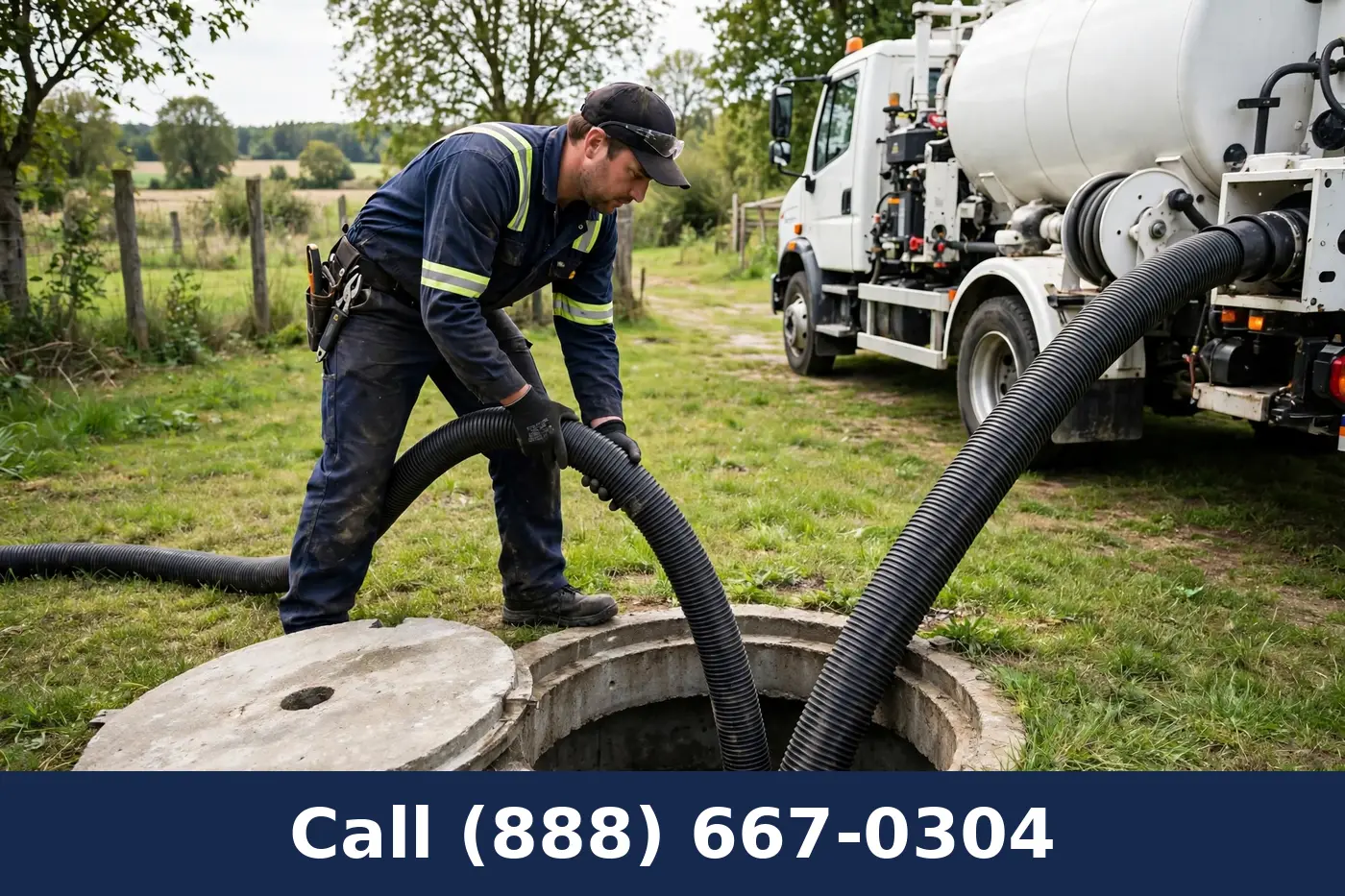
The technician locates the tank, which is quicker and cleaner when risers bring the lids to the surface instead of buried under soil. Lids are opened carefully, since septic gases are hazardous and the work calls for proper equipment and ventilation awareness. Before pumping begins, the technician measures the sludge and scum layers and notes the condition of the baffles, tees, and inlet and outlet ports. The vacuum truck then removes the accumulated solids and liquid down to the tank bottom, agitating stubborn sludge so the tank is genuinely emptied rather than skimmed. With the tank empty, the baffles and walls get a visual inspection for cracks, root intrusion, or deterioration. The drain field area gets a walkover check for soggy spots, odors, or surfacing effluent that would signal absorption trouble. Lids are secured, the area is left tidy, and the homeowner receives a written record of gallons removed and tank condition.
What warning signs mean the tank needs attention now?
Slow drains affecting multiple fixtures at once suggest the system is backing up rather than a single pipe clogging. Gurgling toilets or drains point to air being displaced by rising liquid levels in the tank or lines. Sewage odors indoors or over the yard, especially near the tank or drain field, mean wastewater is surfacing or venting where it should not. A patch of unusually lush, green grass over the drain field can indicate effluent reaching the surface and fertilizing the lawn. Standing water or soggy soil above the absorption area is a serious sign that the soil can no longer accept the flow. Any of these signs warrants a prompt visit rather than waiting for the next scheduled pumping date.
What should never go into a septic system?
Grease and cooking oils are the worst everyday offenders, solidifying in the tank and adding to the scum layer far faster than normal waste. Wipes labeled as flushable do not break down in the tank and accumulate as a fibrous mat that clogs baffles and pumps. Feminine hygiene products, paper towels, and dental floss belong in the trash, not the toilet, on any septic system. Harsh chemical drain cleaners and excessive bleach disrupt the bacterial digestion that keeps the tank working. Medications flushed down the toilet pass through the system and reach the drain field unchanged. Coffee grounds, cat litter, and cigarette butts add inert bulk that fills the tank without breaking down. A household that keeps these out of the drains gets noticeably more life between pumpings.
What affects the cost of a pumping visit?
Tank size and the volume of material removed are the primary factors, since a larger tank takes more truck time and disposal capacity. Accessibility matters: tanks with surface risers are quick to open, while buried lids that must be located and dug up add labor. Distance from the truck to the tank affects hose runs and setup time on larger rural properties. Additional services during the same visit, such as baffle replacement or a filter cleaning, add parts and time. The condition of the tank and lids can add work if deteriorated components need attention before the lids can be secured. Calling (888) 667-0304 gets a straightforward explanation of what your specific system needs and when.
Why choose Plumber Modesto Pros for septic pumping around Modesto?
Rural Stanislaus County has thousands of homes on septic, from farmland properties to county pockets between city sewer lines, and Plumber Modesto Pros works on these systems regularly. Each visit includes measurement, baffle inspection, and a drain field walkover, not just a quick pump-and-go. The written service record builds a history for your system that makes future scheduling accurate instead of guesswork. Waste is hauled to an approved receiving facility and disposed of legally, with documentation to prove it. Calling (888) 667-0304 puts your tank on a measured schedule that protects the drain field, which is the part of the system you most want to last.
Features
- Full pumping of sludge and scum layers down to the tank bottom
- Sludge and scum measurement at each visit to track accumulation rates
- Baffle and tee inspection to confirm inlet and outlet are clear and intact
- Lid and riser condition check with access left clean and secure
- Drain field walkover looking for soggy ground, odors, or surfacing effluent
- Written service record noting gallons removed and tank condition
- Legal disposal of all pumped waste at an approved receiving facility
Benefits
- Keep solids out of your drain field and protect the soil that treats your wastewater
- Follow the widely recommended three-to-five-year pumping rhythm with reminders
- Learn your tank's actual fill rate instead of guessing from the calendar
- Catch baffle damage and early drain field stress while repairs are still small
- Get documentation of each service for your household records
- Avoid backups, odors, and soggy yards that signal a neglected tank
- Have waste hauled and disposed of legally with no mess left behind
Frequently asked questions
How do I know if my septic tank needs pumping right now?
Slow drains across multiple fixtures, gurgling toilets, sewage odors, or soggy ground over the drain field all signal trouble. A technician can measure the sludge and scum layers to give a definite answer.
Can I pump the tank myself or skip pumping if nothing seems wrong?
Pumping requires a vacuum truck, proper safety equipment for hazardous gases, and legal disposal of the waste. A tank that seems fine can still be accumulating solids toward the drain field, which is why scheduled service matters.
Where does the pumped waste go?
It is hauled by the vacuum truck to an approved receiving facility for treatment and disposal. You receive a service record documenting the visit, and disposal follows applicable regulations.
Does a garbage disposal change my pumping schedule?
Disposals add substantial food solids to the tank. Homes that use one regularly should plan on the shorter end of the three-to-five-year range.