
Septic System Repair Near Me
Starting price: Call for pricing
Septic repairs address the parts of the system that wear out or break: corroded baffles, cracked pipes, root-invaded lines, failed distribution boxes, and struggling drain fields. A proper repair starts with diagnosing which component actually failed, because tank trouble, line trouble, and soil trouble each call for different work. Plumber Modesto Pros repairs septic systems across the Modesto area, fixing what can be fixed and giving straight answers when a component has reached the end of its life.
How do you know a septic system needs repair?
The signs of septic trouble are distinct once you know what to watch for, and they tend to arrive as a group rather than one at a time. Drains throughout the house slow down together, which points to the system rather than a single clogged pipe. Toilets gurgle or flush weakly because air and liquid are fighting for space in a backing-up line. Sewage odors appear indoors near drains or outdoors over the tank and drain field area, especially during warm weather. The grass over the drain field turns an unnaturally vivid green, fed by nutrients in effluent that is reaching the surface. Soggy ground or standing water above the absorption trenches means the soil has stopped accepting the flow. Sewage backing up into tubs or floor drains is the most urgent sign and calls for prompt professional attention.
Why is diagnosis the most important part of a septic repair?
Similar symptoms can come from very different failures, and each one demands different work. Slow drains might mean a clogged outlet baffle, a root-choked line, or a saturated drain field, and those three repairs share almost nothing in common. A proper diagnosis opens the tank, measures sludge and scum, inspects the baffles and tees, and checks the inlet and outlet lines. The drain field gets its own evaluation: probing soil moisture, checking distribution box levels, and looking for the pattern of failure across trench lines. Plumber Modesto Pros diagnoses first and recommends second, so the repair matches the failure.
What tank-level repairs are most common?
Baffles are the most frequent tank repair, since concrete baffles corrode from sewer gases over the years until they crumble and fall into the tank. A failed outlet baffle lets scum and solids escape toward the drain field, which is exactly the damage pumping is meant to prevent. Replacement baffles or sanitary tees restore the tank's ability to hold back floating and settled material. Cracked inlet pipes and deteriorated seals where pipes enter the tank are also common, letting groundwater infiltrate and overload the system during wet months. Damaged lids and risers get replaced so the tank stays sealed against surface water and safe for anyone walking over it. Outlet filters, where installed, are cleaned or replaced so the drain field receives only clarified liquid. These tank-level repairs are straightforward once the tank is open and often resolve symptoms that looked like field failure.
What pipe and distribution repairs come up?
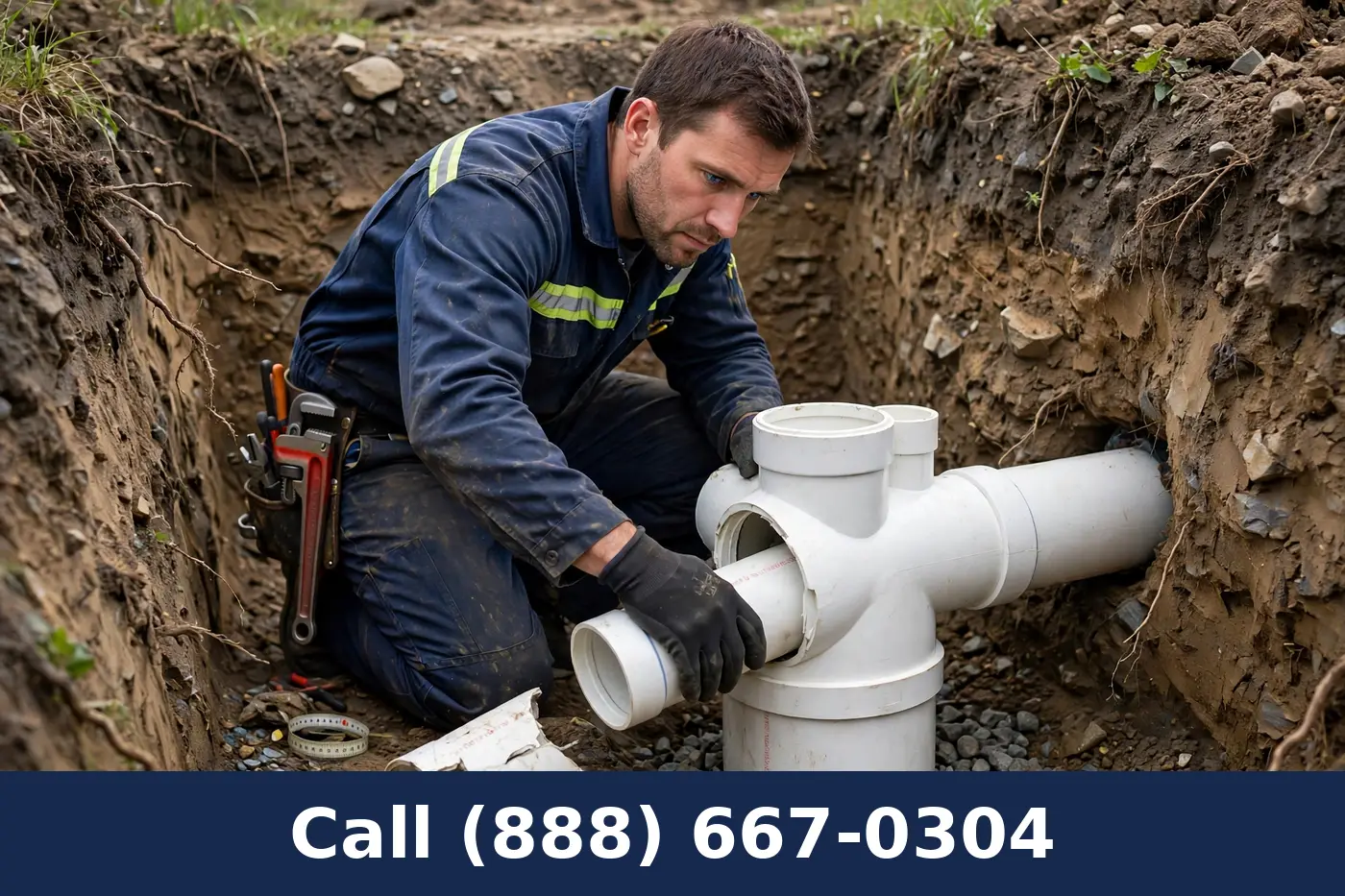
The line from the house to the tank can crack, separate at joints, or fill with roots that entered through tiny openings and expanded inside. Repair means exposing the damaged section, cutting it out, and installing new pipe at the correct grade so flow moves steadily without pooling. Distribution boxes crack, tilt, or fill with solids, and a tilted box sends most of the flow to one trench while starving the others. Leveling or replacing the box restores even splitting, which alone can revive a field that looked unevenly failed. Root intrusion gets cut out and the entry joints repaired or replaced, because cutting roots without fixing the opening invites them back. Where pipes run under driveways or landscaping, the repair plan accounts for surface restoration after the underground work is done.
When can a drain field be repaired versus replaced?
A drain field repair makes sense when the damage is localized and the surrounding soil still absorbs well. A single crushed lateral, one root-invaded trench, or a failed distribution lateral can be exposed and corrected without rebuilding the entire field. The key test is whether the rest of the field passes a hydraulic evaluation, showing it can still accept its share of the flow. Replacement becomes necessary when saturation is widespread, when effluent surfaces across much of the field, or when the soil itself has lost its absorption capacity through years of solids carryover. Older systems sometimes qualify for a new field in a reserve area if the original design set one aside. An honest evaluation distinguishes these cases, because a localized repair costs a fraction of a full field replacement.
What causes septic systems to fail in the first place?
Neglected pumping is the leading cause, since escaping solids clog soil pores that cannot be cleaned. Excessive water use overwhelms the field's steady absorption rate, with leaking toilets and heavy laundry days as common culprits. Grease, wipes, and chemicals either clog components or kill the bacterial digestion the tank depends on. Tree roots seek the moisture and nutrients in the lines, entering through joints and growing until they block flow. Vehicles and heavy equipment compact the soil over trenches, crushing pipes and squeezing out absorption capacity. Stormwater directed over the field saturates ground that should be receiving only effluent. Understanding the cause shapes the repair, because fixing the component without addressing the cause invites a repeat failure.
What affects the cost of a septic repair?
The failed component sets the scale: a baffle replacement is a contained job while a drain field rebuild is a major excavation project. Accessibility matters, since a tank with surface risers opens quickly and a buried system needs locating and digging first. Soil conditions and depth affect how much excavation the repair requires. The extent of root intrusion changes the work from a simple cut-out to a longer line replacement. Whether the repair can reuse existing trenches or needs new absorption area is the biggest cost fork in field work. Calling (888) 667-0304 gets an on-site diagnosis where Plumber Modesto Pros identifies the failed component and explains the repair options in plain terms.
Why call Plumber Modesto Pros for septic repair around Modesto?
Septic repair rewards experience, because the difference between a baffle job and a field replacement is thousands of dollars and only a proper diagnosis tells them apart. Plumber Modesto Pros works on septic systems across the Modesto area and rural Stanislaus County regularly, and diagnoses before recommending. Repairs are done to correct grade with proper materials, and the system is flow-tested afterward to confirm it handles normal household use. Homeowners get a straight explanation of what failed, what was fixed, and what maintenance will prevent a repeat. Calling (888) 667-0304 gets the problem identified correctly and repaired properly the first time.
Features
- Full system diagnosis separating tank, pipe, and drain field problems
- Baffle and sanitary tee repair or replacement at tank inlet and outlet
- Cracked and root-damaged pipe excavation and replacement in failed sections
- Distribution box leveling and replacement for even flow to all trench lines
- Root intrusion removal from lines with repair of the entry points
- Drain field rejuvenation assessment where soil absorption has declined
- Post-repair flow testing to confirm the system handles normal household use
Benefits
- Fix the actual failed component instead of replacing parts that still work
- Stop sewage odors and surfacing effluent with targeted, proven repairs
- Restore even distribution so one trench line stops carrying the whole load
- Keep roots out for the long term by repairing the joints they entered through
- Get an honest assessment when repair is enough and when it is not
- Protect the remaining life of the system with repairs done to proper grade
- Receive a clear explanation of what failed and what the repair changed
Frequently asked questions
My drains are slow and the yard smells. Is my drain field dead?
Not necessarily. Those symptoms can come from a failed baffle, a blocked line, or a tilted distribution box, all of which are repairable. A proper diagnosis identifies the actual failed component before any major work is recommended.
Can tree roots in my septic lines be fixed permanently?
The intruding roots are cut out and the damaged pipe section or joint they entered through is repaired or replaced. Fixing the entry point, not just clearing the roots, is what keeps them from returning.
How do I know if I need a repair or a whole new drain field?
Localized damage with healthy surrounding soil usually means repair. Widespread saturation, surfacing effluent across the field, or soil that no longer absorbs points toward replacement. An evaluation of the field's remaining capacity gives the answer.
Will a septic repair disrupt my yard?
Excavation is limited to the repair area, and the crew backfills and grades afterward. Targeted repairs disturb far less ground than full system replacement.