Pipe Repair Near Me
Starting price: Call for pricing
Pipe repair fixes leaking, corroded, or damaged water lines, from a single pinhole to a burst section. Plumber Modesto Pros locates the failure, cuts out the compromised pipe, and installs a lasting repair with proper fittings. Small problems get small fixes, and honest advice tells you when a repair is enough.
What kinds of pipe problems can be repaired?
Water pipes fail in several ways, and most of them are repairable when caught in time. Pinhole leaks are tiny perforations caused by corrosion, most common in aging copper and galvanized lines. Split or burst sections come from physical stress, ground movement, or water expanding in cold weather. Corroded segments weaken along their length until they weep or rupture. Damaged fittings leak at joints where washers, solder, or threads have given out. Accidental damage from nails, screws, or digging can puncture an otherwise healthy line. A professional repair addresses the specific failure with the right method for the pipe material.
How is a leak located when it is hidden?
Not every leak announces itself with a puddle. Water can travel along pipes and framing, surfacing far from the actual breach. Acoustic listening devices pick up the hiss of pressurized water escaping inside walls or under slabs. Thermal imaging cameras reveal the cool signature of hidden moisture. Moisture meters confirm dampness in building materials. Pressure testing individual lines isolates which run is losing water. For slab and underground leaks, the combination of these tools pinpoints the spot so the repair opens the smallest possible area. Guesswork demolition is never the first move.
What is the difference between a patch and a real repair?
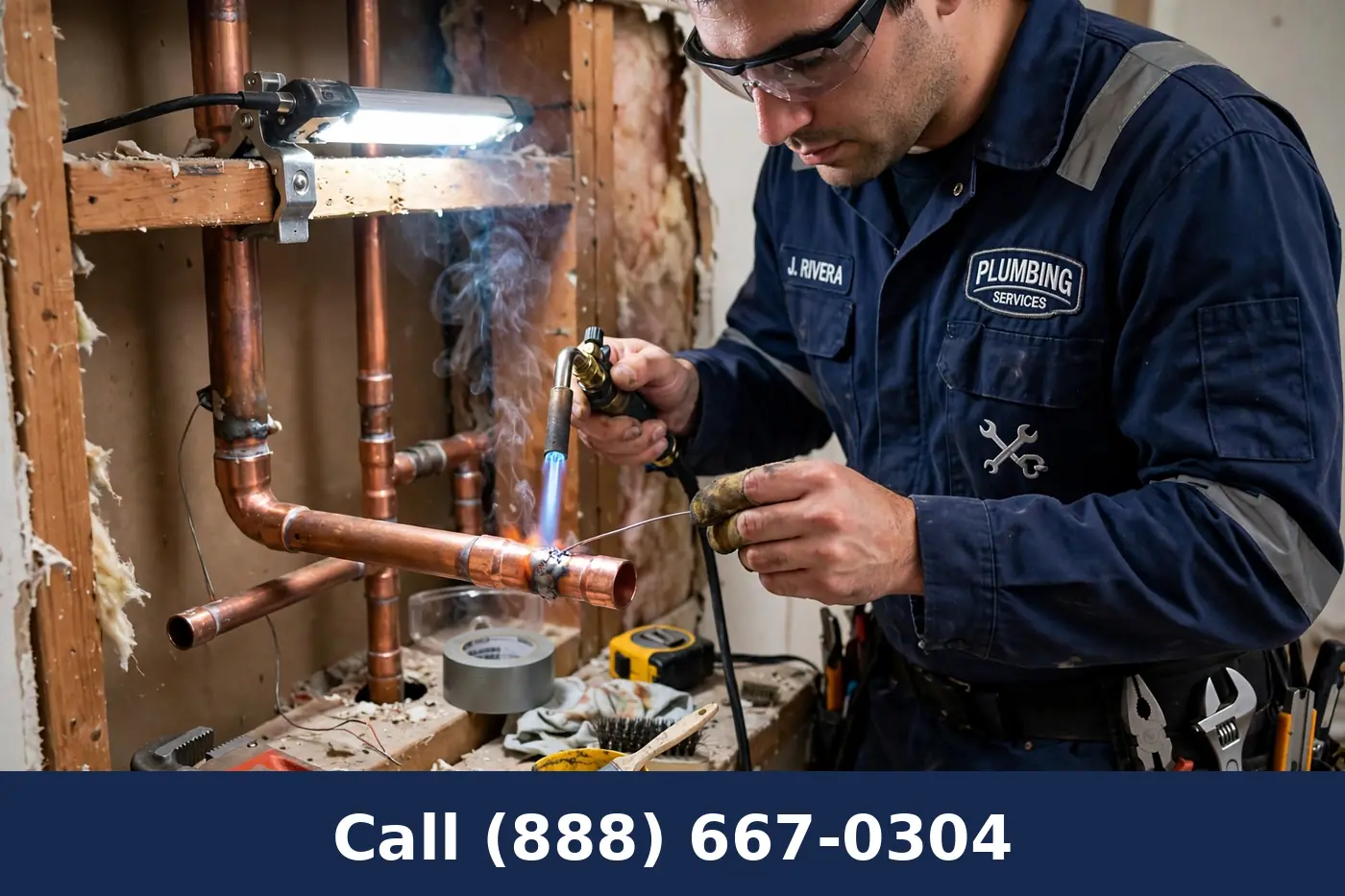
Temporary patches have their place in an emergency, but they are not repairs. Epoxy putty, rubber sleeves with hose clamps, and repair tape can stop the active flow until a plumber arrives. A real repair removes the compromised material entirely. The technician cuts out the damaged section, extending the cuts past all corroded or weakened metal. Then new pipe goes in with proper fittings: soldered or press joints for copper, mechanical fittings for PEX and CPVC. The repair is then pressure-tested to confirm it holds. Patches buy hours or days; a proper section replacement lasts for years.
How does the repair process work?
The visit starts with locating the leak and assessing the surrounding pipe condition. Water is shut off to the affected line and the line is drained. The damaged section is cut out with a tubing cutter, giving clean square ends for the new joints. The replacement piece is measured, cut, and fitted, with the joints made according to the material: soldering for copper, crimp or expansion fittings for PEX, solvent welding for CPVC. Slip couplings bridge the gap where there is no room to flex the existing pipe. Water is restored slowly, the repair is checked for any weeping at the joints, and the line is pressure-tested. The work area is cleaned up and any opened access is closed.
When is repair the wrong answer?
Honest plumbers say so when they see it. Multiple pinhole leaks in the same run mean the pipe is failing everywhere, and each new patch just waits for the next hole. Pipe walls that are visibly thinned or heavily pitted will not hold a reliable joint. Recurring leaks at the same fitting suggest a systemic issue with the material or the water chemistry. In these cases, replacing the run or repiping the affected area costs less over time than a series of repairs. The technician should explain the reasoning and show you the condition of the pipe, so the recommendation is transparent.
How do different pipe materials get repaired?
Each material has its own proper repair method, and using the wrong one creates future problems. Copper is repaired by cutting out the bad section and soldering in new copper, or by using press fittings that seal mechanically without flame. PEX uses barbed fittings with crimp or clamp rings, or expansion fittings depending on the PEX type. CPVC is joined with solvent cement made for that material. Galvanized steel can be repaired with threaded replacement sections, though replacement with modern material is usually wiser. Where different metals meet, dielectric unions prevent galvanic corrosion. Matching the method to the material is what makes the repair last.
What affects the cost of a pipe repair?
Location is the biggest factor. An exposed pipe in a garage is quick to reach, while a leak inside a finished wall or under a slab takes more work to access. The extent of the damage matters, since a single pinhole and a split three-foot section are different jobs. Pipe material affects the fittings and method required. Whether drywall or concrete must be opened and restored adds to the scope. Emergency timing and water damage mitigation are separate considerations. For an exact quote, call (888) 667-0304 and describe where the leak is and what you are seeing.
How does Plumber Modesto Pros handle pipe repairs in this area?
Plumber Modesto Pros repairs water lines for homes and businesses across the Modesto area, from simple pinhole fixes to burst section replacements. Every repair starts with finding the actual failure point, not just the visible symptom. Damaged sections are cut out and replaced with proper fittings for the material, and every repair is pressure-tested before the water goes back on. When the pipe tells a bigger story, you get straight advice about replacement. If water is leaking where it should not be, call (888) 667-0304 and get it fixed properly.
When is a spot repair enough, and when should the whole run go?
Not every leak deserves a full pipe replacement, and not every repair should stop at a patch. A single clean split in accessible copper is a textbook spot repair: cut out the damaged section and sweat or press in a new piece. That fix is honest and it lasts. A section riddled with pinholes tells a different story. When one leak follows another along the same run, the pipe wall has reached the end of its life and patching it just buys weeks. In that case we replace the entire run back to sound material, because chasing leaks one by one costs more in drywall, time, and water damage than one decisive repair.
The same judgment applies to mixed-material systems. A copper-to-galvanized joint with fresh corrosion will fail again no matter how well the patch is made. We replace the joint with a proper dielectric transition or extend the new run past the problem area. After the repair, we pressure-test the section and check every nearby joint under working pressure. That verification is what turns a quick fix into a reliable one.
Features
- Leak location with acoustic and visual inspection methods
- Pinhole leak repair with section replacement, not just patches
- Burst and split pipe replacement with new pipe and fittings
- Corroded section cut-out extending past all damaged metal
- Copper repairs by soldering or press fittings to code
- PEX and CPVC repairs with proper mechanical fittings
- Pressure testing after every repair before water is restored
Benefits
- Leaks stopped at the source with durable repairs
- Water damage halted before it spreads further
- Pressure restored once the breach is sealed
- Matching materials that work with your existing plumbing
- Repairs tested under pressure before the job is done
- Clear explanation of what failed and why
- Honest guidance when replacement beats another repair