Pipe Insulation Installation Near Me
Starting price: Call for pricing
Exposed water lines in crawl spaces, attics, and garages are the first to suffer when temperatures drop, and Plumber Modesto Pros wraps them in proper insulation before trouble starts. We fit foam sleeves, fiberglass wrap, and foil-faced insulation to every vulnerable run, sealing joints and elbows so no bare metal shows. Call (888) 667-0304 for a full-home insulation survey and keep your pipes protected all winter.
Which pipes actually need insulation?
Any water line that runs through unconditioned space is a candidate. That means crawl spaces, attics, garages, unfinished basements, and exterior walls. Hot-water lines benefit everywhere, because insulation keeps the heat in the water instead of warming the crawl space, so showers reach temperature sooner and the heater cycles less. Cold-water lines benefit too, both against winter cold and against summer condensation, when humid air meets a cold pipe and leaves puddles that feed mold.
The runs people forget are the ones that cause the most trouble. The short section of pipe feeding an outdoor spigot inside the wall cavity. The washing machine supply lines in an unheated garage. The condensate and supply lines for a water softener tucked in a cold corner. During a Plumber Modesto Pros survey, the technician walks the entire accessible system with a thermal eye for these overlooked segments. One bare elbow can undo the protection of fifty feet of insulated straight run.
What kinds of pipe insulation are there, and which is right?
Closed-cell foam sleeves are the workhorse for most residential water lines. They come pre-slit in standard diameters, slide over the pipe, and seal with adhesive strips or tape. The closed-cell structure resists moisture absorption, which matters in damp crawl spaces where open-cell materials would soak up water and lose their insulating value. For typical half-inch and three-quarter-inch copper or PEX runs, foam sleeves are the right balance of cost, performance, and durability.
Fiberglass wrap with a vapor barrier serves where temperatures run higher, such as near boiler piping or furnace flue chases, and anywhere the pipe surface exceeds what foam tolerates. Foil-faced insulation adds a radiant barrier that helps in attics and garages with strong temperature swings. For outdoor or high-abrasion locations, the insulation gets an outer protective jacket so it is not shredded by weather or rodents within a season. Plumber Modesto Pros matches the material to the location instead of wrapping everything in the same product.
Why do elbows and fittings matter as much as straight runs?
Heat escapes through the path of least resistance, and an uninsulated elbow on an otherwise wrapped line is exactly that path. In cold conditions, the bare fitting becomes the coldest point on the run, which makes it the most likely place for ice to start forming. Professional insulation work covers elbows, tees, valve bodies, and hangers with mitered foam segments or moldable fiberglass, sealed at every seam.
This is the visible difference between a homeowner's weekend project and a professional job. Hardware-store sleeves on the straight sections with bare copper showing at every turn look finished but perform poorly. A Plumber Modesto Pros installation leaves no bare metal on the insulated runs, with sealed joints that stay sealed through years of temperature cycling and vibration.
How does a Plumber Modesto Pros insulation visit work?
It starts with the survey. The technician walks every accessible pipe run in the home, noting diameters, materials, locations, and condition. Photos document the before state, including any existing insulation that has degraded, slipped, or been chewed by pests. You get a clear explanation of which runs are vulnerable and why, in plain language, before any work begins.
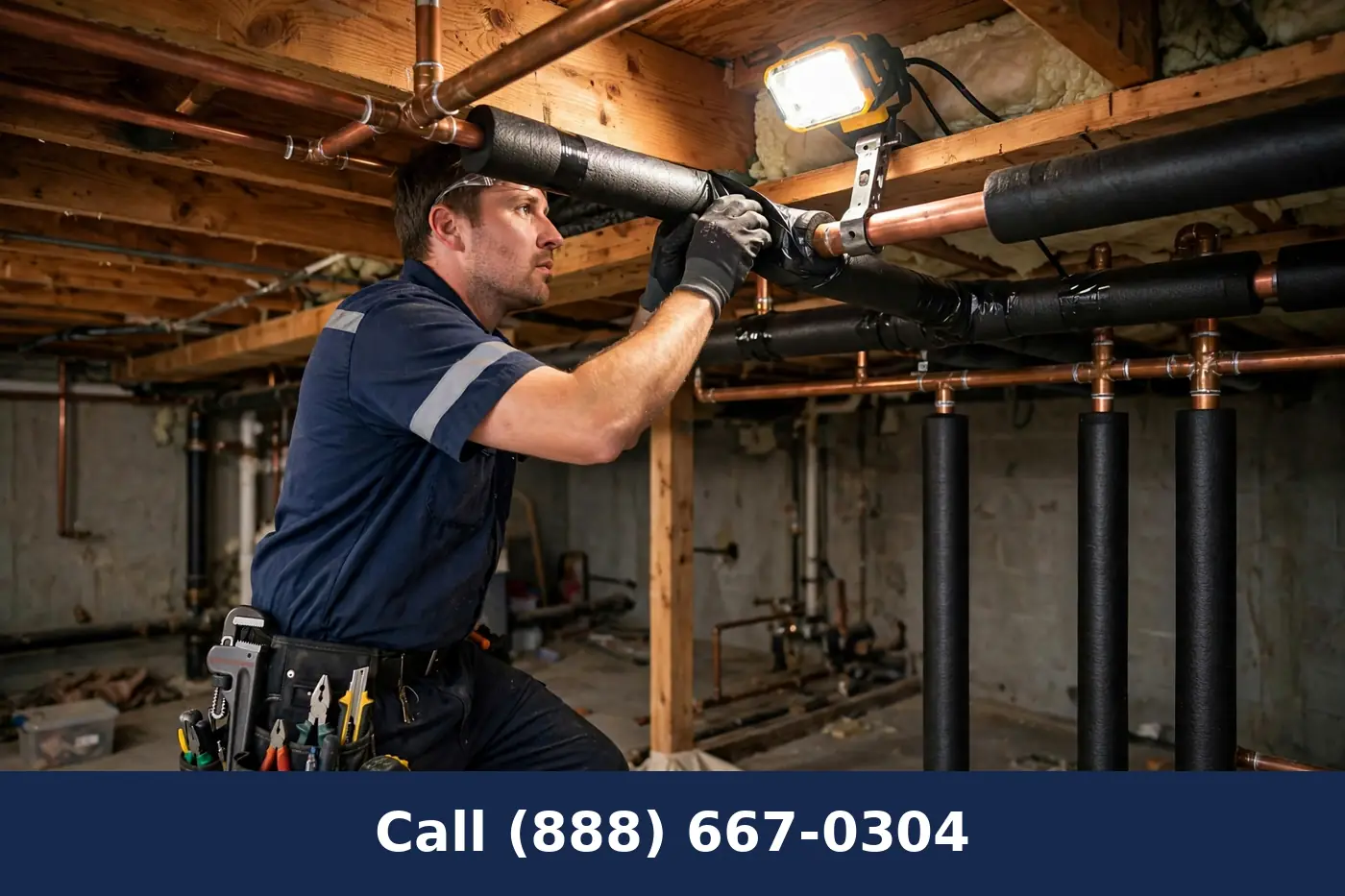
Installation follows a consistent method. Pipes are wiped clean so adhesive bonds properly. Foam sleeves are cut to length with clean square ends, fitted with tight butt joints, and sealed with tape or adhesive at every seam. Elbows get mitered segments or pre-formed covers. Where pipes pass through walls and floors, the annular gap gets sealed with caulk or foam. That keeps cold air from streaming past the insulation and chilling the pipe from the side. Valve handles and access points are left operable, because insulation that blocks a shutoff valve creates its own emergency later.
The visit ends with an after walkthrough and photos. You see exactly what was covered, and the technician points out anything that could not be reached, such as lines buried in finished walls, along with options for those areas. If heat cable was recommended for a repeat trouble spot, the insulation installed is rated for contact with it, so a later upgrade does not mean redoing this work.
What affects the cost of pipe insulation installation?
Linear footage is the starting point: more exposed pipe means more material and more labor. Accessibility is the multiplier. Open basement ceilings are quick work; tight crawl spaces with eighteen inches of clearance take far longer per foot. Pipe diameter matters because larger pipe needs larger, costlier sleeves, and the number of fittings adds labor since each elbow and valve takes individual attention.
Material choice plays a role. Standard foam sleeves are economical; fiberglass with vapor barrier and jacketed outdoor insulation cost more but last longer in harsh locations. Condition of the existing system matters too: corroded pipe that needs cleaning before insulation adheres, or old insulation that must be stripped and disposed of, adds time. Plumber Modesto Pros prices the job after the survey, so you know exactly what is covered and what it costs before we start. Call (888) 667-0304 for an exact quote.
How do we serve your area?
Plumber Modesto Pros insulates pipes in homes and businesses across the communities we serve. Older homes with plumbing retrofitted through crawl spaces and attics are the most common jobs, since those runs were often left bare when the house was built. Newer homes call after their first winter reveals which lines the builder left exposed. Rental properties get whole-building insulation work that protects the owner's asset and reduces emergency calls during cold snaps.
Commercial work includes restaurants with exposed lines in storage areas, offices with rooftop or garage-run piping, and small industrial spaces where process water lines cross unheated zones. For property managers, we document every insulated run with photos, providing a clear record of the preventive work performed. Whatever the building, the principle is identical: cover every vulnerable inch, seal every seam, and leave the system better protected than we found it.
Does pipe insulation really prevent bursts?
Insulation is the single most cost-effective burst prevention available. It does not generate heat; it slows heat loss, keeping the water inside the pipe closer to the temperature of the conditioned space it came from. On a moderately cold night, that retained warmth is the difference between flowing water and an ice plug. Paired with sealed air leaks, insulation handles the vast majority of winter nights without any supplemental heat.
For extreme cold or chronically vulnerable runs, insulation works as the essential partner to heat cable. The cable provides gentle warmth, and the insulation holds it against the pipe instead of letting it escape into the crawl space air. That is why every heat cable manufacturer specifies insulation over the cable. Skipping the insulation and running cable alone wastes energy and protects poorly. Done together, professionally installed, they are the standard defense that plumbers recommend for lines that have iced up before.
Why call Plumber Modesto Pros for pipe insulation?
Because the details decide whether it works. Correct diameter sleeves, sealed seams, covered fittings, sealed penetrations, and materials matched to each location make the difference. That is the difference between insulation that protects for a decade and insulation that slides off, soaks up, or leaves the critical elbow bare. Plumber Modesto Pros surveys the whole system, installs to a professional standard, and documents the result.
The best time to insulate is before the first cold snap, when scheduling is easy and every vulnerable line can be addressed calmly. Call (888) 667-0304 and let Plumber Modesto Pros walk your pipes, quote the work plainly, and wrap your system against the winter ahead.
Features
- Closed-cell foam sleeve insulation sized to your exact pipe diameter
- Fiberglass wrap with vapor barrier for high-heat and boiler lines
- Foil-faced insulation for attic and garage runs with radiant exposure
- Elbows, tees, and valve bodies insulated, not just straight runs
- Air-leak sealing where pipes pass through walls and floor plates
- Insulation rated for contact with heat cable on protected runs
- Full photographic survey of vulnerable lines before and after
Benefits
- Exposed lines protected through the coldest nights of winter
- Less heat lost from hot-water lines on their way to fixtures
- Lower risk of the burst-pipe emergencies that follow cold snaps
- Condensation and sweating reduced on cold-water lines in summer
- Quieter plumbing, with insulation dampening water hammer noise
- A tidy, professional finish on visible basement and garage piping
- One visit covers every vulnerable run in the home