
Main Water Shutoff Valve Replacement Near Me
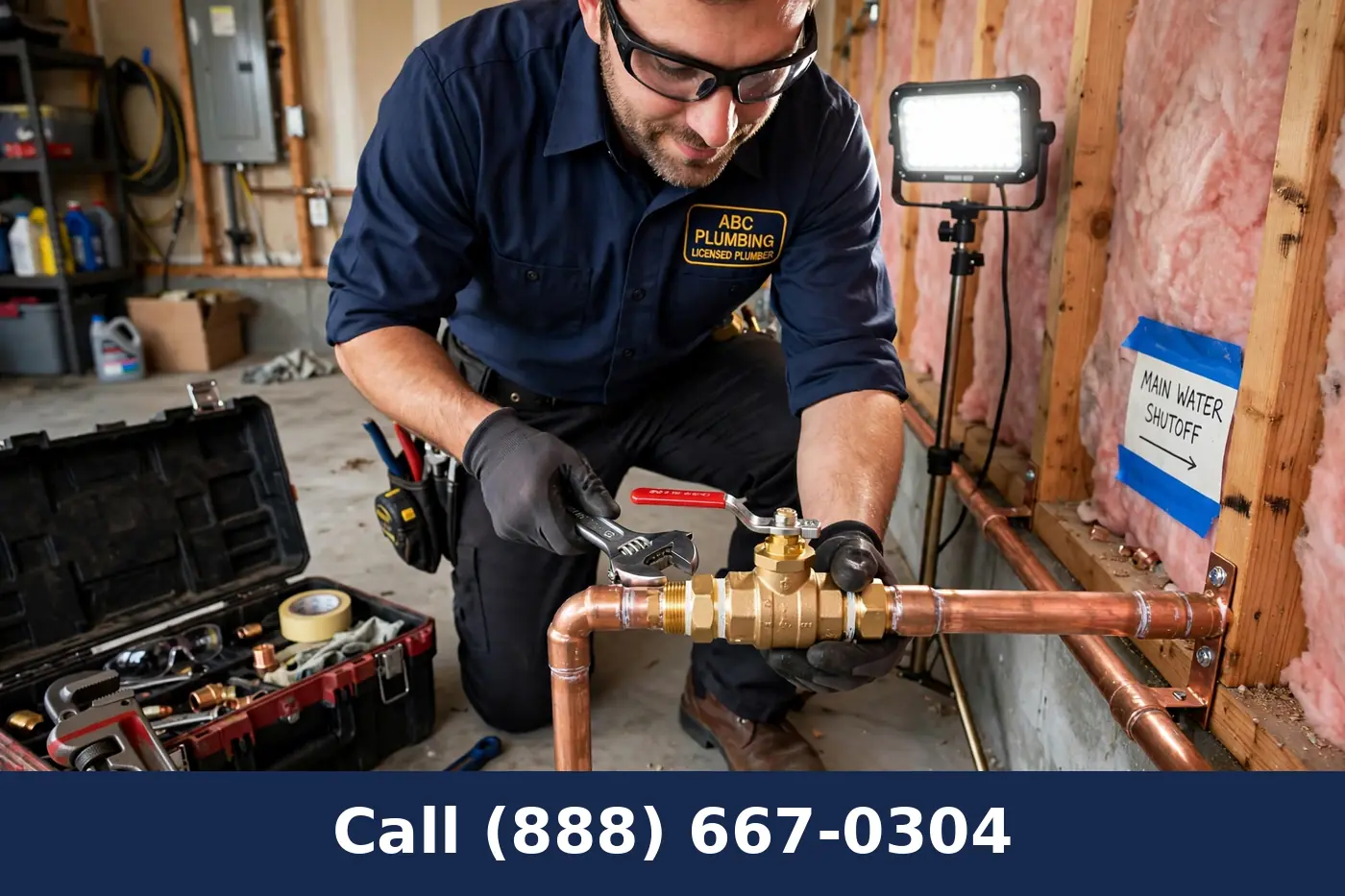
Starting price: Call for pricing
Your main water shutoff valve is the single control that stops every drop of water entering your home. Older gate-style valves seize up after years of sitting untouched, leaving you unable to cut the water during a pipe burst or plumbing emergency. Plumber Modesto Pros replaces failing shutoff valves with dependable quarter-turn ball valves that work every time you need them.
What does your main water shutoff valve actually do?
Your main water shutoff valve is the one control that cuts off every water source in your home at a single point. It sits on the main supply line, either where the line enters the house or out near the water meter. In a burst-pipe emergency, a failed water heater, or any major leak, closing this valve is the difference between a puddle and a flooded house. Every other valve in your plumbing is optional by comparison. This one valve protects everything downstream.
Why do old gate valves stop working?
Most older Modesto-area homes were built with gate valves as the main shutoff. A gate valve uses a round, wheel-shaped handle that you spin several full turns. Inside the body, those threads raise and lower a brass gate that blocks the water. The problem is that this mechanism sits in one position for years, sometimes decades. Minerals from the water settle into the threads, the gate corrodes, and the internal seal wears unevenly. When you finally need it, the wheel either will not budge or it turns but the water keeps trickling through. A valve that cannot stop the water completely has lost its one job.
When should you have your shutoff valve replaced?
- The handle or wheel is difficult to turn, or will not turn at all
- You close the valve and water keeps flowing, even at a trickle
- There is a visible drip at the valve stem or the pipe connections
- You see green or white mineral buildup, rust, or staining around the valve
- The valve is an old gate style and you want a reliable quarter-turn valve instead
- You are heading into winter and want the valve working before cold weather arrives
- Nobody in the house is sure the valve actually works because it has never been tested
If any of these sound familiar, the valve is telling you it is time. A shutoff valve only matters in the moments you cannot plan for, which is exactly why it should be replaced on a calm afternoon instead of during a crisis.
How does the replacement process work?
The job starts with locating the valve and figuring out how the water gets stopped upstream. If your valve is on the house side of the meter, the water must be turned off at the meter or the street first, and we coordinate that part. Once the line is drained and isolated, the old valve is cut out of the main line. The pipe ends are cleaned and prepared, then the new valve goes in using soldered copper joints or threaded connections, depending on your pipe material. After the connection cools and sets, the water is turned back on slowly so air leaves the line without hammering the pipes. We then test the new valve by closing and reopening it while watching for any seepage at the joints.
Ball valve or gate valve: which should go back in?
We install a full-port brass ball valve in nearly every replacement. A ball valve has a straight lever that moves only a quarter turn and stops. When the handle runs parallel to the pipe, the water is on; when it sits perpendicular, the water is off. There is almost nothing inside to corrode shut, and anyone in the household can operate it without wondering which direction to spin a wheel. A full-port design keeps the same internal diameter as the pipe itself, so your water pressure stays exactly where it was. Brass offers a practical balance of strength and corrosion resistance for a residential main line, and it is the modern standard for this job.
What affects the cost of a shutoff valve replacement?
The biggest factor is where the valve lives and how reachable it is. A valve in an open basement or garage near the water heater is the most straightforward job. A valve buried in a yard box or sitting in a crawl space takes more time to access and work on. The type of connection matters too: a threaded valve swaps out more simply than one that must be unsoldered and resoldered into copper pipe. The condition of the pipe on either side of the valve can add work if corrosion has weakened the line itself. Finally, any city fees tied to shutting the supply at the meter are part of the picture. For an exact number for your home, call (888) 667-0304 and we will give you a clear quote after seeing the valve.
What should you do while the water is shut off for the repair?
Plan for the water to be off for the length of the job. Fill a few jugs for drinking and a bucket for flushing the toilet before we arrive. Keep the water heater off or on its pilot setting while the supply is cut, since a heater should not fire with no water in the tank. After the new valve is in and the water comes back on, run the bathtub tap first until the stream runs clear. Sediment that sat in the line can cloud the water at first, and this flushes it out. Then run each fixture briefly to push out trapped air. We walk you through all of this before we start.
How does Plumber Modesto Pros serve Modesto-area homes with shutoff valves?
Plumber Modesto Pros works in the homes, duplexes, and small rental properties across Modesto and the surrounding Central Valley communities. Many of the houses here were built in the decades when gate valves were standard. Stuck shutoff valves are one of the most common things we are called to fix. We stock the brass ball valves and fittings needed for copper, PEX, and older galvanized connections. Our technicians label the new valve and show you exactly how to operate it before we leave. The goal is simple: you should be able to stop your home's water in seconds, and you should never have to think about this valve again.
Do renters need to know about the shutoff valve too?
Yes, and this is a detail landlords often overlook. A tenant who cannot find or operate the main shutoff during a burst pipe will call you while the water keeps running. Showing every tenant where the valve is, and making sure the valve actually works before they move in, protects your property during the hours you cannot be there. A working quarter-turn valve is the simplest insurance a rental owner can have.
Features
- Full-port brass ball valve rated for residential main-line pressure
- Quarter-turn lever handle that anyone in the household can operate
- Soldered copper or threaded connections matched to your existing pipe
- Location check so the new valve sits where you can reach it quickly
- Complete line isolation before work so the rest of the house stays dry
- Pressure and flow test after the new valve is installed
- Labeled handle showing exactly which direction stops the water
Benefits
- Stop water in seconds during a pipe burst instead of hunting for a wrench
- End the slow weep of a gate valve that never fully closes
- Reduce flood risk during cold snaps when pipes are most likely to split
- Know exactly where your water control is and that it works
- Get a durable brass valve built for decades of reliable service
- Make it simple for family members to shut water off while you are away
- Restore confidence before winter, when the valve matters most
Frequently asked questions
How do I know my main shutoff valve needs replacement?
A handle that will not turn, a wheel that spins without stopping the flow, or water that keeps trickling after you close the valve are all clear signs. Visible corrosion or a drip at the valve stem means it should be replaced before an emergency puts it to the test.
What is the difference between a gate valve and a ball valve?
A gate valve uses a round wheel and internal threads to raise and lower a gate inside the body, and after years of sitting still it corrodes and stops sealing. A ball valve uses a quarter-turn lever to rotate a ball with a hole through it, which is far less likely to seize.
Where is my main water shutoff valve located?
It is usually where the water line enters the home, often near the water heater or in a box by the sidewalk near the meter. During a replacement visit we locate it for you and make sure every adult in the home knows where it is.
Can I replace my own main shutoff valve?
The work requires cutting into the main water line, and the city supply side must be shut down before the old valve comes out. A plumber handles the isolation, the new connection, and the pressure test so nothing leaks when the water goes back on.