
Main Water Line Repair & Replacement Near Me
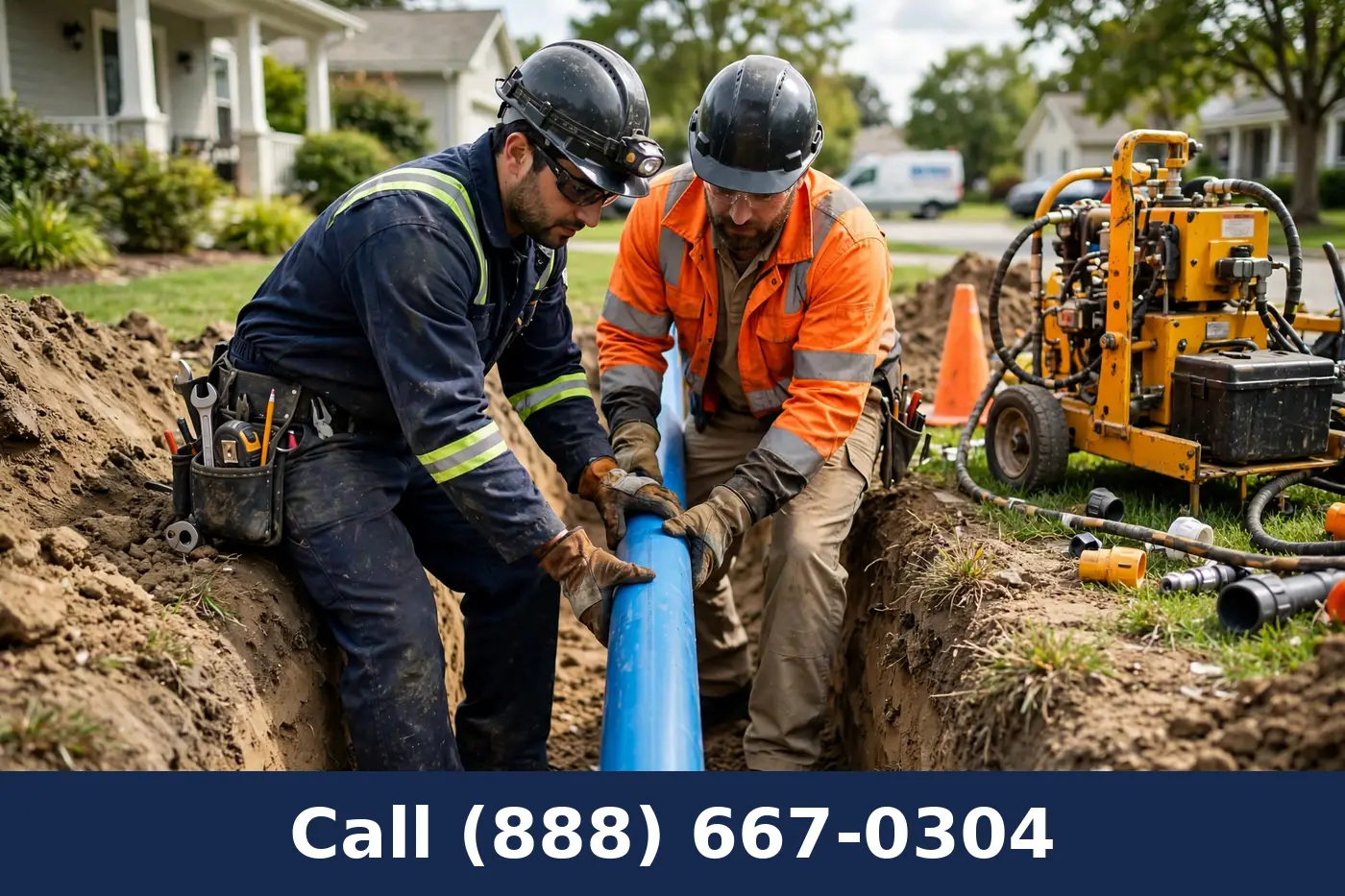
Starting price: Call for pricing
The main water line is the buried pipe that carries water from the city meter or well into your home. When it leaks or fails, it shows up as low pressure, soggy ground, or a climbing water bill. A repair fixes a localized break or bad joint on an otherwise sound line. A replacement installs a new run when the pipe is corroded, brittle, or failing in multiple places. Trenchless methods can often replace the line through small entry and exit pits instead of an open trench across your yard.
What is the main water line and what does it do?
The main water line, sometimes called the water service line, is the single buried pipe carrying potable water into your home. It runs from the municipal meter at your property line, or from a private well. Everything in the house depends on it: every faucet, toilet, shower, appliance, and irrigation zone draws through this one line. In most Modesto-area homes it runs under the front yard, driveway, or side yard, buried deep enough to stay below the reach of ordinary digging and temperature swings. Common materials include copper, galvanized steel in older homes, and newer plastic or polyethylene lines, each with its own aging pattern and typical failure modes. Because the line is pressurized around the clock, even a small crack leaks continuously, which is why supply-line problems get worse and more expensive the longer they run.
How do you know your main water line is failing?
A sustained drop in water pressure across the whole house is the most common early sign, especially when it affects every fixture rather than just one. A patch of lawn or soil that stays wet between rains often marks a buried leak. Grass growing noticeably greener than its surroundings is another tell. Discolored water, particularly brown or rusty tints, can indicate a corroding galvanized or steel line shedding material into the flow. A water bill that climbs without any change in household habits is the meter quietly reporting a leak you cannot see. Any two of these signs together are worth a professional inspection rather than a wait-and-see approach.
When is a repair enough, and when is replacement the right call?
A repair makes sense when the line is mostly sound and the problem is localized. Examples include a single cracked fitting, one bad joint, or a short section crushed by a root. In those cases the crew exposes just the damaged section, cuts it out, and installs new pipe with proper couplings, leaving the healthy remainder in place. Replacement becomes the better choice when the pipe fails in multiple spots. It is also right when the material is deteriorating along its whole length, or when internal corrosion restricts flow that no spot repair can fix. Older galvanized steel lines that deliver rusty water and weak pressure usually fall into the replacement category because the whole pipe shares the same condition. A camera run through the existing line gives the evidence for this decision, showing whether the damage is a single event or a system-wide condition.
What are trenchless water line replacement methods?
Trenchless replacement avoids the long open trench that traditional methods require, which matters when the line runs under a driveway, patio, or mature landscaping. Pipe bursting is the most common approach. A bursting head is pulled through the old line, fracturing it outward while towing a new HDPE pipe into the same path. Only small entry and exit pits are dug, so the surface between them stays largely intact. Both methods use materials with smooth interiors that resist scale and root intrusion far better than the materials they replace. Trenchless is not universal: a fully collapsed line, a line buried where equipment cannot reach it, or a route blocked by utilities may still need open excavation.
How does the job proceed from first call to finished line?
The visit begins with symptom review and a meter check, confirming that water is actually being lost between the meter and the house. A camera inspection of the line follows, showing the location, type, and extent of the damage so the recommendation rests on evidence. The technician then lays out repair versus replacement and trenchless versus excavation options that genuinely fit the property, with the reasoning explained in plain terms. On work day, the crew marks utilities, sets up the excavation or the trenchless entry and exit pits, and exposes or accesses the line. The new pipe is installed, connected at the meter and at the house entry, and the entire run is pressure tested to confirm it holds before anything is backfilled. Excavated areas are backfilled and compacted, and the surface is restored as closely as the work allows.
What affects the cost of a main water line job?
Length is the biggest driver. A short run from a curbside meter to a nearby house entry needs less labor and material than a long run across a large lot. Depth and soil conditions matter because rocky or hard-packed soil slows excavation and may call for different equipment. Surface features above the line add restoration work, since a line under a concrete driveway involves cutting and repouring that a line under lawn does not. The chosen method changes the equation too: trenchless work trades digging for specialized equipment, and the balance depends on the property layout. Pipe material and diameter, the condition of the connections at both ends, and whether the meter box or house entry needs updating all play a role. Calling (888) 667-0304 gets you an on-site evaluation where these factors are measured against your actual property rather than guessed.
How do Modesto-area conditions affect water lines?
Many homes around Modesto still rely on original galvanized or early copper service lines that are now decades old and living on borrowed time. Long dry summers shrink and shift the soil while wet winters swell it, and that seasonal movement works joints and stresses rigid pipe year after year. Mature trees throughout older neighborhoods send roots toward the steady moisture of a pressurized line, finding the smallest joint weakness first. Hard water common to the Central Valley leaves mineral scale inside aging pipe, narrowing the flow until fixtures throughout the house feel the difference. Plumber Modesto Pros sees these patterns across the area and sizes the replacement line for the home's real demand, not just a like-for-like swap of an undersized original.
Why act on a failing water line instead of waiting?
A leaking service line wastes water every hour of every day, and the meter keeps counting whether the water reaches a tap or not. Soil washing out from around a leak can undermine walkways, driveways, and eventually foundation edges as the void grows. Standing water from a surface-breaking leak invites mosquitoes and damages landscaping that costs real money to replace. Calling (888) 667-0304 at the first signs gets the problem diagnosed on your schedule, with camera evidence guiding a repair or replacement that ends the waste for good.
Features
- Video camera inspection of the existing line to confirm damage before any digging
- Trenchless pipe bursting that pulls a new HDPE pipe through the old line path
- Trenchless pipe lining options where the existing line can serve as a host pipe
- Traditional excavation and replacement when trenchless methods do not fit the situation
- New copper, PEX, or HDPE service lines sized for the home's actual water demand
- Meter-to-house routing planned to avoid driveways, patios, and mature trees where possible
- Final pressure testing and flow check on every completed line before the crew leaves
Benefits
- Restore full water pressure instead of living with a slow, unreliable supply
- Stop paying for water that is leaking into the soil instead of reaching your taps
- Protect your foundation and landscaping from the erosion a buried leak causes
- Choose the least disruptive method your property qualifies for, including trenchless
- Get a new line rated for decades of service instead of patching a failing one repeatedly
- Receive a diagnosis backed by camera evidence before committing to replacement
- Work with one team from inspection through final testing with no handoff gaps
Frequently asked questions
How do you find the leak without digging up the whole yard?
A camera run through the line and a meter-based flow check locate the problem first. Digging or trenchless pits happen only at the confirmed spot, not along the entire run.
Is trenchless replacement always an option?
Not always. Trenchless methods need equipment access and a line that can be burst or lined. A camera inspection determines whether your property qualifies before any work is planned.
How long does a water line replacement take?
Most residential replacements are completed within one to two working days once the plan is set. Trenchless jobs often disturb the surface less, which shortens the restoration phase.
What causes a main water line to fail?
Age and corrosion are the most common causes, followed by shifting soil, root intrusion at joints, and damage from nearby digging. A camera inspection shows which cause applies to your line.