
Irrigation Pump Installation & Repair Near Me
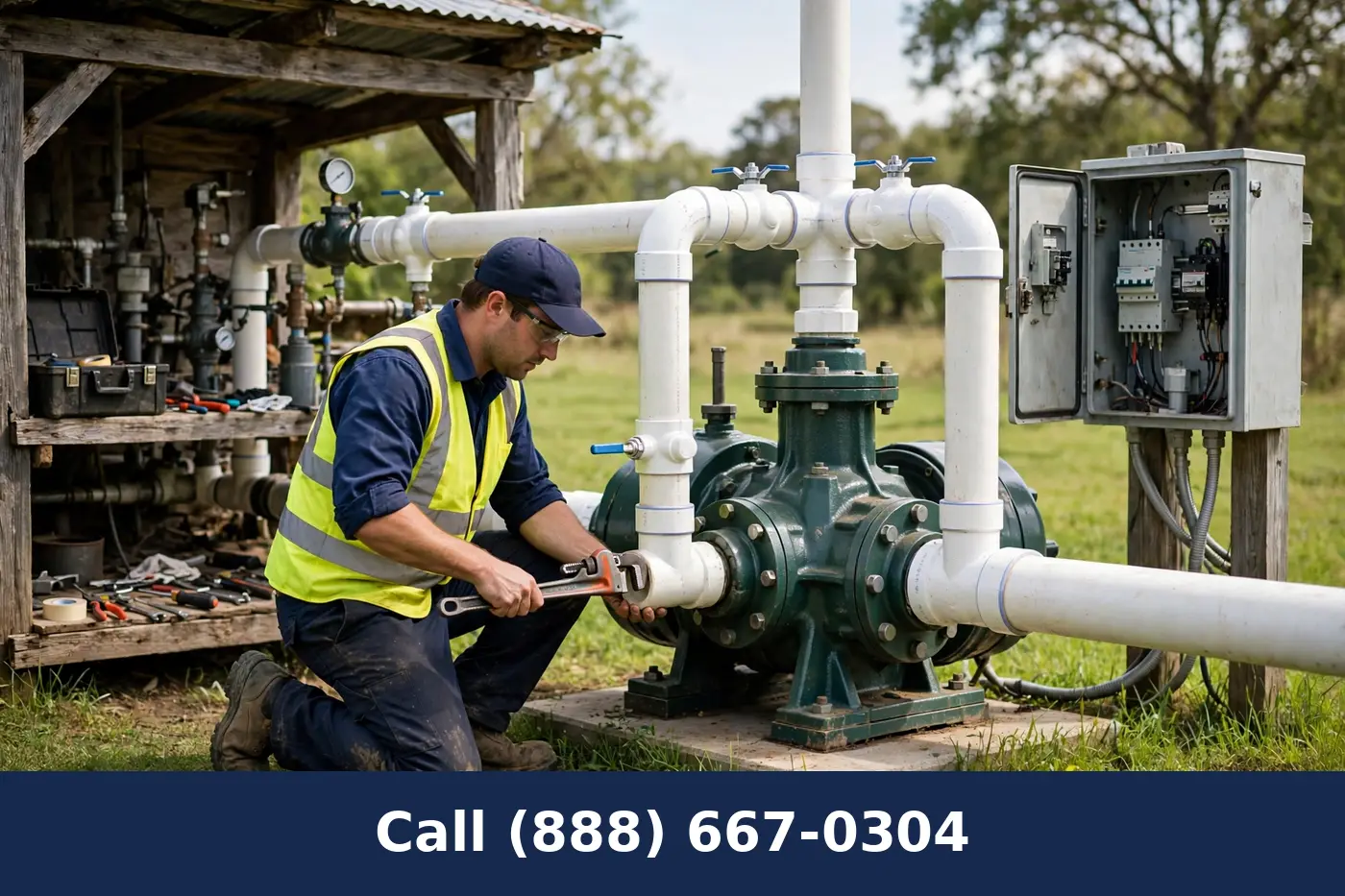
Starting price: Call for pricing
Irrigation pump installation and repair covers the pumps that move water to fields, orchards, and large landscapes. From shallow wells to deep bores, ponds to storage tanks, the right pump makes the difference between thriving growth and wasted water. Plumber Modesto Pros installs new irrigation pumps and services existing ones.
An irrigation system is only as good as the pump behind it. Whether you are watering an orchard, a few acres of pasture, or a large landscaped property, the pump has to deliver the right flow at the right pressure. It has to keep that up hour after hour, through the hottest months of the year. Plumber Modesto Pros installs new irrigation pumps and repairs existing ones, sized to your water source, your acreage, and the way you actually irrigate.
A mismatched pump is an expensive frustration. Too small and zones never get the pressure they need. Too big and you waste energy, wear out components, and blast delicate plantings. Getting the match right is the whole job, and it starts with understanding your water.
What does an irrigation pump actually do?
An irrigation pump moves water from your source to your distribution system at the flow and pressure your sprinklers, drip lines, or flood setup require. The pump's job is defined by two numbers: flow rate in gallons per minute, and total dynamic head, which is the total resistance the pump must overcome, measured in feet.
Total dynamic head combines three things. Elevation change is the vertical distance from the water source to the highest sprinkler. Friction loss is the pressure eaten by pipes, fittings, valves, and backflow devices along the way. Operating pressure is what the sprinklers themselves need at their base to throw water correctly. Add them up, convert to feet, and you have the pump's true workload. A system needing thirty gallons per minute at one hundred fifty-nine feet of head needs a very different pump than one needing the same flow at sixty feet.
That calculation is why professional sizing matters. Two properties with identical acreage can need completely different pumps if one draws from a shallow pond and the other from a deep well.
What types of irrigation pumps are there?
Four basic classes cover most irrigation work. Centrifugal pumps, usually end-suction style, are the workhorses for shallow lift under about twenty-five feet. They are affordable, simple to service, and easy to relocate, and they handle sprinkler and flood irrigation well. Their limit is suction: atmospheric pressure caps how high they can lift water to the pump, so they must sit close to the source and stay primed.
Submersible pumps live underwater inside the well or the pond, pushing water up instead of pulling it. That makes them the right choice for deep wells, and they run quietly because the water cools the motor and muffles the sound. Servicing one means pulling it from the well, so correct installation matters.
Vertical turbine pumps handle deep, high-demand applications with impressive pressure, common in agricultural wells. Jet pumps offer an economical middle ground for moderate depths. For large properties we also see variable frequency drives, which adjust motor speed to match demand and cut energy use dramatically compared to a pump running full tilt all day.
When do you need a new pump or a repair?
A new installation makes sense when you are developing new acreage, converting to a different irrigation method, or replacing a pump that has become unreliable. Expanding from lawn sprinklers to drip irrigation for an orchard, for example, changes the flow and pressure requirements enough to warrant a fresh look at the pump.
Repairs are the call when performance slips. Watch for zones that no longer throw as far, a pump that loses prime repeatedly, unusual vibration or noise, visible leaks at seals, or a motor that trips its protection. A pump that runs but builds no pressure may have a clogged intake, a worn impeller, or a failed check valve, all fixable when caught early.
How does the installation and repair process work?
Call (888) 667-0304 and describe your water source, your acreage, and what you are irrigating. We visit the site to see the source firsthand: well depth, pond level, distance to the farthest zone, and elevation changes across the property.
For a new pump, we calculate your required flow and total dynamic head, then select the pump type and size that meets it efficiently. Installation includes proper suction piping with a clean intake screen, solid mounting, correct electrical wiring with motor protection, and priming provisions so the pump starts reliably. We test every zone at operating pressure before we consider the job done.
For a repair, we diagnose before we replace. We check the intake for blockage, verify prime, test the pressure switch and controls, and inspect seals and impellers. You get a clear explanation of what failed and what the repair involves, and we only proceed with your approval. If the pump is obsolete or the repair approaches the cost of replacement, we say so plainly.
What factors affect the cost of an irrigation pump project?
Pump type and size lead the list. A small centrifugal pump for a lawn is a different investment than a large turbine for acreage, and the electrical requirements scale with it. Three-phase power, long wire runs, and new control panels add to the scope.
Site conditions matter too. A pump station near the source with easy access installs quickly, while a remote location needing trenching, a shelter, or a long suction run takes more work. Water quality plays a role as well: sandy or corrosive water may call for upgraded materials that last longer in harsh conditions.
Ongoing energy cost deserves honest discussion. An efficient pump with a variable speed drive can cost more upfront and save substantially over its life. Call (888) 667-0304 and we will walk through the options for your property with real numbers from your site.
How does Plumber Modesto Pros serve irrigators in your area?
Plumber Modesto Pros works with the full range of irrigation customers across the area: homeowners with large lots, orchard and vineyard operators, horse properties, and small farms. Each one depends on water arriving reliably when the season demands it, and we build and service systems with that pressure in mind.
We also help property owners who inherited a pump station they did not design and have never quite trusted. We evaluate what is there, explain it in plain terms, and bring it up to a standard you can rely on.
Your irrigation is too important to gamble on a guess. Call (888) 667-0304 and let Plumber Modesto Pros match the right pump to your water and your land.
Features
- Centrifugal, submersible, turbine, and jet pump options
- Pump sizing by flow rate and total dynamic head
- Intake screening and suction piping done right
- Pressure tanks, switches, and VFD controls
- Electrical wiring with proper motor protection
- Priming setup and dry-run protection
- Seasonal service, winterization, and repairs
Benefits
- Water large areas evenly without dry spots or runoff
- Match the pump to your well depth and acreage, not a guess
- Cut energy waste with efficient pump and control selection
- Keep crops, orchards, and lawns thriving through dry months
- Reduce service calls with correct installation from day one
- Protect the pump with proper priming and dry-run safeguards
- Get a system designed around your actual water source
Frequently asked questions
What type of irrigation pump do I need?
It depends on your water source and depth. Shallow sources under about twenty-five feet suit centrifugal pumps, deeper wells need submersibles or turbines, and ponds or tanks work with several types. We evaluate your source and recommend accordingly.
How do I maintain an irrigation pump?
At minimum, clear the intake screen regularly, check for leaks and unusual vibration, and winterize before cold weather. Annual professional service catches wear before it becomes a breakdown in the middle of the growing season.
Why did my irrigation pump stop building pressure?
Common culprits are a clogged intake, loss of prime, a failing pressure switch, or a worn impeller. We diagnose systematically instead of replacing parts blindly, so you pay for the actual fix.
Do you repair all brands and types of irrigation pumps?
Yes. We service centrifugal, submersible, turbine, and jet pumps from all major manufacturers. If your pump is obsolete and parts are unavailable, we will tell you honestly when replacement makes more sense than repair.