Interior Shutoff Valve Installation for Hose Bibbs Near Me
Starting price: Call for pricing
An interior shutoff valve is a dedicated valve on the indoor section of the pipe feeding each outdoor hose bibb. It lets you stop water to the outside faucet without affecting the house. With the valve closed and the outdoor faucet opened to drain, the exposed pipe sits empty through the cold months. It no longer holds water that could ice-block and split the line. Homes that lack these valves leave every exterior faucet vulnerable each cold snap, and adding them is straightforward preventive plumbing.
What is an interior shutoff valve for a hose bibb?
A hose bibb is the outdoor faucet on the side of your house where you connect a garden hose. The pipe feeding it runs from inside the home through the exterior wall. An interior shutoff valve is installed on that pipe on the warm side of the wall. It gives you a way to stop water from ever reaching the outdoor section. Once the valve is closed, you open the outdoor faucet and any bleeder cap on the valve, and the trapped water between them drains out. The pipe that sits in the cold wall cavity then holds air instead of water, which means there is nothing inside it to expand when temperatures drop. Many older homes were built without these valves, leaving the outdoor line pressurized straight through the cold season.
Why do outdoor faucets need this kind of protection?
Water expands as it turns to ice, and that expansion exerts tremendous force inside a closed pipe. A standard hose bibb holds water right up to the outdoor handle. When that water ices over, the pressure pushes outward against the pipe walls and fittings. The split often happens inside the wall where you cannot see it. The damage stays hidden until spring, when the reopened valve pours water into the wall cavity. By then the result can be soaked insulation, stained drywall, warped flooring, and mold growth inside a wall that looked fine all winter. Hoses left attached make the problem worse by trapping water against the faucet and preventing drainage. An interior valve with a drain bleeder breaks this chain by removing the water before the cold arrives.
How do you winterize a hose bibb once the valve is installed?
The routine is simple and takes a few minutes per faucet each fall. First, disconnect every garden hose, splitter, and timer from the outdoor faucet, then drain and store the hoses somewhere dry. Next, close the interior shutoff valve for that faucet, turning the handle until it stops or the lever sits across the pipe. Go outside and open the hose bibb fully, letting the trapped water run out of the spout. Back inside, open the small bleeder cap on the side of the shutoff valve over a bucket or rag so the remaining water in the line drains down and out. Once the line is empty, close the bleeder cap and leave the outdoor faucet open through the cold months so any stray moisture has room to expand. In spring, reverse the steps: close the outdoor faucet, close the bleeder, and reopen the interior valve.
What is the difference between a standard and a frost-proof hose bibb?
A standard hose bibb shuts off at the outdoor handle, which leaves water sitting in the pipe inside the cold wall. A frost-proof sillcock has a long stem that places the actual shutoff seat well inside the heated part of the house. Closing the handle drains the outer section by design. Frost-proof models add real protection, but they only work as intended when hoses are disconnected, because a trapped hose defeats the drainage. Pairing a frost-proof bibb with an interior shutoff valve gives two layers of protection for the same line. During an installation visit, the technician can assess whether your existing bibbs are standard or frost-proof and recommend upgrades where they make sense.
Where does the technician install the new valve?
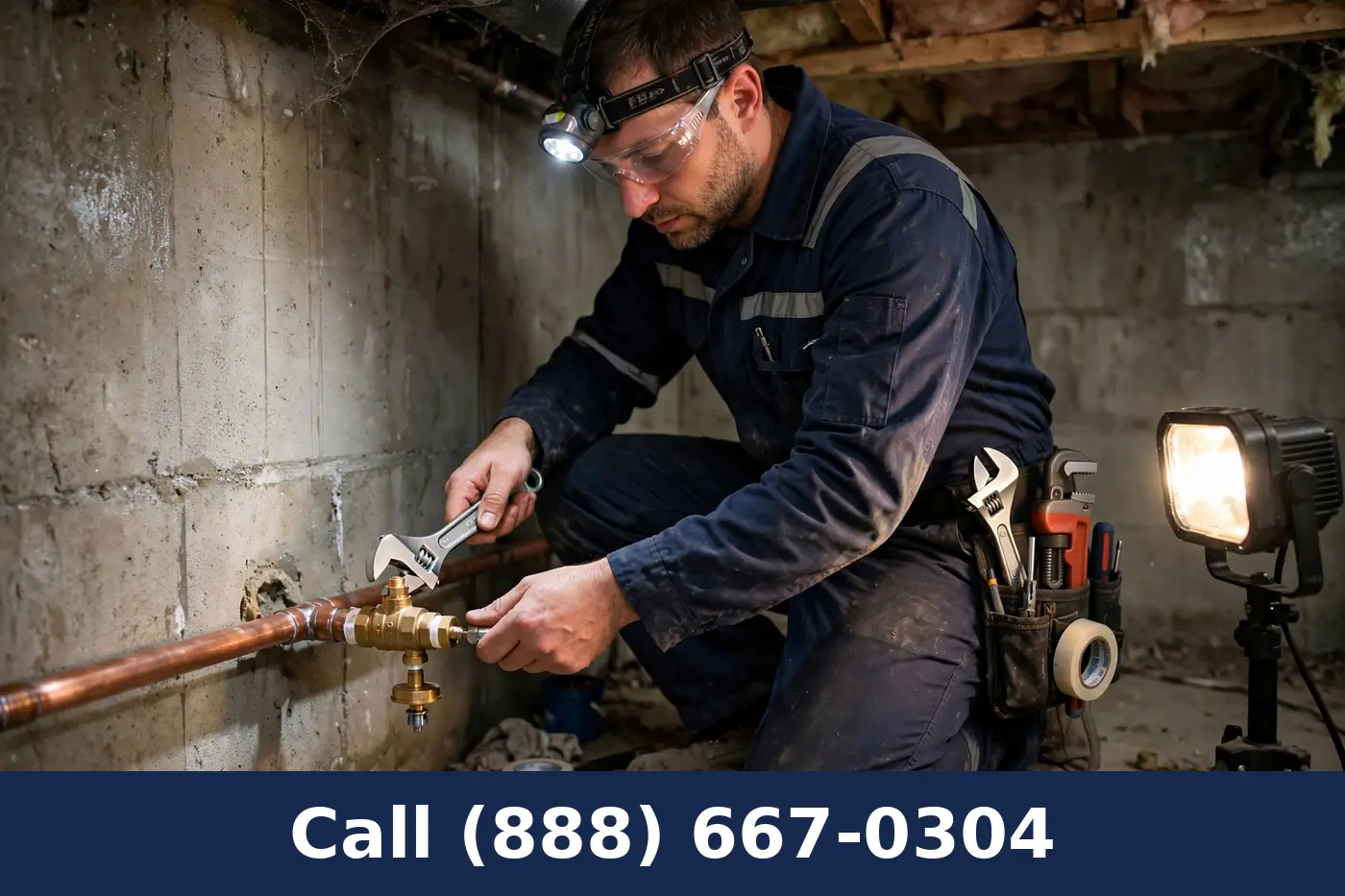
The valve goes on the indoor run of pipe that feeds the hose bibb, as close to the exterior wall as practical and on the warm side of the insulation. Common locations include basements, crawl spaces, utility and laundry rooms, and sometimes behind a small access panel cut into finished drywall. The technician traces the line from the outdoor faucet inward to find the right spot, choosing a place that stays accessible for future use. Each valve is installed with proper supports so the pipe does not stress the new joints, and the bleeder cap is oriented where a bucket can catch the drain water. ## How does the installation visit work?
The visit starts with a walk-around to locate every exterior faucet and trace each supply line to its indoor access point. The main water supply is shut off and the lines are drained down so the new valves can be installed dry. The pipe is cut at the chosen location and the new valve is fitted with the connection method that suits the material, whether copper, PEX, or CPVC. A bleeder cap is added on the downstream side of the valve so the exterior section can be fully drained. After the joints are complete, the main is restored and each new valve is tested under pressure in both open and closed positions. The technician then demonstrates the winterizing routine on one faucet so the homeowner can repeat it confidently each fall.
What affects the cost of adding interior shutoff valves?
The number of exterior faucets is the main factor, since each bibb needs its own valve on its own supply line. Accessibility matters: a valve location in an open basement is quick work, while one buried behind finished drywall needs an access panel. Pipe material and condition affect the connection method and the time to prepare clean, sound joints. Upgrading the outdoor bibbs to frost-proof models at the same time adds parts but combines two improvements into one visit. Homes with finished basements or tight crawl spaces may need more time for the technician to work safely and neatly. Calling (888) 667-0304 brings a technician out to map your faucets and explain exactly what each one needs.
Why does this matter even in the Modesto area?
The Central Valley rarely sees deep, lasting cold, which is exactly why burst hose bibbs catch homeowners here by surprise. A single overnight dip below the ice point can split a pressurized line that survived years of mild winters, because it only takes one cold night. Plumber Modesto Pros installs these valves so each outdoor faucet can be drained and left safe before the first cold night of the season. Calling (888) 667-0304 before the cold weather arrives gets every exterior faucet protected in a single visit.
Features
- Dedicated shutoff valve installed on each hose bibb supply line inside the home
- Ball or gate valve selected to suit the pipe material and the available space
- Installation in basement, crawl space, utility room, or behind an access panel
- Bleeder or drain cap fitted on the valve so the line can be emptied completely
- Each valve clearly labeled so every household member can find and use it
- Outdoor faucet tested and left in the correct position for the cold season
- Existing hose bibbs evaluated and replaced with frost-resistant models when needed
Benefits
- Isolate each outdoor faucet individually without shutting off the whole house
- Drain exposed lines for the cold months and remove the water that causes ice-block damage
- Find every hose bibb valve quickly thanks to clear labeling at each location
- Use the bleeder cap to empty the line fully instead of hoping gravity does it
- Protect interior walls and floors from the damage a burst exterior line causes
- Add lasting value to homes that were built without this basic cold-weather protection
- Get one visit that covers all exterior faucets instead of piecemeal fixes
Frequently asked questions
My home has no interior valves for the outdoor faucets. Can they be added?
That is exactly what this service does. A technician traces each hose bibb line indoors and installs a dedicated shutoff valve with a drain bleeder on the warm side of the wall.
Do I still need to disconnect hoses if I have interior shutoff valves?
A connected hose traps water against the faucet and prevents the line from draining. Disconnect and drain all hoses each fall, then close the interior valve and drain the line.
Should the outdoor faucet be left open or closed for the cold months?
Leave it open after draining the line. An open faucet gives any residual moisture room to expand and confirms the line drained properly instead of holding trapped water.
Can a frost-proof hose bibb replace the need for an interior valve?
Frost-proof bibbs add strong protection but work best paired with an interior valve. The valve lets you positively shut off and drain the line, which covers situations like an accidentally attached hose.