
Heat Pump Water Heater Installation Near Me
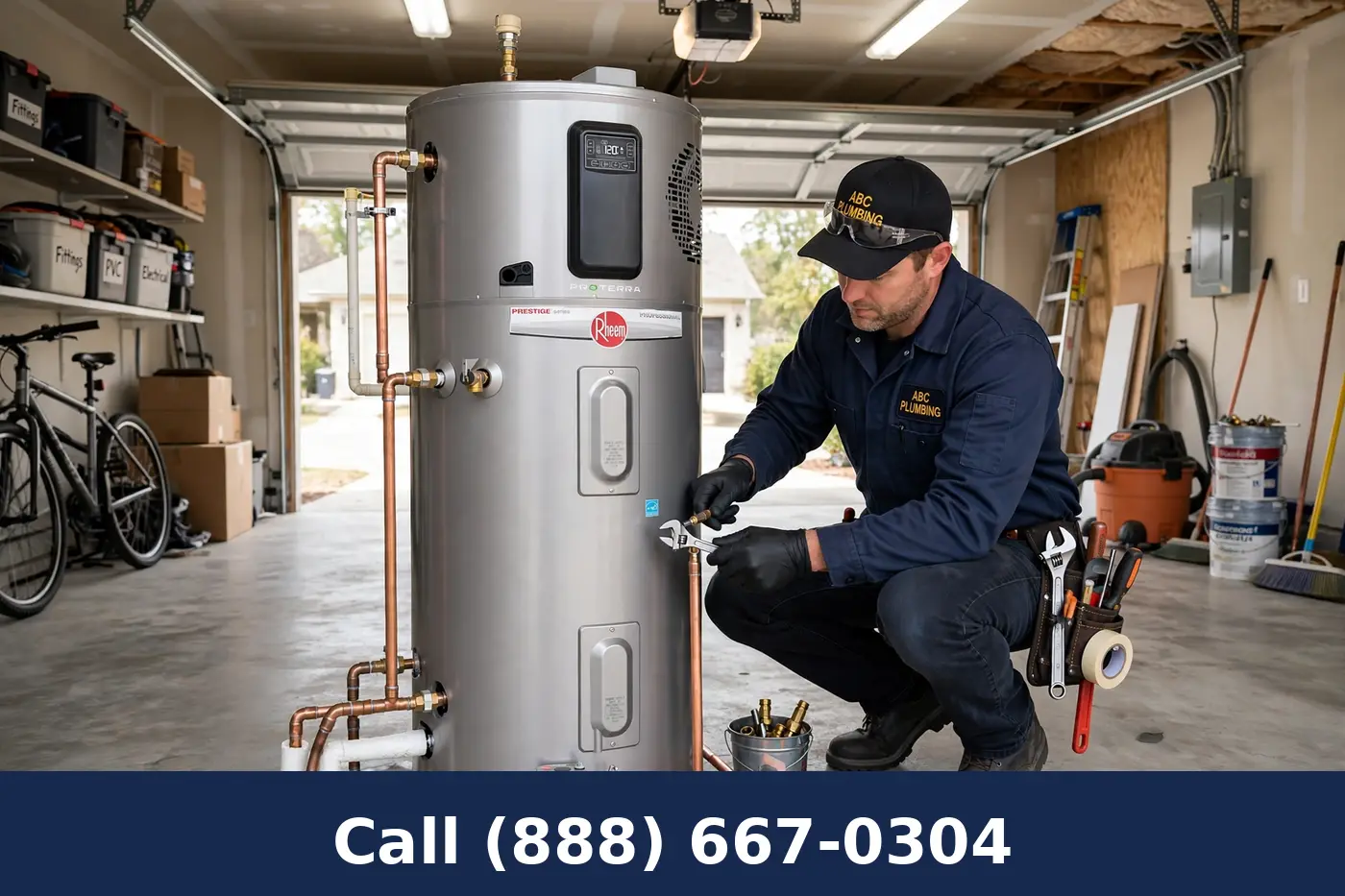
Starting price: Call for pricing
Heat pump water heater installation puts a hybrid unit in your home that pulls warmth from the surrounding air to heat water, using far less electricity than a conventional electric tank. Plumber Modesto Pros evaluates your space, electrical service, and condensate drainage, then installs the unit to manufacturer specifications.
How does a heat pump water heater work?
A heat pump water heater works like a refrigerator in reverse. Instead of generating heat with a burner or electric elements, it extracts warmth from the surrounding air and transfers it into the tank water. Moving heat takes far less electricity than creating it, which is why these units use a fraction of the energy of a conventional electric tank.
The unit still contains electric resistance elements as backup. If the surrounding air drops below the heat pump's operating range, or if demand suddenly spikes beyond what the heat pump can meet, the elements engage automatically. Most hybrid models also offer operating modes. An efficiency mode favors the heat pump, a hybrid mode balances speed and savings, and a high-demand mode brings in the elements for quick recovery.
Because the heat pump cools and dehumidifies the air it draws in, the space around the unit feels slightly cooler and drier. In a Modesto garage, that side effect is usually welcome. The process also produces condensate, a steady trickle of water that must drain somewhere, which is one of the installation details your technician plans for.
Where can a heat pump water heater be installed?
Location matters more for these units than for conventional tanks. The heat pump needs air to work with: manufacturers typically require 700 to 1,000 cubic feet of surrounding space with unrestricted airflow. A typical two-car garage qualifies easily. A small closet does not, unless louvers or ducting provide air exchange.
Ambient temperature must stay above roughly 45 degrees for efficient heat pump operation. Below that, the unit leans on its electric elements and the efficiency advantage shrinks. Modesto garages stay well within range for most of the year, but an uninsulated outbuilding that drops cold in winter is a poor candidate. Your technician measures the space and discusses seasonal temperatures before recommending the unit.
The floor must support a full tank, which can approach 900 to 1,000 pounds for larger models. A drain pan piped to a drain protects against water damage, just as with any tank. Clearances around the unit allow filter access and future service. Corrosive atmospheres, such as spaces storing pool chemicals or solvents, should be avoided since they damage the heat pump coil.
What electrical work is involved?
Heat pump water heaters run on 240-volt single-phase power, similar to a conventional electric tank but with lower amperage draw. Most need a 25-amp circuit, which many homes already have if an electric tank is being replaced. The technician verifies the breaker, wiring size, and grounding before connecting the unit.
Homes switching from gas to a heat pump unit need a new 240-volt circuit run to the location. That is straightforward electrical work, but it adds to the project scope. Your installer coordinates it as part of the installation. The gas line serving the old unit is capped safely if it will no longer be used.
What about the condensate drain?
Every heat pump water heater produces condensate while running, just like an air conditioner. The installation must route that water to a floor drain, a laundry standpipe, a condensate pump, or another approved drain. Letting it pool beneath the unit invites corrosion and water damage.
The drain line needs proper slope and should be checked periodically for blockages, since algae and debris can clog small lines. During installation, the technician confirms the condensate drains properly and the routing will not back up. On some installs, a condensate pump lifts the water to a distant drain when gravity drainage is not available. It is a small detail with outsized importance.
What happens on installation day?
The technician begins by confirming the site evaluation: space volume, ambient conditions, electrical capacity, and drain routing. The old unit, if any, is drained, disconnected, and removed. The new hybrid unit is set level in its drain pan and positioned with the manufacturer's required clearances for airflow and service access.
Water connections go on with a shutoff valve on the cold inlet and a temperature and pressure relief valve piped to a safe drain. Closed plumbing systems get an expansion tank. The condensate line is run to its drain and tested. The 240-volt connection is made, the tank is filled completely, and the unit is powered up.
Commissioning includes running the heat pump through a full cycle, verifying the backup elements engage when called, and checking the operating modes with you. The technician shows you the air filter location and how to clean it, since a clogged filter is the most common cause of reduced performance. You will know which mode suits your household and when to switch it.
How much energy do these units really save?
Heat pump water heaters are among the most efficient water heating options available for homes with suitable space. They typically use less than half the electricity of a conventional electric resistance tank, because moving heat is inherently more efficient than generating it. Households switching from an old electric tank notice the difference on their utility bills.
Actual savings depend on hot water usage, ambient temperatures, and the operating mode selected. Efficiency mode maximizes savings while high-demand mode trades some efficiency for speed. Your installer helps you choose the default mode for your routine. The washable air filter, cleaned every few months, keeps the savings from slipping.
What maintenance does a hybrid unit need?
Filter cleaning tops the list. The heat pump draws room air across its coil, and dust accumulation reduces airflow and efficiency. Most filters rinse clean under a faucet in minutes. Homes with pets or workshop dust nearby check more often.
The condensate drain needs an occasional look to confirm it drains properly. The anode rod and relief valve follow the same inspection schedule as any tank water heater. Beyond that, the sealed heat pump circuit needs no homeowner attention. Annual professional service covers the tank-side items and verifies the heat pump's performance.
What affects the cost of installation?
The unit itself, any new electrical circuit, and the condensate routing define the project. Replacing an existing electric tank in a suitable garage is the simplest case. Converting from gas adds the electrical run and gas line capping. Tight spaces that need louvered doors or ducted air add scope as well.
Rebates can offset the investment where utility or state programs apply. These programs change over time, so your installer can point you toward current offerings without promising any specific amount. The long-term energy savings do most of the financial work regardless.
How does Plumber Modesto Pros serve Modesto homeowners?
Plumber Modesto Pros installs heat pump water heaters across Modesto and the surrounding Central Valley. The team evaluates each home for the space, temperature, and drainage these units require, and will tell you honestly if your layout is not a good fit. Installations follow manufacturer specifications from placement through commissioning.
Call (888) 667-0304 to discuss a heat pump water heater for your home. A technician will assess your space, review your electrical service, and explain what the technology can do for your household.
Features
- Site evaluation for airflow, ambient temperature, and clearances
- 240-volt electrical circuit verification and connection
- Condensate drain line routed to an approved drain or pump
- Proper placement with 700-plus cubic feet of air space
- Washable air filter orientation and access check
- Operating mode setup matched to household usage
- Full commissioning with heat pump and element cycle testing
Benefits
- Water heating energy use cut dramatically versus standard electric
- Dehumidification of the surrounding space as a side benefit
- Quieter operation than many expect from heat pump equipment
- Multiple operating modes for efficiency or quick recovery
- Eligibility for utility rebates where programs apply
- Long equipment life with simple filter maintenance
- Lower strain on your electrical panel compared to tankless electric
Frequently asked questions
Will a heat pump water heater work in my garage?
Most Modesto garages are excellent locations, with ample air volume and moderate year-round temperatures. The technician confirms the space meets the manufacturer's cubic footage and clearance requirements. Small enclosed utility rooms usually need ventilation modifications.
Are heat pump water heaters noisy?
They produce a low hum comparable to a refrigerator or a quiet dishwasher while the heat pump runs. Most homeowners barely notice it in a garage. Bedrooms or living spaces directly adjacent to the unit may hear it faintly.
What happens in winter when the garage gets cold?
The unit's backup electric elements engage automatically when air temperature drops below the heat pump's efficient range. You still get hot water, just with less efficiency during those periods. Modesto winters rarely push garages below the threshold for long.
How long do heat pump water heaters last?
The tank portion follows the same 8 to 12 year range as conventional tanks, with the heat pump module often outlasting it. Regular filter cleaning and annual tank maintenance give the unit its best chance at a long service life.