
Grease Trap Installation Near Me
Starting price: Call for pricing
A grease trap or interceptor captures fats, oils, and grease from kitchen wastewater before they enter the plumbing system. Plumber Modesto Pros installs under-sink traps and outdoor interceptors for restaurants, cafes, and commercial kitchens, sized to your fixture count and flow rate. Proper installation keeps your kitchen compliant with local FOG rules and your drains flowing.
What is a grease trap?
A grease trap is a plumbing device that separates fats, oils, and grease, collectively called FOG, from kitchen wastewater before it reaches the drain lines. Wastewater enters the trap and slows down, which lets the lighter grease float to the top while heavier food solids sink to the bottom. The clarified water in the middle layer flows onward to the sewer. Without this separation step, grease cools and hardens inside pipes, building the blockages that plague commercial kitchens.
The term covers two scales of equipment. An under-sink or floor-mounted grease trap serves a smaller kitchen with modest flow, typically rated in gallons per minute. A grease interceptor is a large underground tank, often a thousand gallons or more, that serves busy restaurants and food courts. Both do the same job at different scales, and local codes usually dictate which one your operation needs.
Why do commercial kitchens need grease traps?
Grease is the leading cause of sewer blockages in food-service districts. When hot grease leaves a fryer or a wash sink, it flows easily, but it congeals as it cools inside the building drains and the city mains. The result is hardened deposits that narrow pipes, cause backups, and in severe cases contribute to sanitary sewer overflows into streets and waterways.
Municipalities respond with FOG programs that require food establishments to install and maintain grease control equipment. Health inspectors check traps during routine visits, and cities can issue violations or fines when grease leaves your property and enters their system. A properly installed trap protects your own plumbing first and keeps you on the right side of these requirements.
How is the right size determined?
Sizing starts with your fixtures. Every sink compartment, dishwasher, floor drain, and food-prep sink that produces grease is counted, and each is assigned a flow rate in gallons per minute. A three-compartment sink moves far more water than a hand sink, and a commercial dishwasher adds its own significant flow. The total fixture load sets the minimum flow rating the trap or interceptor must handle.
Beyond raw flow, local codes often set minimum capacities based on seating, meals served, or kitchen type. An undersized trap fills with grease too quickly, lets FOG pass through, and creates odors and frequent service calls. An oversized unit costs more upfront but runs reliably with longer intervals between pump-outs. We work from your fixture list and the applicable local standards to land on the right size.
How does our grease trap installation process work?
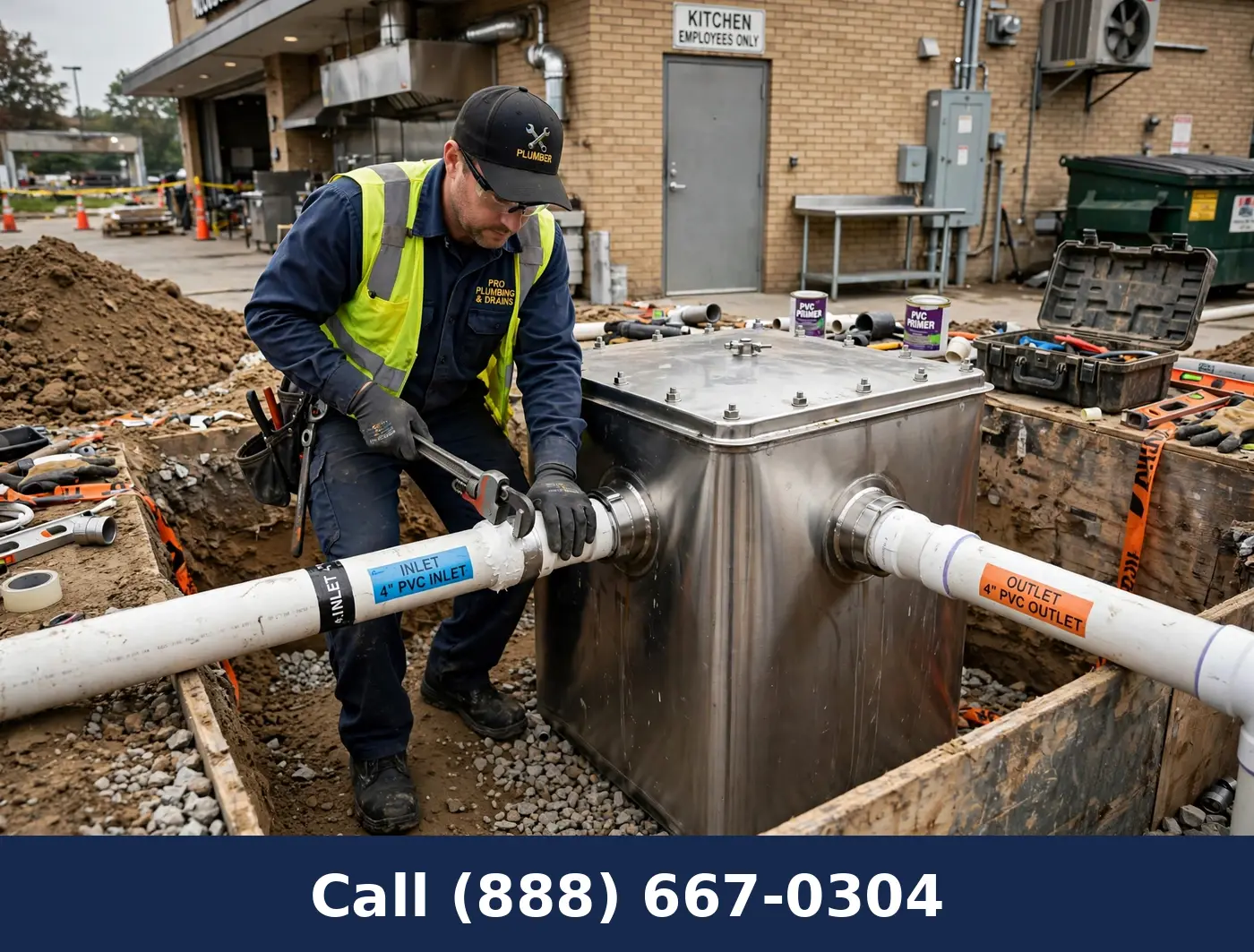
The process begins with a site survey of your kitchen: fixture locations, drain routing, available space, and access for future cleaning. We calculate the required capacity and confirm the equipment choice against local requirements. For under-sink traps, we verify clearances and plan the drain and vent connections. For outdoor interceptors, we plan the excavation, the tank setting, and the inlet and outlet piping.
Installation sets the unit level and plumb, connects the flow control device on the inlet, and ties in the venting so the trap never becomes air-bound. We run water through the system to verify proper flow and separation. Then we walk your staff through the basics of what the trap does and what should never go down the drains feeding it. The job closes with documentation of the installed capacity for your records.
What should never go into a grease trap?
Dishwashers and garbage disposals should not discharge into small under-sink traps, since high-temperature water melts grease through the unit and ground food waste overloads it. Used fryer oil must never be poured down any drain; it belongs in a dedicated recycling container. Chemical degreasers and drain cleaners are counterproductive: they emulsify grease and push it downstream instead of removing it, and many municipalities prohibit them.
Staff habits shape trap performance as much as the equipment does. Scraping plates into the trash, wiping greasy pans before washing, and using sink strainers keep the solids load down. A short training conversation with your kitchen team during installation pays off in fewer pump-outs and cleaner inspections.
What maintenance will the trap need?
Every trap needs regular pump-outs by a professional waste hauler, since the collected grease and solids must be removed and disposed of at an approved facility. The widely used service trigger is the twenty-five percent rule: pump before floating grease and settled solids together exceed a quarter of the trap's liquid depth. For most commercial kitchens, that translates to service every one to three months.
Record keeping is part of compliance in most jurisdictions. Keep every pump-out manifest and service receipt on file, since inspectors ask for them. Between services, staff can monitor the trap visually and note odors or slow drainage as early warnings. A maintenance schedule built around your actual grease output keeps the trap working and the inspectors satisfied.
What does a failed grease inspection look like?
An inspector who finds an overdue trap typically documents the grease level, photographs the condition, and issues a notice requiring corrective action. Repeat violations can bring fines, and a kitchen with a grease-caused backup may face a temporary shutdown until the system is serviced. None of this is theoretical; FOG enforcement is a routine part of municipal sewer programs.
The kitchens that pass inspections without drama share one habit: they service the trap on schedule and keep the paperwork. A clean, accessible trap with current manifests tells the inspector everything is under control. Installation is only the first step; disciplined maintenance is what keeps you passing.
How does Plumber Modesto Pros serve Modesto-area restaurants and kitchens?
Plumber Modesto Pros installs grease traps and interceptors for restaurants, cafes, bakeries, and commercial kitchens across Modesto and the surrounding Central Valley. We size each system from your real fixture load and the requirements that apply in your jurisdiction, then install it with proper venting and accessible placement. Our technicians leave your staff with practical guidance on keeping the trap performing between services.
Call (888) 667-0304 to discuss grease control for your kitchen. We will survey your operation, recommend the right trap or interceptor, and install it correctly the first time. Clean drains and smooth inspections start with the right equipment.
Features
- Under-sink hydromechanical traps for smaller commercial kitchens
- Outdoor underground interceptors for high-volume operations
- Sizing calculations based on fixtures, flow rates, and local rules
- Flow control devices that regulate incoming water for separation
- Proper venting so the unit never becomes air-bound
- Durable corrosion-resistant construction with watertight covers
- Accessible placement that allows convenient cleaning and inspection
Benefits
- Meet local FOG requirements for your commercial kitchen
- Keep grease out of your drain lines and the city sewer
- Reduce the foul odors that grease buildup creates
- Avoid health-code violations tied to grease discharge
- Protect your kitchen from grease-related backups
- Size the system to your actual fixture load
- Document compliance for inspections and landlords
Frequently asked questions
What is the difference between a grease trap and a grease interceptor?
A grease trap is a smaller indoor unit, usually under a sink, while a grease interceptor is a large outdoor underground tank. The choice depends on your kitchen's flow rate and local code.
How do you determine the right size?
Sizing follows your fixtures and their flow rates: sinks, dishwashers, and floor drains are counted and converted to gallons per minute. Your local inspector or our technician confirms the required capacity.
Can a dishwasher drain through a grease trap?
No, dishwashers and garbage disposals should not discharge directly into small under-sink traps. High-temperature water and ground food waste overwhelm the separation process.
Where should a grease trap be located?
The trap must sit as close to the grease-producing fixtures as practical while staying accessible for cleaning. It also needs proper venting so it does not become air-bound.
How often do grease traps need pumping?
They should be pumped before floating grease and settled solids exceed a quarter of the liquid depth. Most commercial kitchens land on a one-to-three-month cycle depending on volume.