
Grease Trap Cleaning & Maintenance Near Me
Starting price: Call for pricing
Grease trap cleaning and maintenance is the scheduled pump-out and servicing that keeps your trap capturing FOG instead of passing it downstream. Plumber Modesto Pros provides routine cleaning for restaurants and commercial kitchens, removing floating grease and settled solids and leaving the unit ready to work. Regular service keeps you compliant, without odors, and protected from grease-related backups.
What does grease trap cleaning involve?
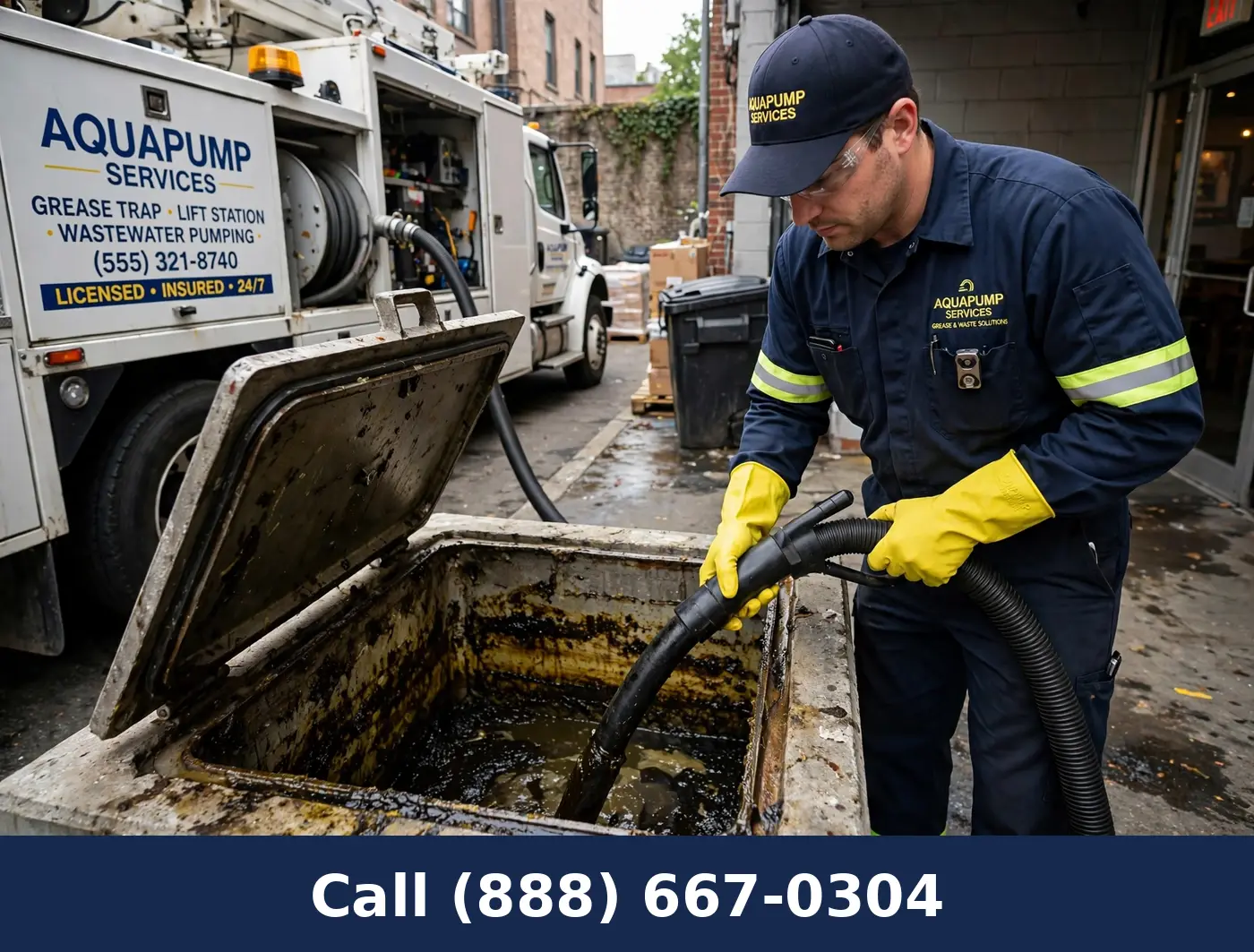
A proper cleaning is a complete pump-out, not a skim of the surface. The service truck's vacuum removes everything inside the trap: the floating grease cap, the wastewater in the middle, and the settled food solids on the bottom. The walls, baffles, and inlet and outlet tees are then scraped and washed down so no residue is left to seed the next buildup. The trap is returned to service empty and ready to separate a fresh load of kitchen wastewater.
Partial cleanings and decanting, where liquid is pumped off and poured back, defeat the purpose and are prohibited in many jurisdictions. A full pump-out resets the trap to zero, which is the only way the separation process can work at full efficiency. When the truck leaves, the unit should look and smell like a clean piece of equipment, not a neglected one.
Why is regular maintenance required?
A grease trap only works while it has room to separate. As grease and solids accumulate, the working volume shrinks, and wastewater passes through too quickly for separation to happen. Grease then carries past the trap into your building drains and the city sewer, where it cools, hardens, and builds blockages. The trap becomes a decoration rather than a device.
Municipal FOG programs treat maintenance as a legal obligation, not a suggestion. Inspectors check pump-out records, measure grease levels, and can cite a kitchen whose trap is overdue. Beyond compliance, neglected traps create the odors that drive customers away and the backups that close a kitchen mid-service. Scheduled maintenance is far cheaper than either consequence.
How often should service happen?
The industry standard is the twenty-five percent rule: schedule a pump-out before floating grease and settled solids together reach a quarter of the trap's liquid depth. For a high-volume fried-food kitchen, that threshold can arrive monthly. A lighter operation with a generously sized interceptor may stretch to a quarterly cycle. The right frequency comes from watching your trap, not from a generic calendar.
Several factors push the interval shorter. Undersized traps fill faster, heavy fryer use generates more FOG, and poor staff habits like pouring oil down drains accelerate accumulation. Seasonal menu changes can shift grease output noticeably. A service provider who measures levels at each visit can tune the schedule to your kitchen's reality instead of guessing.
What are the warning signs of an overdue trap?
Slow drainage at the sinks feeding the trap is often the first signal, as grease narrows the downstream piping. Persistent foul odors around the trap or in the kitchen suggest the unit is full and going septic. Gurgling sounds in the plumbing, grease visibly floating in sink drains, and wastewater backing up into floor sinks all mean the trap has stopped protecting you.
By the time a backup occurs, the problem has moved beyond the trap into the drain lines, and cleaning the lines adds to the bill. Treat the early signs as the deadline, not the backup itself. A quick level check takes minutes and tells you exactly where the trap stands.
What happens during a scheduled maintenance visit?
The technician starts by measuring grease and solids levels to confirm the service is due and to track how quickly your trap fills. The full pump-out follows, with all contents vacuumed into the truck for transport to an approved disposal facility. Baffles and tees are scraped and washed, and the interior is inspected for cracks, corrosion, or damaged components.
The drain lines downstream get attention too, since grease carryover past a full trap hardens in the piping. For kitchens with chronic carryover, hydro jetting the line restores full diameter. The visit closes with a waste manifest for your records and a note of the measured levels, which helps set the next service date. You get documentation that satisfies inspectors and a trap ready for another cycle.
What should kitchen staff do between services?
Daily habits determine how hard the trap works. Scrape plates and cookware into the trash before washing, wipe heavy grease with paper towels, and keep sink strainers in place to catch solids. Used fryer oil goes into recycling containers, never down any drain. Mop water with cleaning chemicals should not be dumped into sinks that feed the trap.
A monthly visual check by a manager catches problems early: lift the lid, note the grease depth, and sniff for unusual odors. Keep the area around the trap clear so service crews can work efficiently. Brief new hires on these basics during onboarding, since one careless shift can undo weeks of good practice.
What records should you keep for grease trap compliance?
Keep every pump-out manifest your hauler provides, since each one documents the date, the volume removed, and the disposal site. Inspectors routinely ask for these during visits, and missing paperwork can draw a citation even when the trap itself is clean. Store them where a manager can produce them on short notice.
Beyond manifests, keep your installation records showing the trap's rated capacity and a simple log of service dates with the measured grease levels. This log reveals whether your service interval still matches your kitchen's output and gives you evidence if a dispute ever arises. Good records are as much a part of compliance as the cleaning itself. Set a calendar reminder to review the log each quarter and confirm the next service date.
How does Plumber Modesto Pros keep Modesto kitchens compliant?
Plumber Modesto Pros provides grease trap cleaning and maintenance for restaurants, cafes, and commercial kitchens across Modesto and the surrounding Central Valley. We build each service schedule around your measured grease output rather than a one-size-fits-all calendar, and we leave you with the manifests and records inspectors expect. Our technicians also watch your downstream lines for carryover and tell you plainly when jetting is needed.
Call (888) 667-0304 to set up a maintenance program for your kitchen. We will assess your trap, establish the right service rhythm, and keep your operation compliant, without odors, and flowing. Grease is relentless, but a disciplined schedule keeps it exactly where it belongs.
Features
- Complete pump-out of floating grease, wastewater, and settled solids
- Scraping and washing of trap walls, baffles, and components
- Inspection of the trap's condition during every service
- Scheduling built around your kitchen's grease output
- Service manifests and records for every visit
- Drain line checks for grease carryover past the trap
- Reminder scheduling so service never slips overdue
Benefits
- Stay ahead of health-code violations and fines
- Prevent grease backups that shut a kitchen down
- Keep foul odors out of your dining and prep areas
- Extend the working life of your trap and drain lines
- Hold service records that satisfy any inspector
- Match service frequency to your actual grease output
- Protect the city sewer from your kitchen's FOG load
Frequently asked questions
How often should a grease trap be cleaned?
Most commercial traps need service every one to three months. The governing standard is the twenty-five percent rule: pump before grease and solids exceed a quarter of the trap's depth.
Can I clean my own grease trap?
In most commercial settings, no. Grease trap waste is regulated and must be hauled and disposed of by qualified professionals with the right equipment and manifests.
Are chemical degreasers a good substitute for pumping?
No, they make the problem worse. Chemical cleaners emulsify grease and push it downstream, and many municipalities explicitly prohibit their use in traps.
What are the signs my trap needs service now?
Slow drains, persistent odors near the trap, gurgling in the plumbing, and visible grease in sink drains all mean service is overdue. Do not wait for a backup.
Do I get paperwork after each cleaning?
Yes, haulers generate a manifest for each pump-out that tracks the waste to its disposal site. Keep your copies on file, since inspectors routinely ask for them. Keep your copies on file where a manager can find them, since inspectors routinely ask for them.