Gas Line Installation Near Me
Starting price: Call for pricing
Adding a gas range, dryer, water heater, fireplace, or outdoor grill starts with a gas line that is sized for the load and built to code. Plumber Modesto Pros runs new gas piping in black iron or CSST, sized from the appliance BTU ratings and the length of the run. The work is pressure-tested before any gas flows. Every new line gets accessible shutoff valves and a documented pressure test.
What does a gas line installation involve?
A gas line installation runs new fuel piping from the existing gas system to an appliance location. The work starts with a load calculation. Every appliance that will draw from the line has a BTU rating, and the pipe must be large enough to deliver that energy over the full length of the run. Then the piping goes in, either rigid black iron with threaded joints or corrugated stainless steel tubing, known as CSST, depending on the route and local code. Joints are sealed with gas-rated thread compound, the line is pressure-tested with air before any gas enters it, and each appliance branch gets its own accessible shutoff valve. Plumber Modesto Pros treats every gas line as safety-critical work, because it is.
How is a gas line sized correctly?
Sizing starts with the total BTU demand. A gas range might need 60,000 BTU per hour while a dryer needs around 22,000, and the pipe must carry the full combined load without excessive pressure drop. Length matters as much as load. A long run of small pipe starves the appliance at the far end, showing up as weak burner flames or a dryer that heats too slowly. Fittings add equivalent length, since every elbow restricts flow. Sizing tables in the National Fuel Gas Code give the capacity of each pipe diameter at each length, and the installation is designed from those tables. An undersized line is not just a performance problem. Appliances starved of gas can soot, misfire, or produce carbon monoxide. Getting the size right on paper comes before any pipe is cut.
• Total BTU load of all appliances sets the minimum pipe capacity. • Longer runs and more fittings require larger pipe diameter. • Undersized lines cause weak flames, sooting, and poor appliance performance.
What pipe materials are used for gas lines?
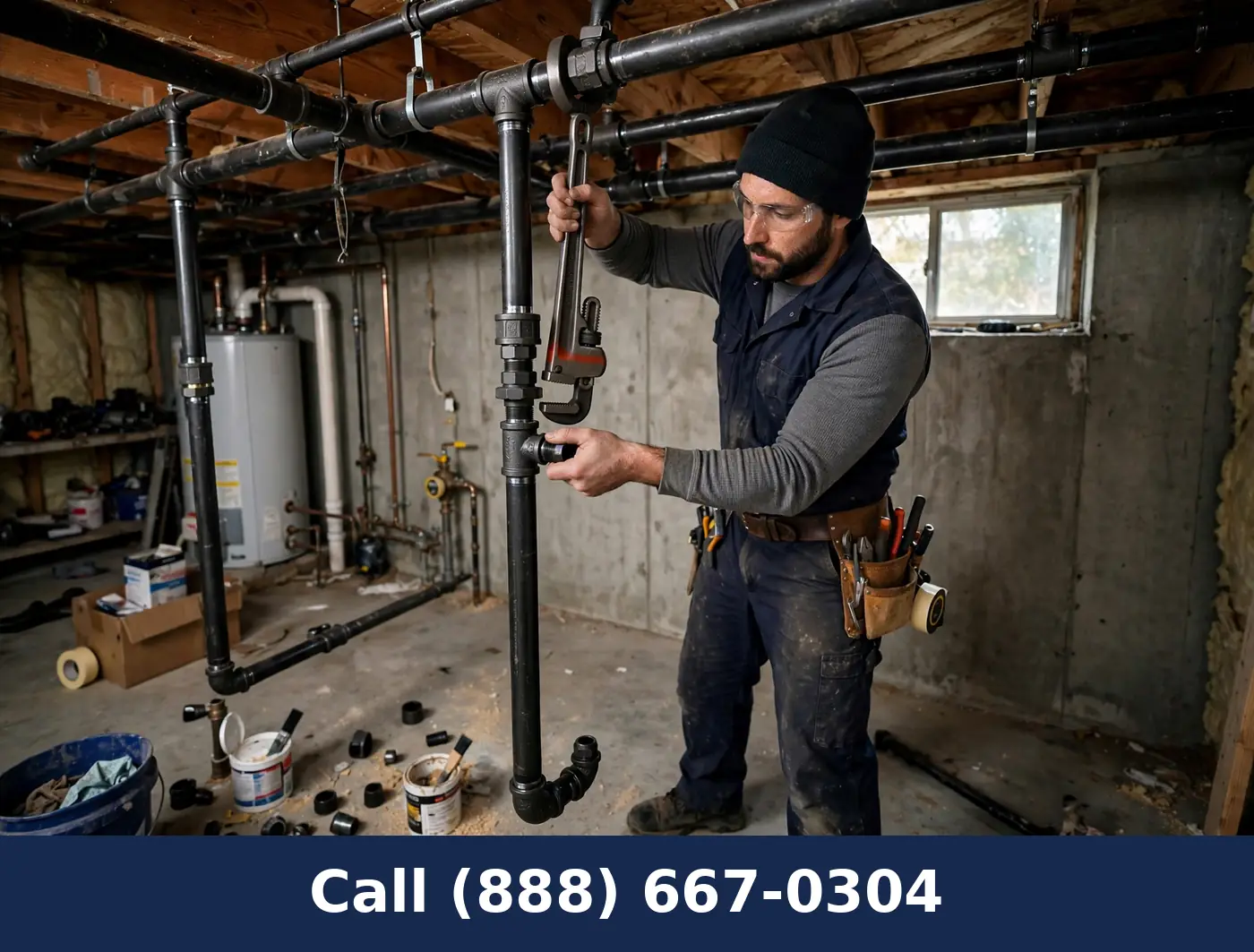
Black iron pipe is the traditional material: rigid threaded steel, assembled joint by joint with pipe wrenches and gas-rated sealant. It is strong, durable, and suitable for most interior runs. CSST is flexible corrugated stainless steel tubing that snakes through framing with far fewer joints, which means fewer potential leak points and simpler routing in remodels. Each has its place. Black iron suits exposed runs and appliance connections. CSST suits long concealed runs through walls and attics. CSST must be bonded to the home's grounding system with heavy copper wire, and it must terminate in a proper fitting before connecting to the appliance. Underground runs use polyethylene pipe rated for gas service, buried at code depth and properly sleeved where it enters the building. Plumber Modesto Pros selects the material that fits the route, the code, and the appliance.
What is a gas pressure test?
Before gas is turned on, the new piping is isolated from the rest of the system and pressurized with air, typically well above normal operating pressure. A gauge watches the line for a set hold time, often 15 minutes to several hours depending on the job and local requirements. If the needle does not move, the piping is gas-tight. If it drops, every joint is checked with leak detection solution until the leak is found and fixed, and the test runs again. Appliances are isolated or disconnected during high-pressure testing so their internal valves are not damaged. The pressure test is the proof that the installation is safe, and Plumber Modesto Pros documents the result for your records.
What safety details matter on a gas installation?
Every appliance branch needs a manual shutoff valve within reach, in the same room as the appliance and accessible without moving it. A sediment trap, a short capped nipple pointing down, goes in the line just before the appliance connection to catch rust and debris before it reaches the burner valves. Thread sealant must be rated for gas; standard white thread tape is not acceptable on gas joints. CSST runs need protection plates where they pass through framing and must be kept clear of sharp edges. After the gas is turned on, every joint is checked again with leak detection solution, appliance burners are observed for steady blue flames, and pilots are lit and adjusted. These steps are not optional extras. They are the standard of care for gas work.
When does a home need a new gas line?
The most common reason is a new appliance. Switching from electric to a gas range, adding a gas dryer, installing a gas water heater, or putting in a gas fireplace or outdoor grill all start with the line. Remodels often need lines relocated when kitchens move. Sometimes the existing line is fine for the old appliance but too small for the new one's BTU demand, and a larger branch must be run. Older homes may still have gas piping that predates modern materials and should be evaluated before new appliances are connected. In each case, the new line is designed as part of the whole system so the added load does not starve the appliances already connected.
What affects the cost of a gas line installation?
Length of the run is the biggest factor. A short branch across a basement ceiling is a different job than a line routed across the house through finished walls. Pipe material and diameter change the material figure. The number of appliances on the new line, and whether each needs its own shutoff and sediment trap, adds fittings and labor. Access matters: open basements and attics are straightforward, while finished ceilings and slab floors are not. Trenching for an underground run to a grill or fire feature is its own scope. For an exact figure, call (888) 667-0304 and describe the appliance and the route.
Why have Plumber Modesto Pros install your gas line?
Gas piping is unforgiving work. A joint that weeps, a line sized too small, or a missing shutoff valve can turn into a dangerous situation. Plumber Modesto Pros designs each gas line from the BTU load, installs it in the right material for the route, pressure-tests it before gas flows, and verifies every joint and flame after. You get a line that feeds your appliances fully, shutoffs you can reach, and a documented pressure test in your records. Call (888) 667-0304 to plan your gas line installation.
Features
- Pipe sizing calculated from BTU load and run length
- Black iron or CSST installed to code for each application
- Gas-rated thread sealant on every threaded joint
- Sediment traps installed ahead of appliance connections
- Pressure testing with air before gas is introduced
- Accessible manual shutoff valve on each new branch
- CSST bonding to the grounding system where required
Benefits
- Gas appliances fed by a correctly sized, leak-tight line
- Pressure-tested piping you can trust behind walls
- The right pipe material for each part of the run
- Shutoff valves placed where you can reach them
- Work that meets local gas code requirements
- No more starving a range or dryer of gas
- Documentation of the pressure test for your records