
Gas Leak Detection & Repair Near Me
Starting price: Call for pricing
Suspect a gas leak? Natural gas is odorless, so utilities add a rotten-egg odorant called mercaptan to make leaks noticeable. Plumber Modesto Pros locates gas leaks with electronic combustible gas detectors and confirms each one with bubble testing, then repairs the failed joint or section to code. If you smell gas right now, leave the area and call your gas utility first.
What should you do if you smell gas?
Leave the area. Do not flip light switches, do not light anything, and do not try to find the leak yourself. Once you are out, call your gas utility's emergency line so they can shut off the meter if needed. Only after the urgent danger is handled does detection and repair work begin. Plumber Modesto Pros performs the detection and repair that follows: finding the exact source of the leak and fixing it to code. That sequence matters. Detection equipment and repair tools have their place, and that place is after the area is safe.
How can you tell if you have a gas leak?
Smell is the first signal. Mercaptan, the odorant added to natural gas, smells like rotten eggs or sulfur, and it is added precisely so leaks announce themselves. Sound is the second: a faint hissing or whistling near piping or an appliance can mean gas escaping under pressure. Sight offers more clues. Dust blowing where there is no draft, dead or dying vegetation along a buried line's path, or bubbles in standing water near piping all point to escaping gas. Inside, a burner flame that burns yellow or orange instead of blue suggests incomplete combustion, which can accompany a supply problem. Unexplained headaches, dizziness, or nausea that ease when you leave the house deserve urgent attention and a call to the utility. Any one of these signs is reason enough to act.
• Rotten-egg smell is the odorant added so leaks can be detected. • Hissing near piping or appliances means gas escaping under pressure. • Dead vegetation or blowing dust can mark an outdoor leak.
How do professionals find the exact leak?
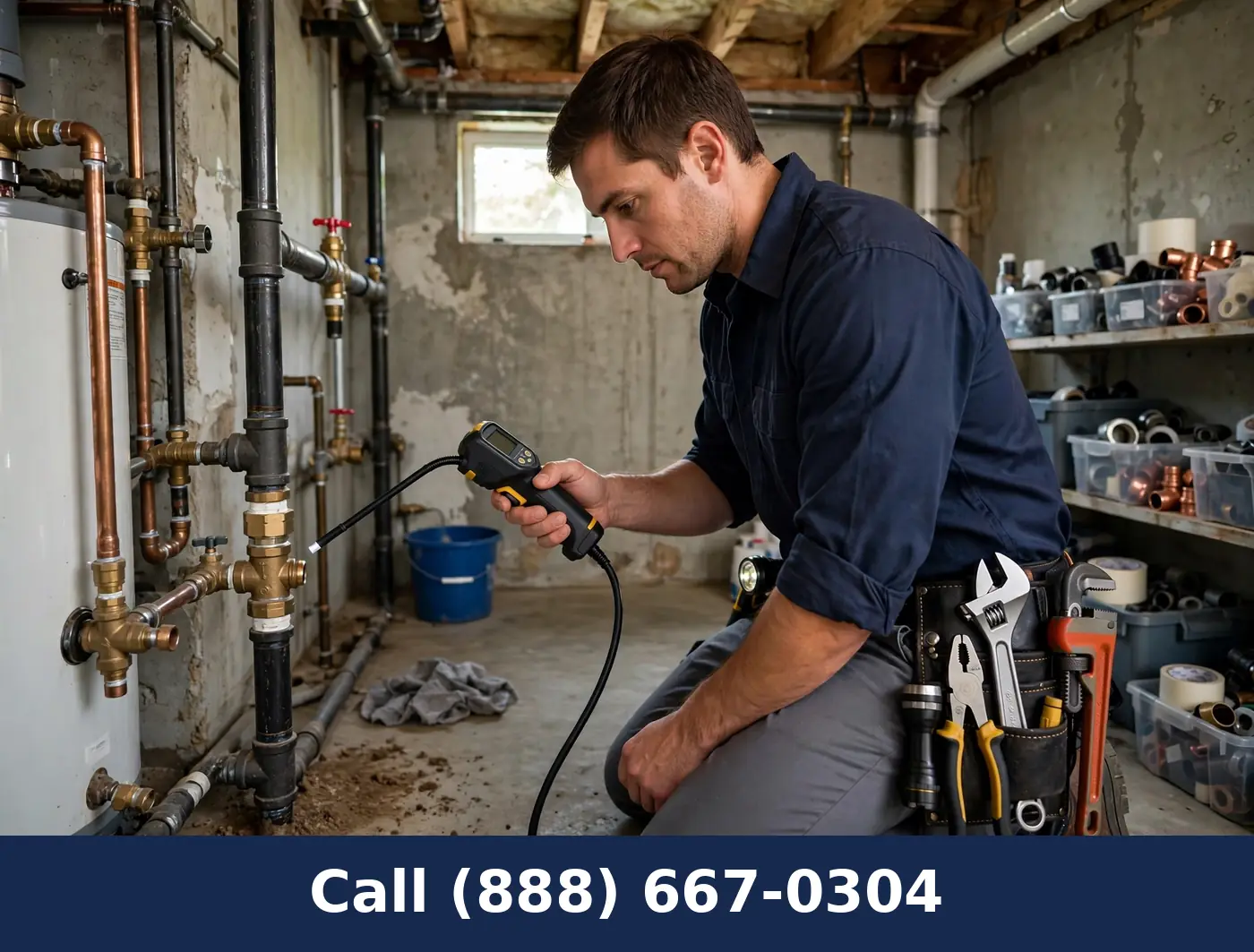
Detection starts broad and narrows down. A technician sweeps the piping system with an electronic combustible gas detector, a sensitive sniffer that alarms as gas concentration rises. The sweep covers exposed piping, appliance connectors, valve stems, unions, and the meter assembly. Crawlspaces and utility closets get attention too, since piping often runs where it is rarely seen. Wherever the detector reacts, the joint gets brushed with leak detection solution, a soapy liquid formulated for the job. Escaping gas blows visible bubbles through the film, marking the exact leak point. This two-step method matters: the detector finds the neighborhood, and the bubbles find the address. For buried service lines, the process moves outdoors with detection along the pipe route and attention to soil and vegetation clues. Rushing this step means repairing the wrong joint while the real leak keeps going.
What kinds of leaks are most common?
Loose or aging appliance connectors are frequent culprits. The flexible connectors behind ranges and dryers work hard, flexing every time the appliance moves, and their fittings can loosen over the years. Threaded joints that were sealed with the wrong compound, or not enough of the right one, weep slowly. Valve stems on older shutoff valves can leak around the packing. Corroded sections of black iron pipe develop pinholes, especially where moisture collects. Underground, shifting soil and root pressure stress buried piping and its joints. Each type has its own correct repair, which is why the detection step comes first. The fix for a loose connector is very different from the fix for a corroded run.
How is a detected leak repaired?
The gas is shut off and the failed component is addressed directly. A loose fitting is disassembled, cleaned, resealed with gas-rated compound, and retightened to spec. A damaged connector is replaced with a new one, never patched. A corroded pipe section is cut out and new pipe is fitted in. A failing valve is replaced. After the repair, the affected section is pressure-tested with air and gauge-monitored for the required hold time. Then gas is restored and every joint is bubble-checked again under working pressure. Appliances are relit and their flames observed for steady blue combustion. The repair is only finished when the detector stays silent and the bubbles stay absent. That two-step proof is what makes the result trustworthy. It is the difference between hoping the leak is fixed and knowing it.
What should you never do when checking for a gas leak?
Never use an open flame to look for a leak. It sounds obvious, but people still do it, and the result can be catastrophic. Never ignore a faint odor because it comes and goes; intermittent smells often mean a leak that worsens under certain conditions. Never try to tighten gas fittings yourself without knowing the system. Overtightening cracks fittings, and disturbing a corroded joint can turn a weep into a rupture. Never assume the utility's meter shutoff fixes the problem permanently. It stops the urgent danger, but the leak is still there waiting for the gas to come back on. Leave detection and repair to people with the right equipment. A professional visit also documents the leak location and the repair, which protects you if questions come up later.
What affects the cost of leak detection and repair?
Detection time depends on the size of the system and how hidden the piping is. Exposed basement piping is quick to sweep; piping buried in walls or under slabs takes longer. The repair itself depends on what failed: a connector replacement is a small job, while cutting out corroded pipe inside a finished wall is larger. If the detection reveals multiple leaks or systemic corrosion, the recommendation may shift from repair to replacement of the run. For an exact figure, call (888) 667-0304 and describe what you are experiencing.
Why call Plumber Modesto Pros for gas leak detection and repair?
A gas leak is the one plumbing call where precision matters most. Plumber Modesto Pros finds the exact leak with electronic detection and bubble confirmation, repairs it to code with the right materials, pressure-tests the work, and verifies every appliance before leaving. You get a documented result and clear guidance on what to watch for going forward. If you smell gas right now, leave and call your utility first. For the detection and repair that comes next, call (888) 667-0304.
Features
- Electronic combustible gas detector sweep of all piping
- Bubble testing of every suspect joint and fitting
- Inspection of appliance connectors and valve stems
- Buried line tracing for outdoor leak sources
- Code-compliant repair of the failed joint or section
- Post-repair pressure test with gauge monitoring
- Flame and appliance operation checks after restoration
Benefits
- Know exactly where the gas is escaping
- Small leaks found before they become dangerous
- Electronic detection plus bubble confirmation
- The leak repaired to code, not just located
- Every joint rechecked after the repair
- Clear guidance on what to do if you smell gas again
- Documentation of the detection and repair for your records