Galvanized Pipe Replacement Near Me
Starting price: Call for pricing
Galvanized steel pipes were standard in homes built before the 1960s, and most have now corroded from the inside out. Plumber Modesto Pros replaces failing galvanized lines with modern copper or PEX, restoring pressure and water clarity. It is the definitive fix for the rust, leaks, and trickling fixtures that old steel pipe causes.
What are galvanized pipes and why do they fail?
Galvanized pipe is steel pipe coated with a layer of zinc to resist rust. It was the standard water supply material in American homes from the early 1900s through the 1960s. The zinc coating protects the steel for a while, but water eventually wears through it, and then the underlying steel corrodes. The corrosion happens from the inside, where it cannot be seen, narrowing the pipe and weakening the walls. With a typical lifespan of 40 to 50 years, nearly every galvanized system still in service is past its expected life. Modesto's older and historic neighborhoods still hold many homes plumbed entirely in this aging material.
What are the warning signs of failing galvanized pipe?
The signs build up over time and are easy to recognize once you know them. Water pressure declines gradually as rust and mineral deposits narrow the inside of the pipes. Water runs brown, yellow, or orange when first turned on, especially in the morning after sitting overnight. Pinhole leaks appear at joints and threaded connections, which are the weakest points. Rust-colored stains show up on sinks, tubs, and laundry. Water may carry a metallic taste or odor. Visible corrosion on exposed pipes in garages or crawl spaces means the hidden pipes are in worse shape. Two or more of these signs together mean the system is failing.
Can galvanized pipes be repaired instead of replaced?
Small, isolated leaks can be patched, but patching a galvanized system is usually buying time rather than solving the problem. The corrosion is system-wide: when one joint fails, the rest of the pipe is in similar condition, and the next leak is a matter of time. Each repair also disturbs already-weakened pipe, which can start new leaks nearby. Descaling can improve flow temporarily, but it cannot restore thinned walls or fix corroded threads. When the pipe material itself is the problem, replacement is the only repair that addresses the cause. A professional assessment of the pipe's condition makes the call clear.
What materials replace galvanized pipe?
Copper and PEX are the standard replacements, and both outperform galvanized steel in every way that matters. Copper brings a long proven history, natural corrosion resistance, and familiarity to every plumber. PEX brings flexibility, fewer joints, resistance to scale and corrosion, and simpler installation through existing walls. CPVC is another option in some situations. Where new copper or PEX meets any remaining metal pipe, dielectric unions prevent galvanic corrosion between dissimilar metals. The technician recommends the material that best fits the home's layout, water chemistry, and the homeowner's priorities.
How does galvanized pipe replacement work?
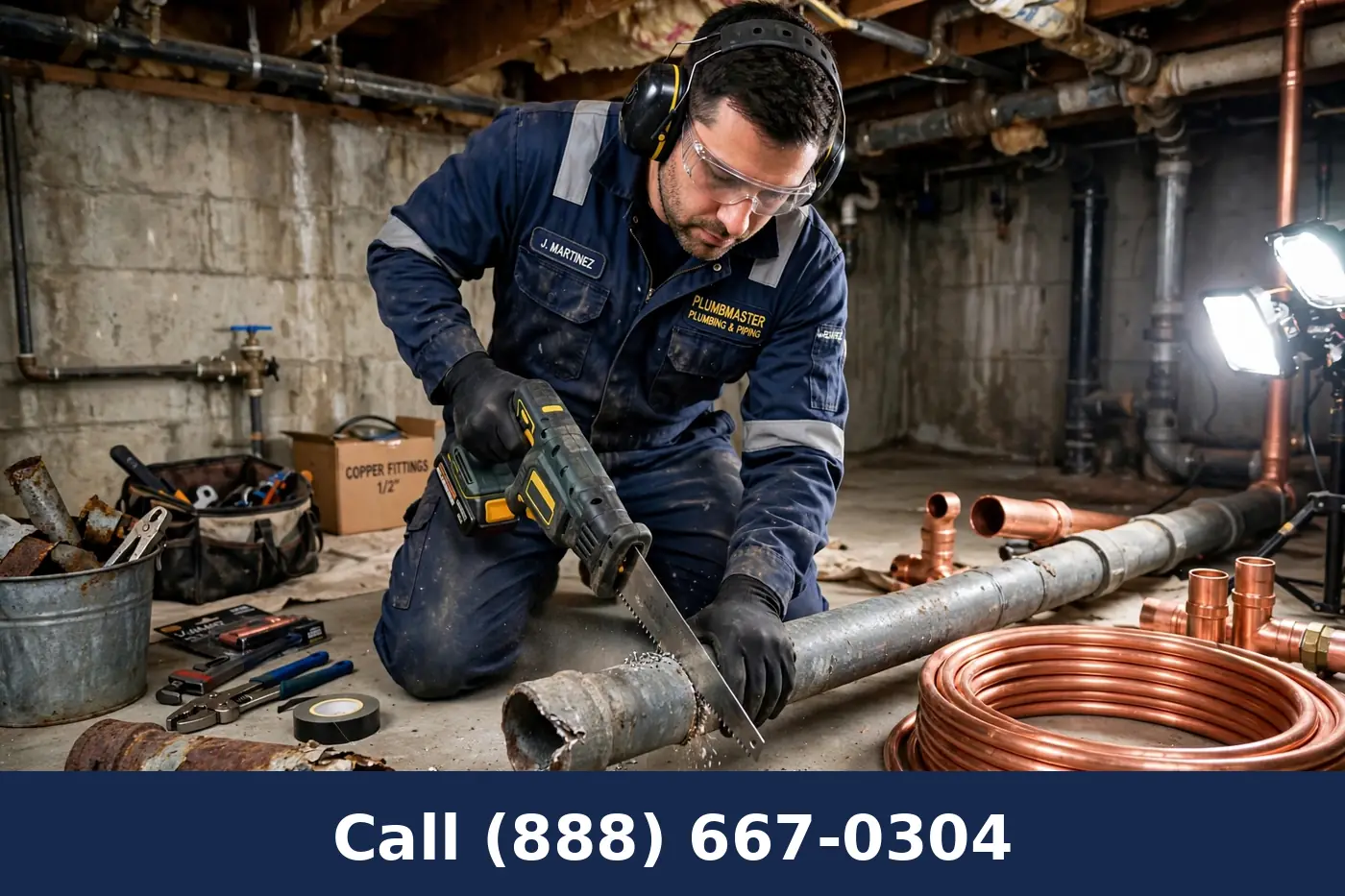
The project follows the same careful sequence as a whole-home repipe. A walkthrough maps the existing galvanized runs and plans the new layout. Water is shut off and the old steel pipe is cut out section by section; galvanized is heavy and rigid, so removal takes more effort than pulling out copper. New copper or PEX goes in along the planned routes, with new shut-off valves at each fixture. Dielectric fittings go wherever new material meets old. The complete system is pressure-tested before any wall is closed. Drywall is patched, textured, and painted to match. Water is restored each evening during the project, and a final walkthrough confirms pressure and clarity at every tap.
How disruptive is the replacement?
Most homes take a few days, with the schedule depending on size and the number of fixtures. Galvanized removal is the messiest phase because the rigid pipe must be cut out in sections and the old threaded joints can be stubborn. Rusty water and sediment get flushed from the lines as work progresses. The crew protects floors and furnishings and cleans up daily. Wall openings are kept to the minimum needed for access, and PEX can often thread through with fewer openings than rigid materials need. Once the new pipe is in and tested, patching and painting return the home to normal.
What affects the cost of galvanized pipe replacement?
The amount of galvanized pipe in the home is the primary factor, since every foot must be removed and replaced. The replacement material affects labor, with PEX typically installing more quickly than copper. Accessibility matters: exposed runs in crawl spaces go more easily than lines buried in finished walls. The number of fixtures sets the connection count. If the project expands into a full repipe versus replacing only the worst sections, the scope changes accordingly. For an exact quote on your home, call (888) 667-0304 to schedule an assessment of your galvanized system.
How does Plumber Modesto Pros handle galvanized replacement in this area?
Plumber Modesto Pros replaces galvanized plumbing in older and historic homes across the Modesto area, where this aging pipe is still common. Each project starts with an honest assessment of the pipe's condition, so you know whether targeted replacement or a full repipe is appropriate. Installations use modern materials with proper dielectric separation and full pressure testing. If your water runs rusty and your pressure keeps fading, call (888) 667-0304 and get the old steel out of your walls.
Is it better to replace galvanized pipe in stages or all at once?
A common question is whether to swap out galvanized pipe a section at a time or to repipe the whole house in one project. Staged replacement makes sense when the budget is tight and the existing pipe still passes basic pressure tests. In that approach, we start with the worst offenders: the lowest-pressure runs, the sections with pinhole history, and the galvanized pipe feeding the kitchen and main bath. All-at-once repiping costs more up front but avoids opening walls twice and gives you one matched, modern system. The decision usually comes down to the pipe's condition and how long you plan to stay in the home.
Dielectric unions deserve a mention too. Whenever copper or steel meets a different metal, a small galvanic reaction starts eating the joint. We isolate those transitions with dielectric unions so the new system does not inherit the old corrosion habits. After the final connection, the whole system is pressure-tested before a single wall patch goes on. That test confirms every joint, fitting, and valve holds at working pressure. Many homeowners also use the repipe as a chance to add shutoff valves at every fixture. A quarter-turn ball valve under each sink and behind each toilet lets you isolate one fixture without killing water to the house. It is a small addition that pays off every time a faucet needs work later.
Features
- Complete removal of corroded galvanized steel supply lines
- Replacement with copper or PEX matched to your home
- Dielectric unions wherever new pipe meets remaining metal
- New fixture shut-off valves installed during replacement
- Pressure testing of all new connections before close-up
- Drywall patching and texture matching after installation
- Disposal of removed galvanized pipe and debris
Benefits
- Clear water without rust, discoloration, or metallic taste
- Strong water pressure restored throughout the home
- An end to recurring pinhole leaks at corroded joints
- Pipes that resist the internal corrosion galvanized suffers
- Better water heater performance without rust sediment
- No more rust stains on fixtures, sinks, and laundry
- A plumbing system suited to decades of reliable service