Frozen Pipe Thawing Near Me
Starting price: Call for pricing
When a water line ices up and the tap runs dry, Plumber Modesto Pros restores flow with professional thawing equipment matched to your pipe material. Our technicians use electric thaw machines for metal lines and controlled steam or hot-water jetting for plastic lines, so the ice clears without thermal shock. Call (888) 667-0304 and we will locate the blockage and get your water moving again.
How does a pipe end up ice-blocked in the first place?
Water inside a pipe turns to ice when the pipe sits in air or soil below the cold threshold for long enough. The trouble spots are predictable: supply lines running through unheated crawl spaces, pipes in exterior walls with thin insulation, lines in attics and garages, and outdoor spigot feeds. A cold snap does not need to last a week. A single night of wind-driven cold against an exposed section can start the ice plug, and once flow stops, the still water in the rest of the line chills faster.
The first sign is usually a faucet that gives nothing, or a thin trickle that weakens to a drip. Toilets may stop refilling after a flush. Sometimes you will hear the supply line groan or tick as pressure builds behind the blockage. The most dangerous sign is no sign at all. An ice plug in a line you never use, like a guest bathroom or an outdoor kitchen feed, can sit quietly until spring. It only reveals itself as a split pipe when it thaws on its own.
Why is thawing a pipe yourself risky?
The instinct is to grab a heat gun, a hair dryer, or worse, a propane torch. Open flame is the fastest way to turn a blocked pipe into a burst pipe. Concentrated heat creates steam pressure in the trapped water while the surrounding ice has nowhere to expand. Even a heat gun can scorch plastic piping or melt the solder in a copper joint if it lingers in one spot. Pouring boiling water over an exterior pipe causes rapid temperature swings that crack fittings, especially on older galvanized steel.
There is also the electrical hazard. Many ice-blocked lines sit in damp crawl spaces or near standing water from a weeping joint, and mixing improvised heating equipment with wet surroundings is dangerous. Professional thawing uses equipment designed for exactly this job, with temperature control and material-matched methods. Plumber Modesto Pros would rather thaw the line once, correctly, than repair the damage a rushed DIY attempt causes.
What methods do professionals use to thaw a line?
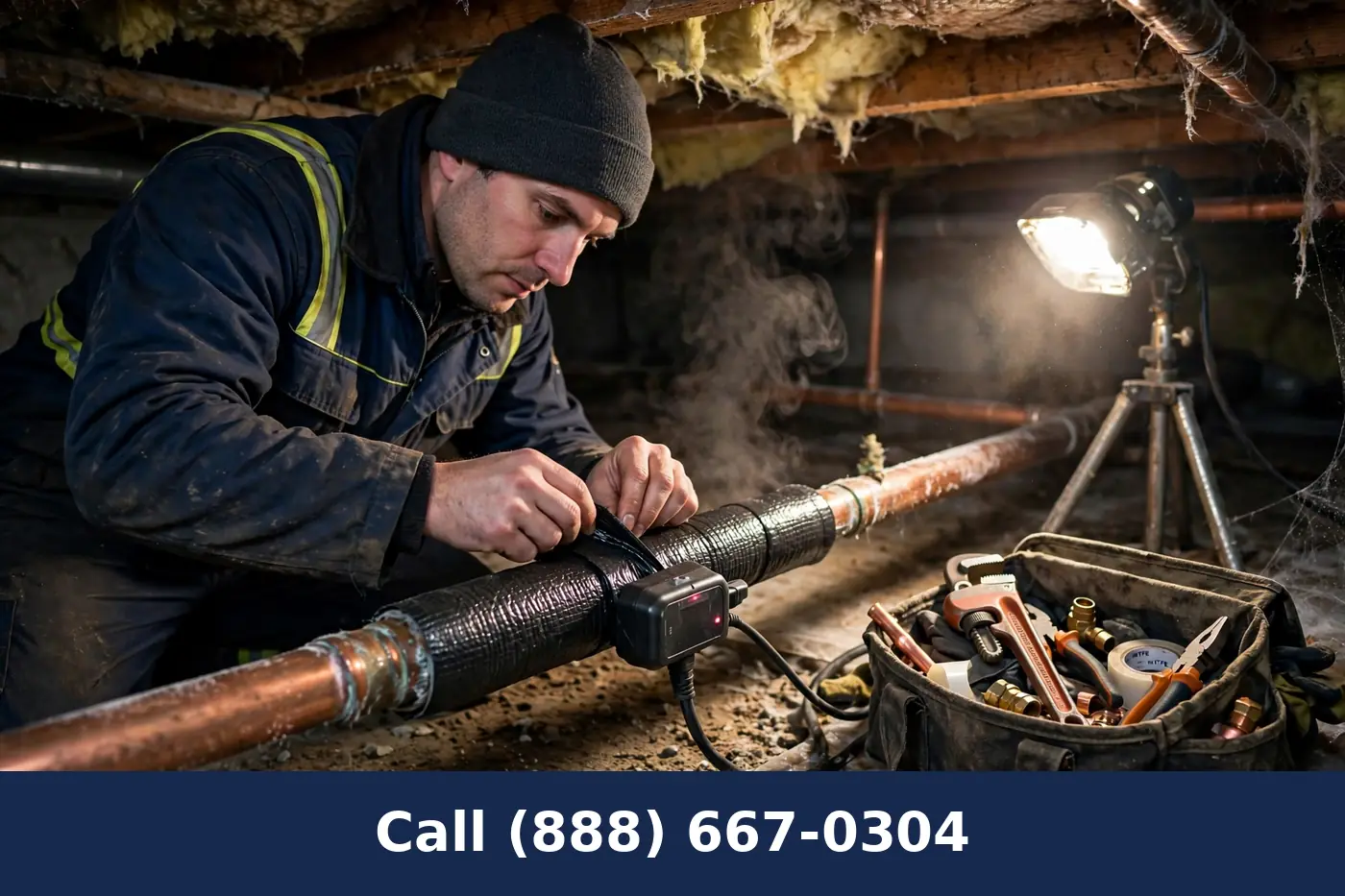
The method depends on what the pipe is made of. For copper or galvanized steel, an electric thaw machine is the standard tool. Heavy cables clamp to clean pipe on both sides of the blocked section, and a controlled low-voltage, high-amperage current flows through the metal itself. The pipe wall warms evenly from the inside out, melting a thin layer of ice along the interior so supply pressure can push the remaining core through. A skilled technician can clear a long blocked run this way without opening a single wall.
Plastic pipe cannot be thawed electrically, because PEX and PVC do not conduct current. For those lines, technicians use steam or hot-water jetting. A small flexible hose feeds through an accessible point, such as a removed fixture or a hose bibb, and delivers controlled hot water or low-pressure steam directly against the ice. The jet melts the plug gradually while the returning water and slush flow back out of the line. It is slower than electric thawing but far safer for plastic, with no risk of softening or deforming the pipe wall.
For lines where the blockage location is unknown, thermal imaging comes first. An infrared camera reads surface temperatures along walls, floors, and ceilings, and the ice-blocked section shows up as a distinct cold band. That lets the technician open the smallest possible access point or choose the right feed point for the jetting hose, instead of guessing and cutting exploratory holes.
What happens during a Plumber Modesto Pros thawing visit?
The visit starts with locating the blockage and relieving pressure. The nearest faucet is opened so that meltwater and pressure have somewhere to go as the ice releases. The main shutoff is verified working, because a line that has been ice-blocked may have a weakened joint that gives way once flow returns. And the technician wants to be able to stop the water in seconds.
Next comes the thaw itself, using the method matched to the pipe material. The technician works from the faucet side back toward the supply, melting the plug progressively so pressure never gets trapped between two ice walls. Throughout the process, joints and fittings are watched for weeping, because the expansion of ice often stretches a fitting just enough to leak once water moves again.
After flow is restored, every accessible joint on the run gets inspected with a dry hand and a pressure check. If a split or a stretched fitting is found, it gets repaired on the spot, usually by cutting out the damaged section and joining new pipe. Finally, the technician walks you through why that particular line iced up and what would stop it happening again. That may be insulation, heat cable, rerouting, or simply keeping a cabinet door open during cold snaps.
What affects the cost of professional pipe thawing?
Accessibility is the biggest factor. A blocked line in an open basement with exposed pipe takes far less time than the same blockage inside a finished wall or under a slab. There, locating and access work come first. Pipe material matters too, because electric thawing and steam jetting use different equipment and different setup time. The length of the blocked section plays a role, as does whether the visit happens during normal hours or as an emergency call in the middle of a cold night.
What raises the total is usually what the thaw reveals. A line that iced up because it was poorly routed may need rerouting or insulation to make the fix permanent, and a fitting weakened by ice expansion may need replacement. Plumber Modesto Pros explains each of these factors before work begins and gives you the price up front. For an exact quote on your situation, call (888) 667-0304.
How do we serve your area?
Plumber Modesto Pros thaws ice-blocked lines in homes and businesses across the communities we serve. Residential calls cluster around crawl-space and attic runs in older houses, where insulation has settled or was never installed around the plumbing. Mobile and manufactured homes are especially vulnerable because their supply lines often run beneath the floor with minimal skirting protection. Commercial calls come from restaurants and offices with lines in unheated storage areas, and from vacant properties where the heat was set too low or shut off entirely.
Property managers rely on thawing service during the first hard cold snap of the season, when multiple units can lose water on the same night. We document each unit's blockage location and the condition of the piping. The owner gets a clear record and a prioritized list of which lines need insulation or heat cable before the next cold spell. Whatever the building, the goal is the same: water flowing again today, and a plan so it does not happen twice.
How do you keep pipes from icing up again?
Prevention starts with knowing which lines are vulnerable. Any pipe on an exterior wall, in a crawl space, attic, or garage, or running through an unheated addition deserves attention before winter. Foam sleeve insulation is the first line of defense, and it works best when every inch is covered, including elbows and valve bodies that are easy to skip. Sealing air leaks where pipes pass through walls and floors matters just as much, because a draft of cold air defeats insulation quickly.
For lines that have iced up before, thermostat-controlled heat cable is the reliable answer. The cable runs along the pipe under the insulation and warms automatically when temperatures drop, holding the line above the ice point all winter. Disconnecting garden hoses and draining outdoor faucet lines removes one of the most common starting points for ice. And during an extreme cold snap, letting a faucet drip on the vulnerable run keeps water moving, which is the simplest protection of all.
Why call Plumber Modesto Pros when the tap runs dry?
An ice-blocked pipe is a race against the split. Ice expands as it forms, and the pressure it creates is what bursts pipes, often in the middle of the night when nobody is watching. Every hour the blockage sits, the risk grows, and a thaw that starts as a routine service call becomes a water-damage repair if the pipe gives way first. Professional equipment clears the blockage safely, checks for damage, and leaves you with a prevention plan.
Keep (888) 667-0304 handy before the cold arrives. When a faucet goes silent after a cold night, call Plumber Modesto Pros. We will find the blockage, thaw it with the right method for your pipes, and make sure your water is flowing again.
Features
- Electric resistance thawing machines for copper and galvanized lines
- Steam and hot-water jetting for PEX, PVC, and other plastic piping
- Infrared thermal locating to pinpoint the ice-blocked section
- Pressure relief at fixtures to protect joints during the thaw
- Post-thaw leak inspection of every joint and connection
- Insulation and heat cable recommendations for repeat trouble spots
- Emergency shutoff verification before any thawing begins
Benefits
- Water flowing again without tearing open walls unnecessarily
- Pipe inspected for splits during the thaw, not after flooding starts
- Safer than DIY torch or open-flame methods that damage pipes
- Vulnerable lines identified so the same spot does not ice up twice
- Protection advice tailored to your home's actual weak points
- Insurance-friendly documentation of the service performed
- A clear plan if a thaw reveals a pipe that needs replacing