
Fixture Shutoff Valve Replacement Near Me
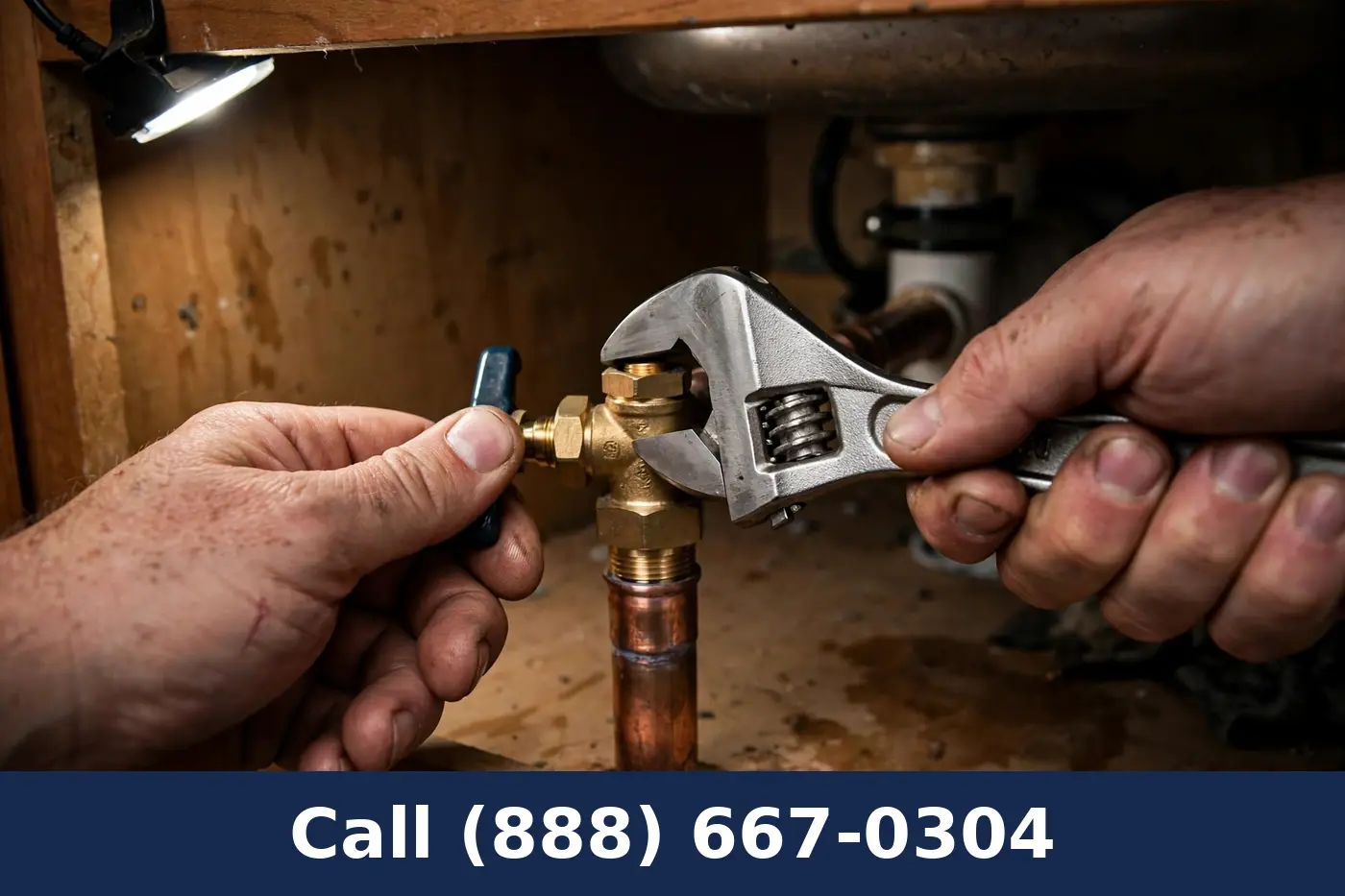
Starting price: Call for pricing
Every sink, toilet, dishwasher, and washing machine should have its own shutoff valve so you can stop water to one fixture without shutting down the whole house. These small angle-stop valves seize from years of sitting untouched, then leak or refuse to close exactly when you need them during a faucet swap or a repair. Replacing a failed valve with a modern quarter-turn ball valve restores reliable local control and takes the drama out of future fixture work.
What is a fixture shutoff valve and why does it matter?
A fixture shutoff valve, most often called an angle stop, is the small valve on the water line. It sits where the line comes out of the wall or floor to feed a single fixture. You will find them under sinks, behind toilets, and at the supply connections for dishwashers, washing machines, and ice makers. Their whole job is isolation: turn the handle and water stops to that fixture alone while the rest of the house keeps running. That single ability is what makes faucet replacements, toilet resets, and appliance swaps routine instead of house-wide shutdowns. When a valve works, nobody thinks about it. When it fails, it usually fails at the worst possible moment, halfway through a repair with the old fixture already disconnected.
Why do these valves fail?
Most failures come from neglect rather than use, because a valve that sits open for a decade builds mineral scale and corrosion on its internal parts. Multi-turn valves rely on a rubber washer pressing against a seat, and that washer hardens, cracks, or embeds with grit until it can no longer seal. The stem packing that seals around the handle dries out too, which is why an untouched valve often starts weeping the first time someone turns it. Hard water accelerates every part of this process by depositing minerals on stems, seats, and threads. Cheap builder-grade valves installed during original construction tend to reach this state sooner than quality brass replacements. The result is a handle that will not turn, a valve that will not fully close, or a steady drip from the stem that ruins cabinet wood.
When should you replace a shutoff valve instead of repairing it?
A minor drip at the packing nut can sometimes be fixed by gently tightening the nut behind the handle, which compresses the packing and stops the seep. Replacement becomes the right move when the valve still passes water while fully closed, because the internal seat or washer has failed beyond adjustment. A handle that spins without changing the flow has a stripped or broken stem and cannot be trusted. Visible corrosion on the valve body, green or white crust on the connections, or moisture that returns after drying all signal a valve past its reliable life. If forcing the handle risks snapping the pipe stub behind the wall, replacement by a professional avoids turning a valve job into a wall repair. Many homeowners discover the problem during a faucet installation, when the old valve is disturbed for the first time in years and starts leaking.
Why do plumbers recommend quarter-turn ball valves?
Older multi-turn stops need several rotations to close and their washers wear a little with every use. A quarter-turn ball valve uses a polished ball with a hole through it: aligned with the pipe the water flows, rotated ninety degrees the water stops completely. There is no washer to wear out and no packing to dry into a leak, which is why these valves still operate smoothly after years of sitting open. Quality brass ball valves handle the pressure and temperature swings of household supply lines without complaint. For the homeowner, the difference shows up the next time a fixture needs work: one quick turn and the water is off.
How does the replacement visit work?
The technician starts by locating the main house shutoff and turning it off, then opens a low faucet to drain pressure from the lines. Under the sink or behind the toilet, the old valve is disconnected from the supply stub and the flexible supply line is set aside for inspection. The stub pipe is cleaned and checked for soundness, because a damaged stub needs attention before a new valve goes on. The new quarter-turn valve is installed with the connection type that fits the existing pipe: compression, push-fit, or soldered, each done to a watertight standard. A new flexible stainless supply line connects the valve to the fixture, since old supply lines are a common second failure point. The main is turned back on slowly, air is bled from the lines, and every connection is watched under full pressure for any sign of moisture. The whole job typically takes well under an hour per fixture, and doing both hot and cold valves together adds little time.
What affects the cost of a valve replacement?
Access is the biggest variable: an open under-sink cabinet is quick work while a toilet valve boxed behind tile or a vanity takes more care. The number of valves being replaced at once matters, since the main shutoff is already off and each additional valve adds only incremental time. Pipe material and condition play a role, because a corroded stub or an unusual connection type takes more preparation. Whether the supply lines are being replaced at the same time affects parts and time, though it is usually wise to do them together. Some homes need the main house shutoff serviced first if it will not close fully, since no valve work can start without a reliable upstream stop. Calling (888) 667-0304 gets a clear on-site assessment of your valves and an explanation of what each one needs.
Should you replace all the valves in the house at once?
Not necessarily, but a whole-house valve check during any plumbing visit is smart preventive practice. Valves installed at the same time in the same water conditions tend to age together, so one failure often predicts others. Kitchens and main bathrooms deserve priority because their valves see the most fixture work over the years. A technician can test every accessible valve in a home in minutes, marking which ones operate cleanly and which are heading for trouble. Grouping replacements into one visit saves repeated main-shutoff cycles and repeated service calls.
Why call Plumber Modesto Pros for shutoff valve work?
A stuck valve tempts homeowners to force it, and a snapped stub inside the wall turns a small job into drywall and pipe repair. Plumber Modesto Pros carries the right pullers, cutters, and connection fittings to remove seized valves without damaging the pipe behind them. Each replacement is matched to the pipe material and finished with a leak check under full pressure before the technician leaves. Calling (888) 667-0304 gets the valve replaced correctly the first time, and your next fixture project starts with a simple quarter-turn instead of a gamble.
Features
- Replacement of seized, leaking, or weeping angle-stop valves at any fixture
- Quarter-turn ball valves installed in place of failure-prone multi-turn stops
- Compression, push-fit, or sweat connections matched to your existing pipe material
- Both hot and cold valves replaced together at a fixture for matched reliability
- New flexible stainless supply lines connected and checked at every replaced valve
- Packing-nut and seat evaluation first, so repairable valves are serviced not replaced
- Full pressure restoration and leak check with the main supply back on
Benefits
- Shut off water to one fixture instantly without killing water to the whole house
- Make future faucet, toilet, or appliance work simple instead of risky
- Eliminate slow weeps and drips at valve stems that stain cabinets and floors
- Stop forcing a seized handle that could snap and flood the cabinet
- Match new fixtures with dependable isolation instead of trusting corroded old stops
- Get both valves at a fixture done in one visit while the water is already off
- Know exactly which valves in your home are sound after a whole-house check
Frequently asked questions
Can I just tighten a leaking shutoff valve instead of replacing it?
A drip at the packing nut sometimes stops with a gentle tightening. If the valve still passes water when fully closed or the handle will not turn properly, the internal parts have failed and replacement is the reliable fix.
How long does it take to replace one shutoff valve?
A single accessible valve usually takes well under an hour, including shutting off the main, swapping the valve, reconnecting the supply line, and testing under pressure.
Should both the hot and cold valves be replaced together?
Yes, when one fails the other is usually the same age and condition. Replacing both while the water is already off costs little extra and prevents a second visit soon after.
What if my main house shutoff will not close either?
The main shutoff has to work before any fixture valve can be replaced. A technician will check it first and service or replace it so the downstream work can proceed safely.