Drain Cleaning Near Me
Starting price: Call for pricing
Slow sinks, gurgling tubs, and drains that back up again after a bottle of chemical cleaner are signs of buildup only professional equipment can clear. Plumber Modesto Pros cleans kitchen, bathroom, and laundry drains with augers and cabling machines that cut through grease, hair, and soap scale at the source. The goal is a drain that runs clear — not one that drains a little faster for a week.
What does professional drain cleaning actually do?
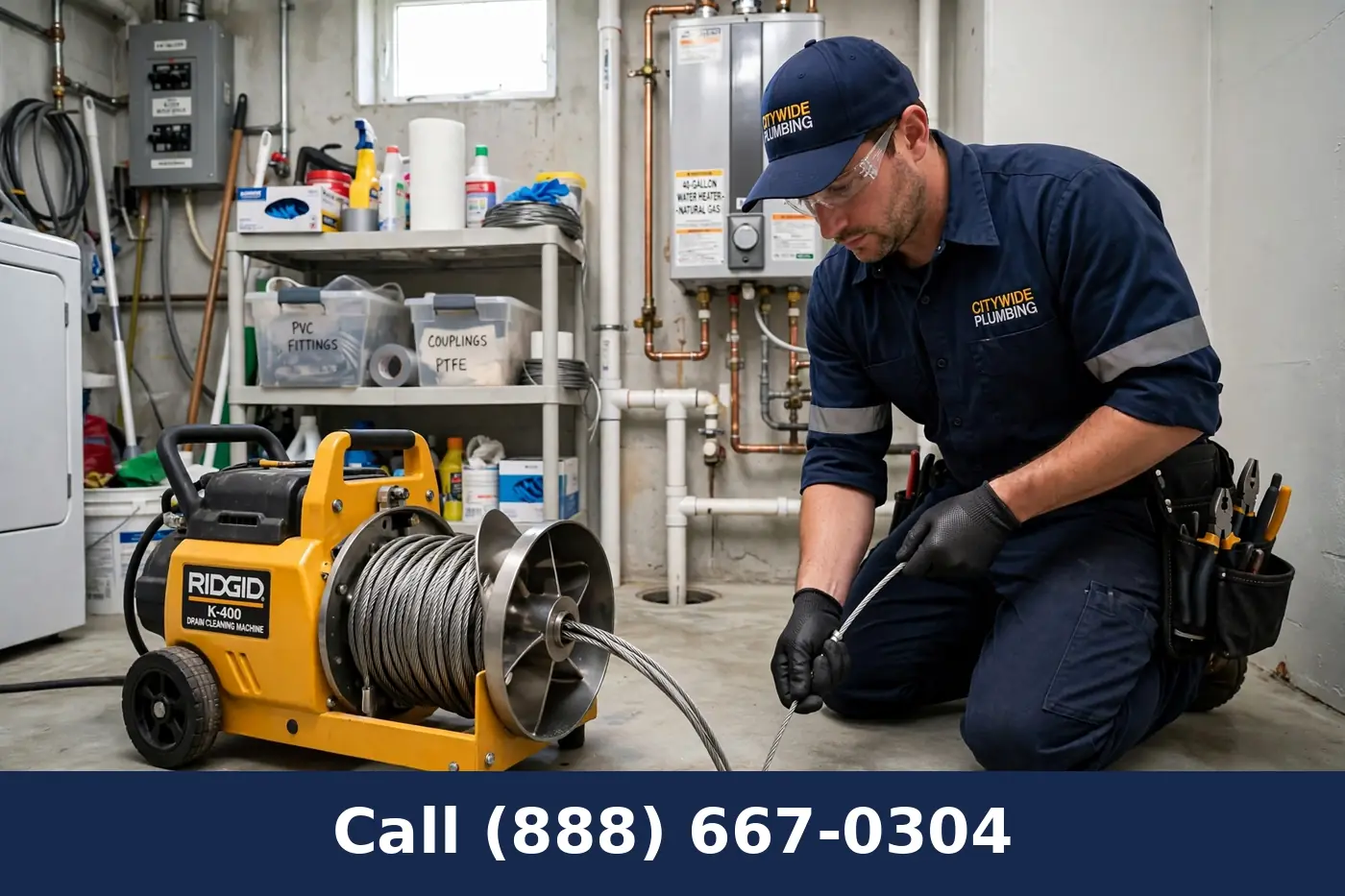
Professional drain cleaning removes the physical material blocking or narrowing your drain lines. A drain auger, sometimes called a snake, is a flexible steel cable with a cutting head that rotates as it feeds into the pipe. The head breaks apart the clog and scrapes buildup from the pipe walls as the cable advances and retracts. Larger cabling machines handle main lines and long runs with heavier cutting heads. Unlike chemical cleaners that dissolve a narrow channel, mechanical cleaning removes the mass of the blockage itself. The pipe is left open from wall to wall, not just punctured.
Why do household drains clog in the first place?
Every drain collects what goes down it, and some of that material never fully washes away. Kitchen lines gather grease that cools and hardens on the pipe walls, layer by layer, until the opening narrows. Bathroom drains collect hair wrapped around soap residue, forming dense mats that water cannot push through. Laundry drains catch lint and fabric fibers that bind together in the line. Over months and years these deposits shrink the pipe's effective diameter. A drain that once handled full flow starts draining slowly, then gurgles, then backs up. The buildup was always the problem; the clog is just the moment it becomes obvious.
When should you call a plumber instead of reaching for the plunger?
- A drain that stays slow after plunging and hot-water flushing
- Water backing up into a second fixture, like the tub filling when the toilet flushes
- Gurgling sounds from drains when water runs elsewhere in the house
- Foul odors rising from a drain that never fully clears
- The same drain clogging again within weeks of a previous clearing
- Multiple drains slowing down at the same time, which points to a main line
- Standing water in a sink or tub that will not drain at all
A single slow bathroom sink is often a simple hair clog near the trap. Multiple fixtures acting up together means the problem sits deeper in the system, and that is where professional equipment earns its keep.
How does a drain cleaning visit work?
We start by running water and watching how each affected drain behaves, which tells us where the blockage likely sits. The cleanout — the capped access point on the drain line — is opened so the cable can enter without going through your fixtures. The auger or cabling machine feeds the cutting head into the line, rotating through the blockage and scraping the pipe walls on the way back. For kitchen lines, a grease-cutting head is used; for bathroom lines, a head that grabs and retrieves hair mats. After the cable comes back clean, we run water at full flow to confirm the drain carries it away without hesitation. If the clog returns quickly, a camera inspection is the next step.
What is the difference between snaking and hydro jetting?
A drain snake breaks through a clog and clears a path, which solves most routine blockages. Hydro jetting goes further: high-pressure water scours the entire inside of the pipe, stripping away the grease and scale coating the walls. Snaking is the right first answer for a straightforward clog. Jetting is the right answer when the same line clogs repeatedly, because it removes the buildup that keeps causing the problem. We recommend jetting when cabling reveals a heavily coated line or when your history shows the same drain failing every few months.
What should you avoid putting down your drains?
Grease is the number one enemy of kitchen drains — it looks harmless as a liquid and turns to a solid coating inside the pipe. Coffee grounds, eggshells, and starchy foods like rice and pasta swell and bind in the line. In the bathroom, hair is the main culprit, and flushable wipes are not truly flushable despite the label. Laundry lint belongs in the trash, not the utility sink. Small changes in these habits extend the time between professional cleanings considerably.
What affects the cost of drain cleaning?
The location and depth of the clog drive the job. A hair clog near a bathroom trap is quick; a blockage deep in the main line takes more cable and more time. Access matters too — a home with a proper cleanout is simpler to work through than one where the line must be entered through a removed toilet. If a camera inspection is needed to find a recurring problem, that is a separate step. Call (888) 667-0304 and describe what your drains are doing; we will give you a straight answer.
Why do chemical drain cleaners so often disappoint?
Caustic cleaners work by generating heat and chemically attacking the clog, but they follow the path of least resistance — straight down the middle. The result is a narrow channel through the blockage while the bulk of the grease and hair stays glued to the pipe walls. Worse, the heat and chemistry can soften PVC, corrode metal traps, and eat at the rubber seals in your fixtures. A cleaner that fails to clear the line leaves you with a pipe full of caustic water that the plumber must then work around. Mechanical cleaning avoids all of this by removing the material directly.
How can you keep drains clear between professional visits?
Small habits make the biggest difference. Scrape plates into the trash before rinsing, and wipe greasy pans with a paper towel before they reach the sink. A simple mesh strainer in every bathroom drain catches hair before it enters the line. Run hot water for half a minute after doing dishes to keep grease moving past the trap. In the laundry, a lint catcher on the discharge hose stops fibers from packing the utility drain. None of these replace professional cleaning, but they stretch the interval between visits.
How does Plumber Modesto Pros keep Modesto drains running clear?
Plumber Modesto Pros cleans drains in the homes, duplexes, and rentals across Modesto and the surrounding Central Valley towns. We carry augers and cabling machines sized for everything from bathroom sinks to main sewer laterals, plus camera equipment for the stubborn cases. Our technicians protect your home while they work and test every drain before they leave. Clean drains are one of the simplest comforts in a home, and we treat them that way.
Features
- Drain augers and cabling machines sized for each line
- Kitchen line cleaning that cuts through grease buildup
- Bathroom drain clearing for hair and soap blockages
- Laundry and utility drain service for lint and debris
- Camera inspection available when clogs keep returning
- Cleanout access used wherever possible to protect fixtures
- Flow testing after cleaning to confirm the drain runs clear
Benefits
- Clear the actual blockage instead of masking it
- Stop the cycle of clogs that return every few weeks
- End slow drainage, gurgling, and foul drain odors
- Protect pipes from the damage of repeated chemical cleaners
- Keep wastewater moving away from your home reliably
- Find out whether a deeper line problem is hiding
- Get drains that stay clear with normal use
Frequently asked questions
Why do my drains keep clogging after I clear them?
Chemical cleaners and plungers usually open a small path through the clog without removing the buildup coating the pipe. Grease, hair, and scale remain on the walls, so the next clog starts forming right away. Professional cabling removes the material itself.
Are chemical drain cleaners safe for my pipes?
Caustic cleaners generate heat and can damage older pipes, rubber seals, and the finish on fixtures. They also rarely solve the underlying buildup. Mechanical cleaning removes the blockage without chemicals.
How long does a drain cleaning visit take?
Most single-drain cleanings are completed within the visit, since the equipment is on the truck. Main-line or multi-drain jobs take longer because each branch is worked separately and tested afterward.
Can you clean drains without making a mess?
Yes. We work through existing cleanouts wherever possible and protect the surrounding area. The equipment is designed for indoor use, and we test the drain before leaving.