
Down-Well Camera Inspection Near Me
Starting price: Call for pricing
A down-well camera inspection lowers a waterproof video camera into your well casing to show the inside of the well in real time. It reveals casing damage, corrosion, scale buildup, and obstructions that no surface check can find. Plumber Modesto Pros records the footage and explains exactly what the video shows.
Your well looks simple from the surface: a cap, a casing, and water that comes out when you turn the tap. Everything below the ground is invisible, and that is where the trouble hides. A down-well camera inspection turns that darkness into daylight. Plumber Modesto Pros lowers a waterproof video camera into your well casing and shows you the inside of your well on a monitor at the surface, in real time.
It is the closest thing to climbing down into your well yourself. Casing cracks, rust, mineral scale, and dropped debris all appear on screen exactly where they sit. No guessing, no assumptions, no tearing things apart to find out.
What is a down-well camera inspection?
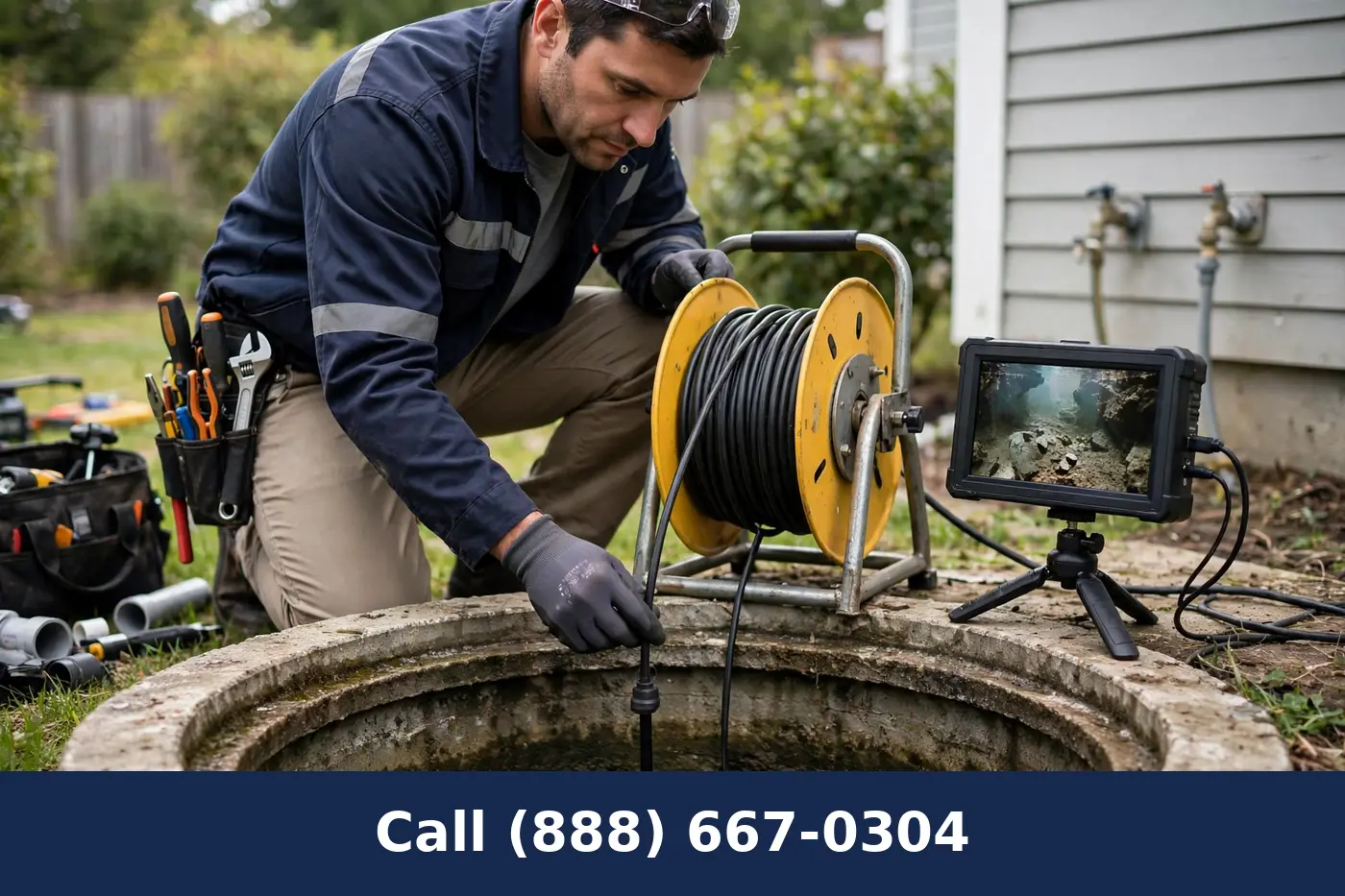
A down-well camera is a compact, waterproof video camera mounted on a flexible cable with its own lighting. Our technician removes the well cap and feeds the camera into the casing. It lowers slowly past the drop pipe, the pump, and the wiring, all the way to the intake screen or the bottom of the well. You watch the journey live on a monitor at the surface.
Modern inspection cameras capture high-definition footage and often include side-viewing capability, so the lens can look directly at the casing wall instead of only downward. A depth encoder on the cable tracks exactly how far down each feature appears. That means every crack, joint, and deposit gets logged with its depth, which matters enormously when planning a repair.
The survey records the full length of the casing, including every joint and weld. It documents corrosion, pitting, and rust on steel casings, which is especially common in wells drilled decades ago. It shows mineral scale and iron bacteria buildup that narrow the casing and choke flow. It reveals collapsed or separated sections, intruding roots, and objects that fell in long ago and were forgotten.
What you cannot see from the surface is exactly what this service exists to reveal. Water tests tell you about chemistry, and flow tests tell you about output, but only a camera shows you the physical condition of the well itself.
When do you need a camera inspection?
Cloudy or silty water is the most common reason. Turbidity often points to a structural problem like a cracked casing or a collapsed section letting sediment in. A camera finds the exact spot instead of leaving you to wonder.
Declining flow is another strong signal. When yield drops, the cause could be mineral scale coating the intake screen, a blockage, or a damaged casing. Video pinpoints which one it is, and that decides whether you need cleaning, a repair, or something bigger.
Strange odors or recurring bacteria problems also justify a look downhole. A breached casing lets surface water, insects, and contaminants into the well, and shock chlorination will not fix the root cause if the casing itself is broken. The camera confirms whether the barrier is intact.
Camera surveys are also smart before buying a property with an older well, after nearby construction or seismic activity, and when a pump keeps failing for no clear reason. A misaligned drop pipe or a casing obstruction can destroy pumps, and video evidence ends the cycle of repeat replacements.
What happens during a down-well camera inspection visit?
Call (888) 667-0304 and describe what you are seeing: cloudy water, low flow, odor, or simply an aging well you want to understand. We confirm your well's depth and casing size so we bring the right camera head for the job.
On site, the technician removes the well cap and sanitary seal carefully. The camera head, usually under two inches in diameter, slides into the casing alongside the existing pump and wiring. Nothing needs to be pulled or disconnected for a standard survey, which keeps the visit simple and affordable.
The descent is slow and deliberate. We pause at every joint, discoloration, or irregularity so the footage is clear and the depth reading is exact. You are welcome to watch the monitor beside the technician, and most homeowners find it genuinely fascinating to see hundreds of feet into their own property.
After the survey, we compile the recording with a written summary. Each finding is listed with its depth and a plain-language explanation of what it means. Then we talk through your options, from monitoring a minor issue to scheduling a targeted repair. You keep the video file, which is useful for second opinions, insurance claims, or future comparisons.
What factors affect the cost of a camera inspection?
Depth is the main driver, because a deeper well means more cable, more time, and more footage to review. Casing diameter matters too: very narrow casings may need a smaller camera head and a slower, more careful descent.
Water clarity affects the visit as well. The camera needs reasonably clear water to produce useful images. If your water is heavy with sediment, we may need to flush the well before the survey, which adds time. Your technician will assess conditions honestly before starting and tell you if flushing is needed.
Whether the pump stays in place or needs to be pulled for a clearer view also shapes the scope. Most residential surveys work fine with the pump in place, keeping the job straightforward. Call (888) 667-0304 with your well's depth and symptoms, and we will give you a straight answer on what the inspection involves for your situation.
What do well owners get from a Plumber Modesto Pros camera inspection?
Plumber Modesto Pros brings down-well camera surveys to homeowners across the area who are tired of guessing about their water. Older properties with steel casings from decades past are our most common calls, and those are exactly the wells where hidden corrosion and joint failure show up on video.
We work with rural families, small farms, and anyone whose daily life depends on a well that keeps performing. We also support real estate transactions, giving buyers video proof of well condition and sellers a credible report that stands up to a home inspector's questions.
A camera inspection will not fix your well by itself, but it ends the guessing. Once you can see the problem, the right repair becomes obvious. Call (888) 667-0304 and let Plumber Modesto Pros show you what is happening down there.
Features
- Waterproof HD camera lowered the full depth of the casing
- Live surface monitor so you watch the inspection with us
- Casing joint and weld inspection for cracks and separation
- Corrosion, pitting, and scale buildup documentation
- Drop pipe, pump, and wiring visual condition check
- Screen and intake zone inspection for blockages
- Recorded video file and written findings report
Benefits
- See the true condition of your well instead of guessing
- Diagnose cloudy water, low yield, or odor at the source
- Get video evidence that guides targeted, accurate repairs
- Avoid drilling a new well when a repair would solve it
- Document well condition for insurance or property disputes
- Plan pump or casing work with exact depths and measurements
- Peace of mind knowing what is really down there
Frequently asked questions
How long does a camera inspection take?
Most residential camera inspections take under an hour, including setup and review time. Deeper wells take a little longer because the camera travels farther, but the process is straightforward.
Will the camera damage my well or pump?
The camera is only about an inch and a half wide and slides into the casing alongside the pump and wiring. The process is non-invasive, and your pump does not need to be removed for a standard survey.
What if my well water is cloudy or silty?
The camera needs reasonably clear water to see well. If your water is extremely cloudy, we may recommend flushing the well first. Your technician will tell you honestly whether conditions are right for useful footage.
Do I get to keep the video footage?
You receive the recorded video along with a written summary of findings and repair recommendations. The footage is yours to keep and share with other contractors, insurers, or buyers if you wish.