
Camera & Pressure Pipe Inspection Near Me
Starting price: Call for pricing
A camera and pressure pipe inspection finds hidden pipe problems without digging, pairing a waterproof video camera pushed through the line with a controlled air-pressure test. The camera shows cracks, roots, and blockages on a live monitor while the pressure reading confirms whether the pipe is truly sealed. It turns mysterious symptoms into a precise, evidence-based repair plan.
What is a camera and pressure pipe inspection?
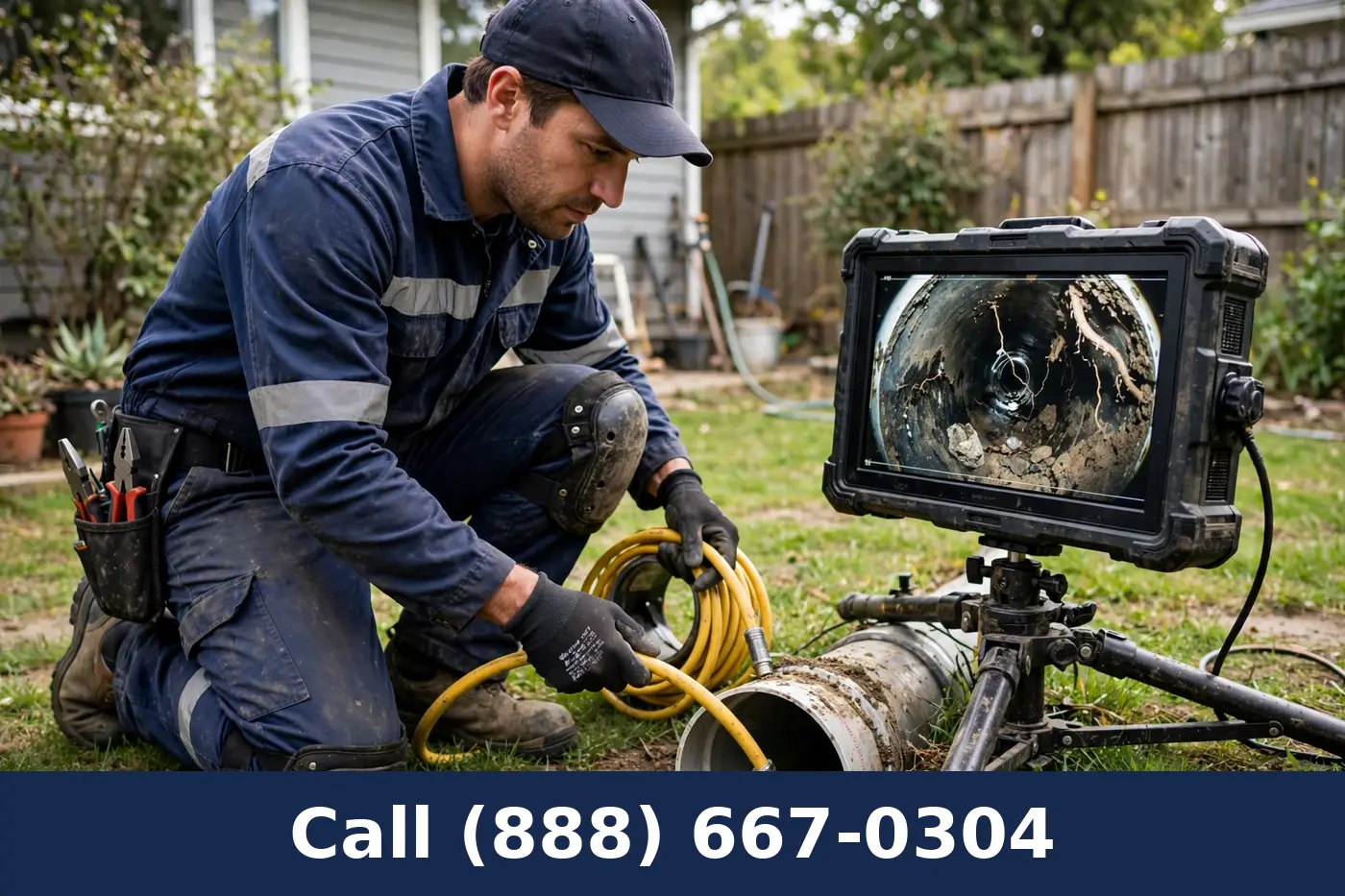
A camera and pressure pipe inspection is a two-part diagnostic visit that looks inside your plumbing instead of guessing at it from the outside. First, a technician feeds a flexible rod carrying a small waterproof camera into the pipe through a cleanout, drain opening, or access port. The live video feed appears on a monitor above ground. The camera head carries its own LED lights and travels through bends, wyes, and long runs. The technician steers it steadily, watching for blockages, cracks, roots, scale, and misaligned joints. Second, the technician runs a pressure test on the line using an air compressor, pressurizing the pipe and watching the gauge to see whether it holds pressure as it should. A line that loses pressure has a leak or breach somewhere even if the camera cannot see every inch.
Why combine the camera with a pressure test?
The camera and the pressure test answer two different questions, and together they cover what either one misses alone. The camera answers the question of what the pipe looks like on the inside, showing roots, buildup, cracks, and offsets in sharp detail at recorded distances along the line. The pressure test answers whether the pipe is actually sealed. Some leaks hide in joints where the camera image looks acceptable, yet air still escapes under pressure. The technician can narrow the search by testing shorter segments, one section at a time.
When should a Modesto homeowner schedule a pipe inspection?
Slow drains that keep coming back after clearing point to a structural problem rather than a simple clog, and an inspection shows which one you are dealing with. Gurgling fixtures, sewage odors near drains or in the yard, and patches of lawn that stay wet without rain are classic signs that something underground has changed. A sudden drop in water pressure on the supply side, or a water bill that climbs without any change in household habits, suggests a supply line leak worth finding precisely. Home purchases are another smart trigger: seeing the actual condition of buried pipes before you buy removes one of the most expensive surprises a new owner can face. Older properties with original piping deserve a baseline inspection even when nothing seems wrong, because materials like cast iron and clay deteriorate on a predictable timeline.
How does the camera inspection actually work, step by step?
The visit starts with a conversation about symptoms, because where the trouble shows up tells the technician which line to scope first. Next, the technician picks the best access point, usually a main cleanout. In older homes without one, an interior access point lets the camera enter safely. The camera head goes in and the push cable feeds steadily through the system, with the technician pausing at anything unusual so the monitor shows it clearly. Distance markings on the cable record how far from the entry point each defect sits, which later tells the repair crew exactly where to dig or line. Many systems also carry a locating beacon in the camera head, so a receiver above ground can mark the spot on the surface directly over the problem. Footage is recorded throughout, which means the homeowner can watch the findings later and a second opinion can review the same evidence.
How does the pressure test work, step by step?
For the pressure check, the technician isolates the section of pipe under test and connects an air compressor with a calibrated gauge to the line. The line is brought up to the right test pressure for its material and purpose. The compressor is shut off, and the gauge is watched over a set holding period. A steady needle means the section is sealed; a falling needle means air is escaping somewhere and the section fails. The technician can narrow the search by testing shorter segments, closing valves between sections so each run proves itself independently. This sectional approach turns a vague whole-house pressure drop into a specific run of pipe with a known start and end. Because air is used instead of water, the test leaves no flooding behind and can be repeated after repairs to confirm the fix held.
What kinds of problems do these inspections uncover?
Tree root intrusion shows up clearly on camera as hairlike tendrils or dense mats pushing through joints and cracks, which is common in neighborhoods with mature landscaping. Grease and scale buildup narrows the pipe on screen and explains recurring slow drains that snaking never fully resolves. Offsets and bellies appear as stepped joints or low spots where the camera lens dips. Those low spots collect debris that the camera can locate precisely. Cracks and fractures show as sharp lines across the pipe wall, and collapsed sections are unmistakable because the camera simply cannot pass. Corrosion inside older metal piping appears as rough, flaking walls that reduce diameter and shed material into the flow. On the supply side, pinhole leaks and failing fittings may not show dramatically on video but reveal themselves when the pressure gauge will not hold.
What happens after the inspection is complete?
The technician walks the homeowner through the recorded footage, pointing out each defect at its recorded distance so the findings are transparent rather than abstract. The written report lists every issue with its location. That evidence supports the repair options: spot repair at a located point, trenchless lining for long damaged runs, or full replacement where the pipe has lost its structure. Because the evidence is specific, quotes from any contractor can be compared against the same findings instead of against competing guesses. If the system passes both the camera and pressure checks, the homeowner gets a clean baseline and can schedule the next inspection years out with confidence.
Why does this service matter for homes around Modesto?
Many homes in the Modesto area and across Stanislaus County were built when cast iron, clay, and galvanized steel were standard. Those pipes are now aging in place. Shifting soils, mature street trees with aggressive roots, and long dry summers followed by wet winters all stress buried piping in ways that show up first as mysterious symptoms indoors. An inspection lets Plumber Modesto Pros match the repair to the real condition of the line instead of recommending the same heavy fix for every symptom. Calling (888) 667-0304 puts a trained technician with camera and pressure equipment on the job, and the findings stay yours whether you schedule the repair tomorrow or next year.
Features
- High-resolution push camera with bright LED lighting fed through cleanouts and access ports
- Technician walkthrough of the footage with each defect pointed out and explained
- Distance counter on the cable that records how far into the line each problem sits
- Controlled air-pressure test that reveals leaks without filling pipes with fluid
- Recorded footage saved to a file you can keep, share, or review later
- Written findings report describing every defect found, with locations marked
- Combined camera and pressure diagnosis so visual damage and pressure loss are both checked
Benefits
- See the real condition of your pipes instead of guessing from symptoms alone
- Avoid unnecessary digging by pinpointing exactly where the problem lives
- Catch small cracks and root intrusion before they become line failures
- Get repair quotes based on evidence rather than worst-case assumptions
- Document pipe condition for home purchases, insurance needs, or future planning
- Plan maintenance on a schedule that fits your property instead of reacting to breakdowns
- Make one call and get both a visual inspection and a pressure integrity check in a single visit
Frequently asked questions
Do I need to dig up my yard for a pipe inspection?
No digging is needed for the inspection itself. The camera enters through a cleanout or drain access, and the pressure test connects to the pipe above ground, so your yard stays untouched.
Can a camera inspection find leaks the camera cannot see?
That is exactly why the pressure test is part of the service. The camera shows visible damage while the air-pressure check reveals hidden leaks in joints or sections that look acceptable on video.
How should I prepare before the technician arrives?
Clear access to the main cleanout and describe your symptoms in detail, including when slow drains or pressure changes started. Reducing water use shortly before the visit gives the camera a clearer view.
Will I get to see the footage from my inspection?
The footage is recorded during the visit. The technician reviews it with you on the monitor, pointing out each defect and its location.