
Booster Pump Installation Near Me
Starting price: Call for pricing
A booster pump installation adds a pump to your main water line that raises weak incoming pressure to a strong, usable level. It is the fix for homes where showers dribble, upstairs fixtures starve, and two taps running at once means neither works well. Plumber Modesto Pros sizes and installs whole-house booster systems with proper controls.
You turn on the shower and get a sad trickle. Upstairs, the bathroom barely fills the tub. Run the washing machine and the kitchen faucet at the same time and both slow to a crawl. The problem is not your fixtures. It is the pressure arriving at your house, and a booster pump installation fixes it at the source. Plumber Modesto Pros installs whole-house booster systems that take weak incoming water and deliver the strong, steady pressure your home should have had all along.
Low pressure has many causes. A long run from the municipal main, aging pipes, a neighborhood that outgrew its infrastructure, or a modest well system can all cause it. Whatever the cause, living with it is optional. A correctly sized booster pump changes daily life in a way you feel at every tap.
What is a booster pump and how does it work?
A booster pump is an electrically driven pump installed on the main water line where it enters your home or building. It takes the incoming water and adds pressure before sending it to your fixtures. Think of it like a fan for water: spinning impellers fling water outward with centrifugal force, and each stage of impellers adds more pressure on top of the last.
The most common residential choice is the multistage centrifugal pump. Instead of one oversized impeller, it uses several smaller impellers in series, and each stage stacks its pressure gain onto the previous one. That design delivers strong, smooth pressure without the noise and bulk of a single huge impeller. Many modern units are self-priming, start automatically when a tap opens, and shut down into standby when flow stops.
Controls matter as much as the pump. A basic setup uses a pressure switch. It starts the pump at a low setpoint and stops it at a high one, often paired with a small tank to smooth cycling. A variable-speed setup uses a drive that constantly adjusts motor speed to hold pressure steady no matter how many fixtures are open. We recommend the control strategy that fits your home and your budget.
When do you need a booster pump?
The symptoms are hard to miss. Showers that never feel strong, tubs that take forever to fill, and irrigation zones that underperform all point to low pressure. If running two fixtures at once makes both unusable, your system is crying out for help.
Multi-story homes feel it most. Every vertical foot of elevation costs pressure, so an upstairs bathroom can be nearly unusable while the ground floor seems merely weak. Large homes with long pipe runs lose pressure to friction along the way. Homes at the end of a municipal line or on a hill often receive less pressure than their neighbors closer to the main.
A booster pump also rescues homes drawing from storage tanks or shallow wells where the natural pressure is modest. If you have added bathrooms, a big soaking tub, or body sprays, your original plumbing may not keep up. A booster brings the supply up to the demand.
What does a booster pump installation visit involve?
Call (888) 667-0304 and describe your pressure problems: which fixtures suffer, how many stories your home has, and whether you are on city water or a well. We schedule a site visit to measure your actual incoming pressure and flow, because sizing starts from real numbers, not assumptions.
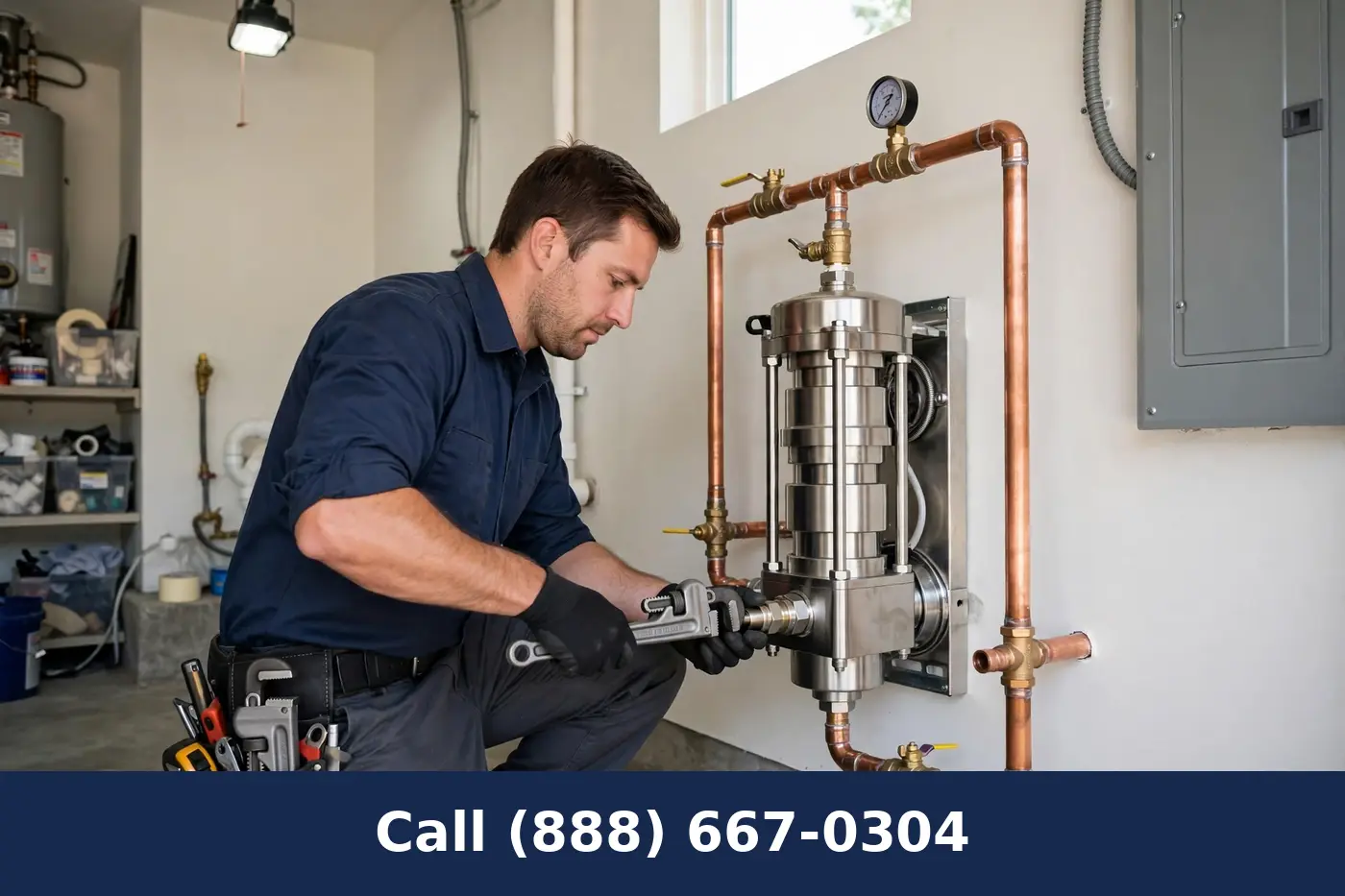
On installation day, we shut off the main and cut the booster into the supply line at the point where it serves the whole house. The pump sits on a solid, level base with vibration isolation so it runs quietly. We wire it to a dedicated electrical circuit with proper grounding and protection.
Every professional installation includes a bypass loop with isolation valves on either side of the pump. That bypass is your insurance: if the pump ever needs service, you turn two valves and the house runs on incoming pressure until we are done. We also install dry-run protection, a sensor that shuts the pump down if the supply ever runs dry, because running a pump without water destroys it quickly.
Before we leave, we test pressure at fixtures throughout the house, with one tap running and with several running at once. We set the controls to your target pressure and show you how the system behaves. You should feel the difference at the very first shower.
What factors affect the cost of a booster pump installation?
The pump itself is the core of the project. Multistage units cost more than single-stage, and variable-speed constant-pressure systems cost more than basic pressure-switch setups, but they also deliver a noticeably better experience. We help you weigh that trade honestly.
Your home's layout shapes the labor. A clean installation point in an accessible garage or utility room is straightforward, while a cramped crawlspace or a finished basement with no good access takes more time. Electrical work varies too: homes with panel space nearby are simpler than homes needing a longer circuit run.
The condition of your existing plumbing plays a role as well. Very old or undersized piping may limit what even a great pump can deliver, and we will tell you plainly if pipe upgrades should come first. Call (888) 667-0304 for a site evaluation, and we will scope the job to your home's actual needs.
Why do local homeowners call Plumber Modesto Pros for pressure help?
Plumber Modesto Pros installs booster pumps for homes across the area where pressure problems are a fact of life. That includes hillside properties, homes at the far end of municipal lines, large multi-story houses, and rural properties on modest well supplies. Each situation gets measured, not guessed at.
We also work with homeowners finishing additions or remodels that added demand the original plumbing never anticipated. A new primary suite or a big new shower should feel like an upgrade, not a disappointment, and proper pressure is what makes it so.
Stop planning your mornings around which fixtures can run together. Call (888) 667-0304 and let Plumber Modesto Pros give your home the water pressure it deserves.
Features
- Whole-house multistage centrifugal booster pumps
- Pressure switch and variable-speed constant-pressure controls
- Bypass loop with isolation valves for serviceability
- Dry-run protection that shuts the pump down safely
- Proper suction-side setup matched to your supply
- Electrical connection on a dedicated circuit
- Full pressure testing at multiple fixtures before sign-off
Benefits
- Turn weak, disappointing showers into strong, steady ones
- Run multiple fixtures at once without pressure collapse
- Bring upstairs bathrooms up to the pressure of the ground floor
- Stop the trickle when the washing machine and shower run together
- Protect appliances that need steady pressure to work right
- Add a bypass so you still have water if the pump ever stops
- Enjoy consistent pressure instead of planning life around it
Frequently asked questions
Will a booster pump work if my water supply is very weak?
A booster pump needs some incoming pressure to work with; it multiplies what arrives, it does not create water from nothing. If your supply is truly dry or near zero, a storage tank filled during better hours is the better answer.
Are booster pumps noisy?
Modern multistage booster pumps are designed for residential use and run about as loud as a household vacuum cleaner. They only run when water is being used, so the house stays quiet the rest of the time.
What happens if the booster pump stops working?
Yes, every professional installation includes a bypass loop with isolation valves. If the pump ever needs service, you flip the valves and your home runs on incoming pressure until the work is done.
How do you size a booster pump for my home?
Sizing is based on your lowest available incoming pressure, your home's fixture count, and the pressure you want at the taps. We measure your actual conditions and select a pump and controls that match, not a generic off-the-shelf guess.