
Backwater Valve Installation Near Me
Starting price: Call for pricing
A backwater valve is a one-way device installed on your sewer lateral that lets wastewater flow out while blocking reverse flow from the municipal sewer. Plumber Modesto Pros installs mainline backwater valves at the point where your lateral meets the city system. When a surcharge pushes sewage backward, the valve's flapper closes and seals, protecting your home automatically.
What is a backwater valve?
A backwater valve is a mechanical device that allows wastewater to flow in only one direction: away from your home. Installed on the sewer lateral, it sits quietly open during normal use and snaps shut the moment flow tries to reverse. Think of it as a one-way door for your sewer line, one that needs no power and no attention to do its job.
These valves are also called check valves or backup valves, and they come in mainline and branch styles. The mainline valve protects the entire home and is installed where the lateral leaves the property. The branch valve protects a single fixture or drain. For whole-home protection against municipal surcharges, the mainline valve is the standard recommendation.
How does a backwater valve work?
Inside the valve body hangs a hinged flapper, held open by gravity and the gentle pressure of your normal drainage. Every flush and every draining sink pushes wastewater past the open flapper and on toward the city sewer. You never feel it and never think about it.
When the municipal sewer surcharges, pressure in the city line reverses the flow direction. The backward-moving water pushes the flapper up against its sealed seat, closing the valve and blocking the surge from reaching your home. Once the surcharge passes and pressure equalizes, gravity drops the flapper back open and normal drainage resumes. The whole cycle happens automatically, with no action required from you.
When does a home need a backwater valve?
The clearest candidate is a home with fixtures below the elevation of the upstream manhole cover. If the city sewer fills to the street level, gravity alone will push sewage into any fixture sitting lower than that point. Basements, sunken bathrooms, and low laundry rooms face this risk first.
Neighborhoods with combined sewers, where stormwater and sewage share the same pipes, surcharge more readily during heavy rain. Homes that have already suffered a backup during a storm are telling you the risk is real. Even without a history of backups, a home in a low-lying area or a flood-prone street benefits from the protection. A site review and camera inspection confirm whether your lateral and fixture elevations make a valve worthwhile.
How does our backwater valve installation process work?
We begin by reviewing your lateral's route, depth, and condition with a camera, and by checking the elevation of your fixtures relative to the municipal line. This tells us the right valve size and the best installation point. We then verify buried utilities and plan the excavation, which may be in the yard or beneath a slab depending on where your lateral runs.
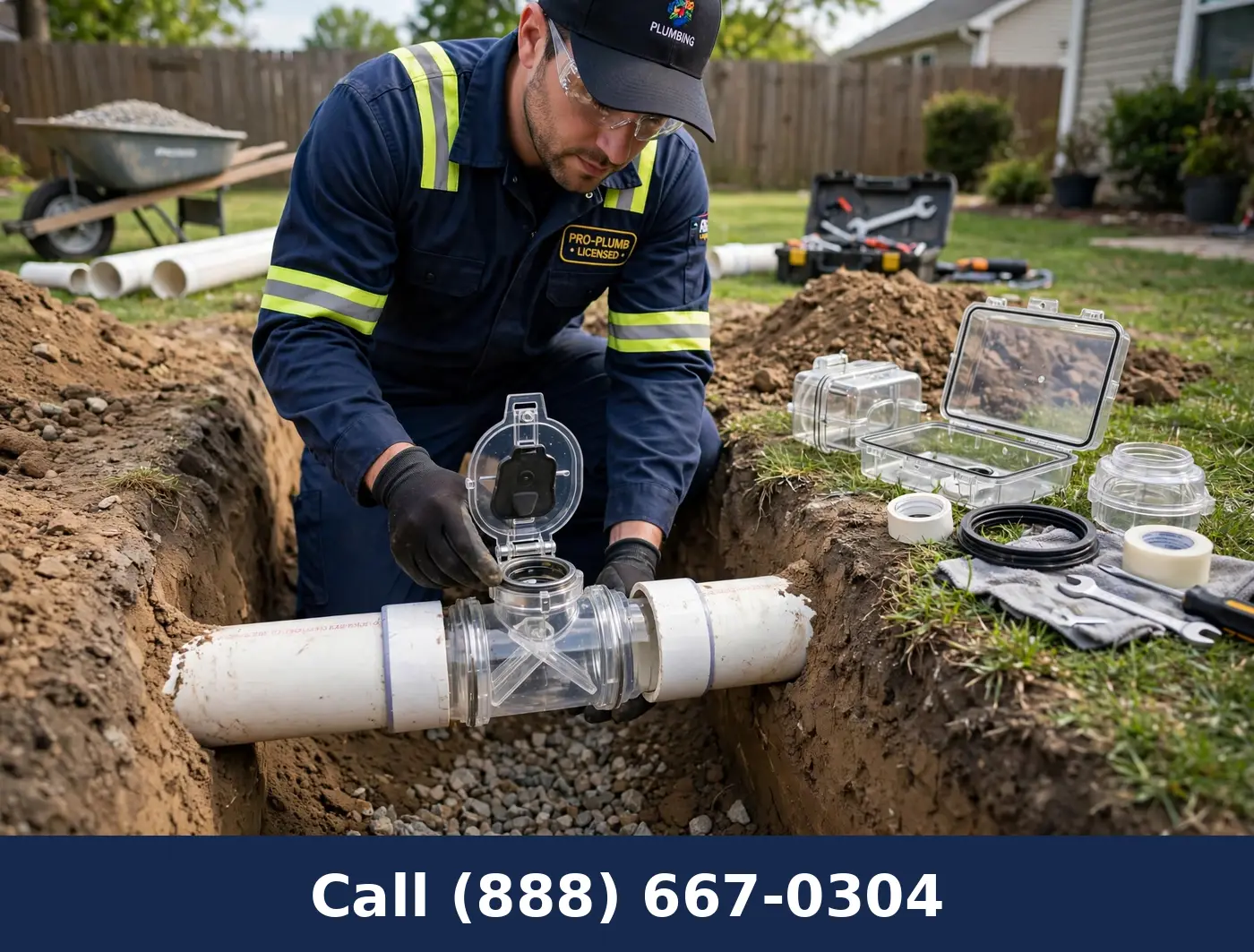
The installation exposes the lateral at the chosen point and cuts the valve body into the line, oriented so the flapper opens toward the city. An access box with a clear cover goes over the valve so it can be inspected and cleaned without digging. We test the flapper's movement, backfill in compacted layers, and restore the surface. Before we leave, we show you the access point and explain the simple maintenance it needs.
What maintenance does a backwater valve need?
A backwater valve is a mechanical device sitting in a stream of wastewater, and it needs periodic attention to keep working. Debris such as toilet paper, hair, and grease film can collect around the flapper hinge and keep it from seating fully. A valve that looks fine from above may fail to seal during the one surcharge that matters.
We recommend checking the valve about once a year. The clear cover makes this simple: open the access box, look at the flapper, and clear away any debris. Never run a drain snake through a valve without care, since the cable can knock the flapper off its hinge. A few minutes of annual attention keeps the protection reliable.
What are the limits of a backwater valve?
A backwater valve guards against reverse flow from the municipal side, but it cannot fix problems in your own lateral. A blockage from grease, roots, or a collapsed pipe will still back up behind the valve, since the wastewater has nowhere to go. The valve is surge protection, not a substitute for a healthy line.
During a surcharge event, the closed valve also means your own wastewater cannot leave the house until the event passes. Using fixtures heavily while the valve is closed can cause your own backup, so restraint during major storms is wise. Understanding these limits helps you get the full benefit of the device without false confidence.
Can a backwater valve be added to an older home?
Yes, and older homes are often the ones that need it most. The installation exposes the lateral at the chosen point and cuts the valve into the existing line, whether that line is clay, cast iron, or plastic. An access box goes over the valve so future inspection and cleaning never require digging.
The main question is access: the lateral must be reachable at a point where the valve can be serviced. In most yards this is straightforward, while lines under slabs or additions need a closer look. A camera survey and site review during our first visit will tell you exactly what your home allows. Most installations finish in a single visit once the plan is set. You get a clear explanation of the valve's operation before we leave.
How does Plumber Modesto Pros protect Modesto homes from sewer surges?
Plumber Modesto Pros installs backwater valves across Modesto and the surrounding Central Valley, where heavy winter rains can stress municipal sewers and push flow backward toward low fixtures. Our technicians assess your lateral and fixture elevations before recommending a valve, so you get protection matched to your actual risk. We install the valve cleanly, set the access box for easy future checks, and leave you knowing exactly how it works.
Call (888) 667-0304 to find out whether your home is a candidate for backwater protection. We will inspect your lateral, explain the flapper's operation in plain terms, and install a valve that stands guard every time the city line surges.
Features
- Mainline backwater valve sized to your lateral diameter
- Hinged flapper design that seals automatically against reverse flow
- Clear-top access box for easy inspection and cleaning
- Installation on the lateral between home and municipal connection
- Valve body and seat materials built for wastewater service
- Annual maintenance guidance to keep the flapper sealing properly
- Post-installation test confirming the valve opens and closes correctly
Benefits
- Block municipal sewer surges from entering your home
- Protect finished basements and low-lying fixtures
- Reduce the risk of sewage damage during heavy rain
- Keep the valve working automatically with no effort
- Maintain normal drainage when the city line is calm
- Add a layer of defense alongside proper drainage
- Gain confidence during storm season
Frequently asked questions
Will a backwater valve affect my normal drainage?
The flapper hangs open during normal use and wastewater flows past it freely. You will not notice it in daily life until a surcharge event closes it.
Does a backwater valve need maintenance?
Yes, debris like paper, hair, and grease film can collect around the flapper and stop it from sealing fully. An annual cleaning and check keeps it ready.
Will a backwater valve stop all backups?
It reduces the risk substantially but cannot protect against blockages in your own lateral. Think of it as surge protection for the city side of your system.
What is the difference between a mainline and a branch valve?
A mainline valve protects the whole home and is the standard choice. A branch valve protects a single drain and fits only when a mainline install is not practical.
How do I know if my home needs one?
If your fixtures sit below the level of the street's manhole covers, or your neighborhood's sewers surcharge during heavy rain, you are a strong candidate. A camera inspection and site review confirm it. Our technicians can assess your lateral and fixture elevations during a service visit and give you a straight answer.