Backflow Prevention Testing & Installation Near Me
Starting price: Call for pricing
Backflow is the unwanted reversal of water flow that can pull irrigation water, fertilizers, or other contaminants back into your clean drinking water supply. A backflow prevention assembly installed at the right connection point stops that reversal mechanically, using check valves and, in higher-risk setups, a relief valve. Most water providers require these assemblies to be tested at installation and every year after, and Plumber Modesto Pros handles both the installation and the scheduled testing.
What is backflow and why is it dangerous?
Backflow is water flowing in the wrong direction through your plumbing, from a contaminated source back toward the clean supply. It happens two ways. Backpressure occurs when a downstream pump or boiler pushes water backward. Backsiphonage occurs when a pressure drop in the main, such as a water main break, sucks water backward like a straw. The danger is what the reversed water carries. That can include fertilizer and pesticide residues from irrigation lines, stagnant water from hoses and sprinkler pipes, boiler treatment chemicals, or bacteria from a pool. Once contaminants cross into the potable lines, they can reach every tap in the building and, in serious cases, the public main serving the neighborhood. That is why water providers treat backflow prevention as a public health matter rather than an optional upgrade.
Where do cross-connections happen in a typical property?
A cross-connection is any point where the drinking water system meets a potential contaminant, and homes have more of them than most owners realize. Lawn irrigation systems are the most common, because sprinkler heads sit at soil level and chemical injectors add fertilizer directly into the lines. Swimming pools and spas with automatic fill lines, decorative fountains, and hose bibbs with chemical sprayers attached all create connection points. Boilers, water softeners with brine tanks, and fire sprinkler systems add cross-connections in commercial and multi-family buildings. Even a garden hose left lying in a puddle or a bucket of cleaning solution is a temporary cross-connection if a pressure drop occurs. A proper survey walks the property, lists these points, and matches each one to the right level of protection.
What types of backflow prevention assemblies are used?
The right device depends on the hazard level and the plumbing layout, not on one-size-fits-all rules. For basic residential irrigation without chemical injection, a pressure vacuum breaker is often appropriate, using a spring-loaded air inlet that breaks any siphon before it can pull water backward. A double check valve assembly uses two independent spring-loaded check valves in series and suits moderate hazards where the water authority requires a testable device. A reduced pressure zone assembly, or RPZ, is the highest level of common protection. It pairs two checks with a relief valve between them that dumps water to the ground if either check fails, so a failure announces itself. RPZ units are required for high-hazard connections such as systems with fertilizer injection, boilers, or commercial processes. Simple hose-bibb vacuum breakers thread onto outdoor faucets as an inexpensive fix for the humble garden hose cross-connection.
Why does testing have to happen every year?
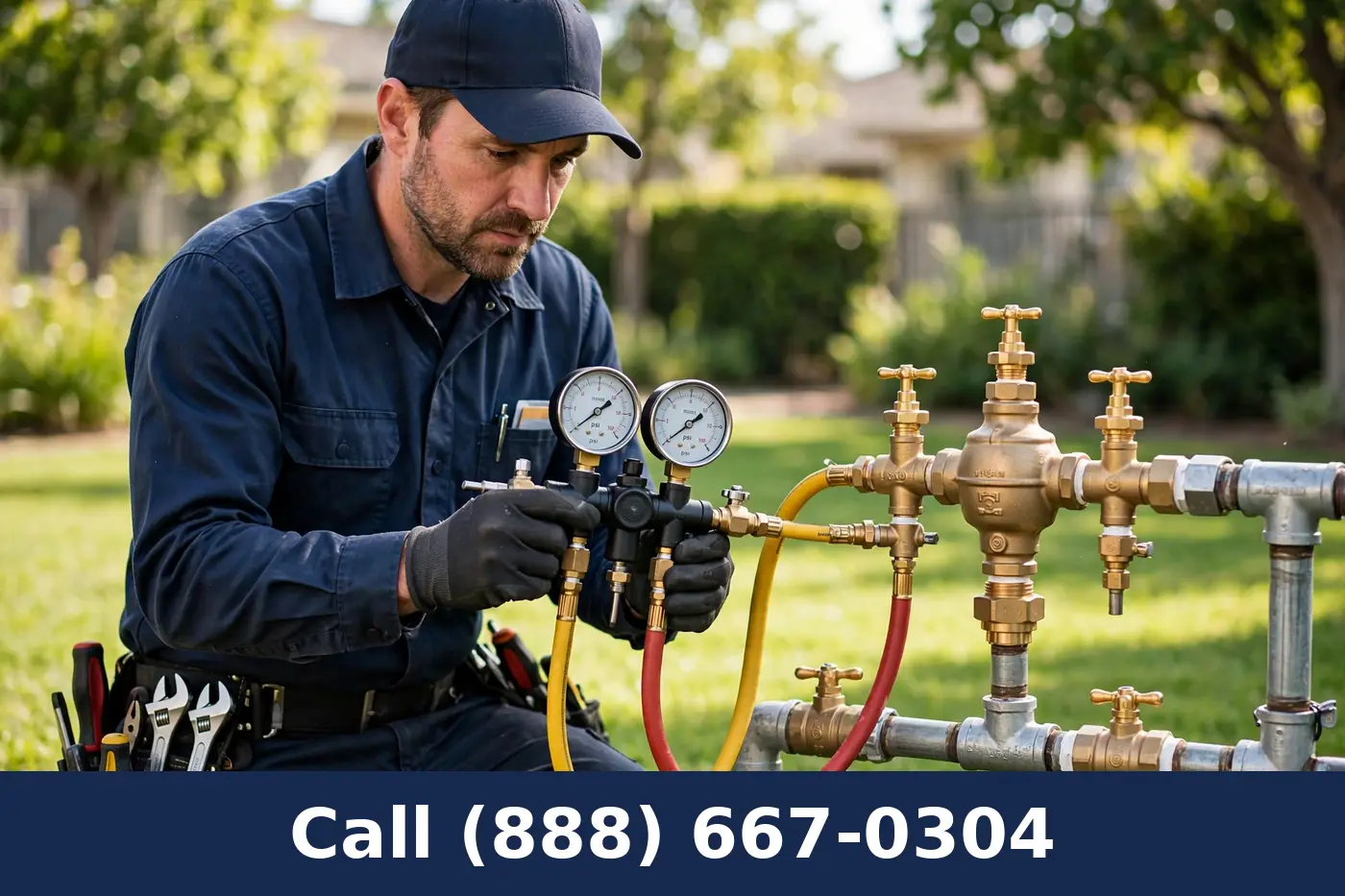
A check valve can fail without any outward sign: no leak, no noise, no change in water pressure at the tap. The assembly keeps looking fine while quietly providing no protection at all, which is precisely the failure that matters. Water providers therefore require testable assemblies to be verified at installation, after any repair, and once a year after that, with results filed to the purveyor. The test uses a calibrated differential pressure gauge connected to the assembly's test cocks. The tester checks each check valve separately for a tight seal at the required pressure differential. On an RPZ, the relief valve is also verified to open at its specified differential. A device that fails any part of the test is repaired or rebuilt and then retested until it passes.
What does a backflow installation visit involve?
The visit begins with the cross-connection survey, walking the property and noting every irrigation zone, pool line, hose bibb, and commercial connection. The technician selects the assembly type that matches each hazard and confirms the choice against local water provider requirements. Installation places the device at the correct point in the piping with the clearances needed for testing access and, for RPZ units, proper drainage for the relief port. Shutoff valves go on both sides of testable assemblies so future testing can isolate the device without draining the building. After installation, the assembly is tested right away with the calibrated gauge, and the passing results are documented for the water provider's records. The technician also notes the annual retest date so the next test does not slip through the cracks.
What does a testing visit involve for the homeowner?
Testing is a short, tidy appointment, usually well under an hour for a typical residential assembly. The tester closes the downstream shutoff, connects the gauge to the test cocks, and runs through the check valves one at a time. Water is off to the downstream side during part of the test, so irrigation or the affected zone pauses briefly and then resumes. If the assembly fails, the tester explains what failed and what the repair involves before any additional work begins.
What affects the cost of installation and testing?
Assembly type is the main cost factor, since a simple vacuum breaker and a full RPZ assembly are very different devices with different installation demands. Location and accessibility matter: an assembly on an open irrigation main is straightforward, while one needing concrete work or vault access takes more labor. Pipe size and material affect fittings and connection time, and commercial or multi-zone properties may need more than one assembly. Repairs on an existing device depend on whether it needs a simple internal rebuild or a full replacement of the body. Annual testing is a separate recurring visit priced on its own, reflecting the calibrated equipment and documentation involved. Calling (888) 667-0304 gets an on-site survey where Plumber Modesto Pros identifies your cross-connections and explains exactly what each one needs.
How should assemblies be protected through the seasons?
Above-ground backflow assemblies contain brass bodies and rubber internals that do not tolerate ice-block conditions, so cold snaps deserve attention. Insulated pouches or enclosures made for backflow devices add a layer of protection during the coldest weeks. Irrigation systems feeding the assembly should be drained for the cold months using the system's own winterizing routine. Never wrap a device so tightly that the test cocks and shutoffs become unreachable, since the annual test still needs clear access. Plumber Modesto Pros can advise on protection that fits your specific installation during the testing visit. Calling (888) 667-0304 keeps your assemblies installed correctly, tested on schedule, and documented with your water provider year after year.
Features
- Site survey to identify cross-connections at irrigation, pool, and commercial systems
- Correct assembly selection for the hazard level, from vacuum breakers to RPZ units
- Installation with proper clearances, drainage, and accessible test cocks
- Scheduled testing with a calibrated differential pressure gauge
- Written test results prepared for filing with your water provider
- Repair or rebuild of failed assemblies using manufacturer-spec internal parts
- Seasonal guidance on protecting above-ground assemblies during cold snaps
Benefits
- Keep fertilizers, pesticides, and stagnant irrigation water out of your drinking supply
- Meet your water provider's testing schedule without tracking the paperwork yourself
- Get test documentation filed correctly so the assembly stays in compliance
- Catch a silently failed check valve before it matters instead of after
- Size the protection to your actual hazard instead of over- or under-building it
- Extend assembly life with rebuilds when the body is sound but internals are worn
- Have one provider handle installation, testing, and repairs year after year
Frequently asked questions
Do I really need a backflow preventer for a home sprinkler system?
In most cases yes. Irrigation lines sit at soil level and can carry fertilizer residue, so water providers commonly require a testable assembly on the irrigation connection with annual testing.
What happens if my assembly fails its annual test?
The tester identifies which check valve or relief valve failed, then repairs or rebuilds the assembly with proper internal parts and retests it until it passes. The passing result is what gets filed.
How long does a backflow test take?
A typical residential assembly test takes well under an hour. Water is interrupted to the downstream side only during part of the test, then restored right away.
Can I test the assembly myself?
Testing requires a calibrated differential pressure gauge and knowledge of the test procedure, and water providers require results from a qualified tester. This is a job for a trained technician with the right equipment.