Appliance Water Line Hookups Near Me
Starting price: Call for pricing
Refrigerators with ice makers, washing machines, and other water-using appliances need supply lines that are tapped in properly and valved off individually. Plumber Modesto Pros runs appliance water lines from the nearest suitable cold water pipe, with a real tee and shutoff valve instead of a leak-prone saddle tap. The line is routed cleanly, pressure-tested, and left with enough slack to move the appliance for cleaning.
What are appliance water line hookups?
An appliance water line hookup is the supply connection that feeds water to a refrigerator ice maker, a washing machine, or any other appliance that needs a water feed. The job has two parts: tapping into a nearby cold water line, and running a supply line to the appliance with a shutoff valve in between. The shutoff matters as much as the connection. When each appliance has its own valve, a leaking ice maker line or a washer hose change does not require shutting off water to the whole house. Plumber Modesto Pros builds every hookup this way, as a small but complete plumbing job rather than a shortcut.
Why avoid saddle valves for ice maker lines?
The saddle valve is the cheap shortcut that causes the expensive damage. It clamps around a copper pipe and drives a needle through the wall to tap the water. That needle hole is small, so flow to the ice maker is weak from the start. The rubber gasket under the clamp hardens with age and starts to weep. The needle itself corrodes and can snap off. Many local codes do not approve saddle valves at all. The correct method is to cut the pipe, install a tee fitting, and add a short nipple with a real quarter-turn shutoff valve. It takes more work up front and it lasts decades instead of years. Plumber Modesto Pros does not install saddle valves for appliance hookups.
• Saddle valves pierce the pipe and are notorious for slow leaks. • Many codes do not approve them for permanent connections. • A cut-in tee with a real shutoff valve is the lasting alternative.
What does a refrigerator and ice maker hookup involve?
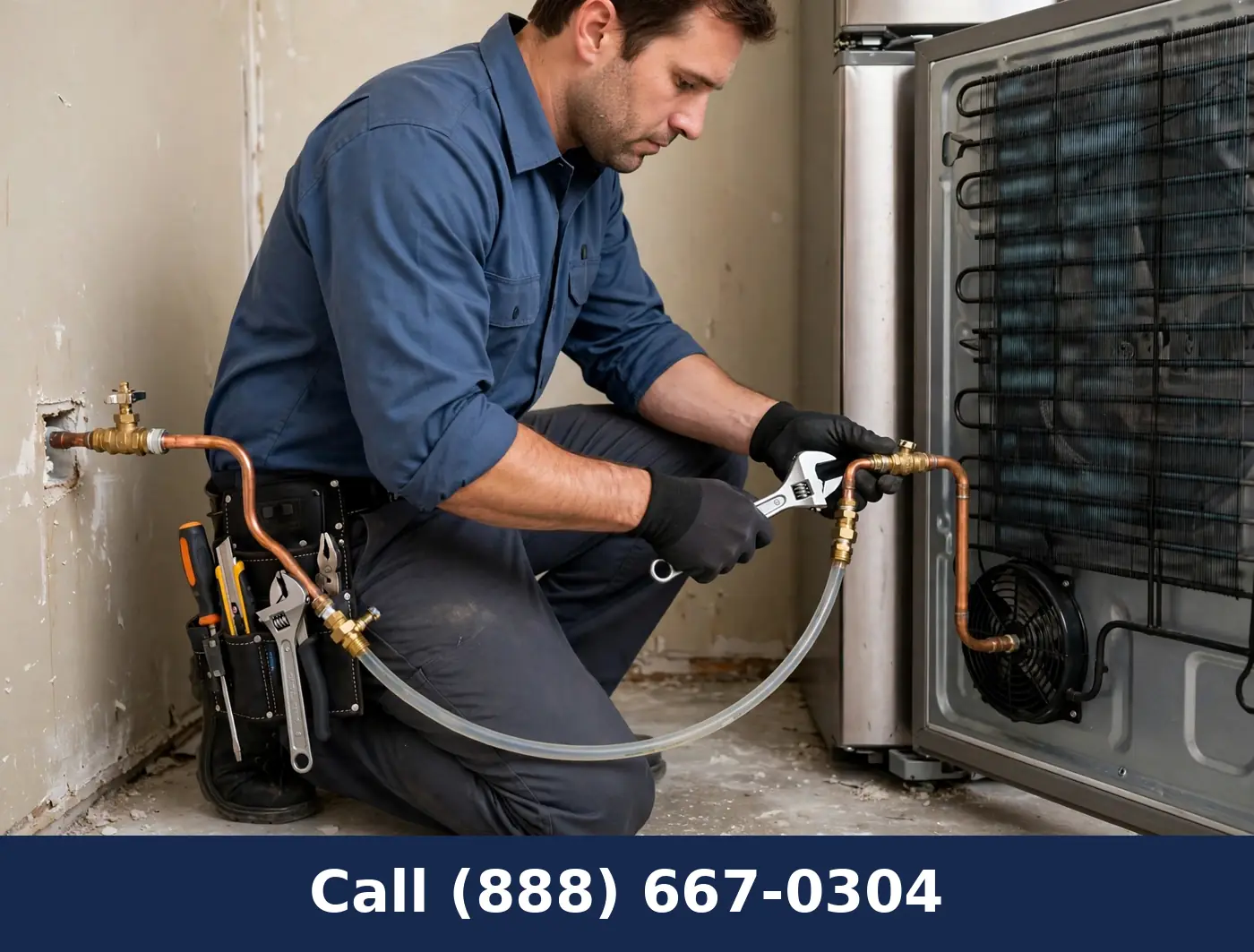
The nearest cold water line is located, often the kitchen sink supply or a line in a nearby wall or crawlspace. A tee is cut into that line with a shutoff valve on the branch. From the valve, a quarter-inch line runs to the back of the refrigerator: copper or braided stainless, routed along walls or through cabinets, secured so it cannot kink. Enough extra line is left coiled behind the fridge so the appliance can be pulled out for cleaning without stressing the connection. At the fridge end, the line connects to the inlet valve with the fitting the manufacturer specifies, usually a compression fitting tightened to spec. Water is turned on slowly, every joint is checked, and the ice maker is cycled to confirm it fills and shuts off.
What about washing machine hookups?
Washing machines need both hot and cold supplies with individual shutoff valves, plus a proper drain standpipe. The supply valves should be quarter-turn ball valves, which shut off positively even after years of sitting open. Braided stainless washer hoses are the standard connection from valve to machine. They should be replaced on a schedule, since a burst washer hose is one of the most damaging home floods. The drain standpipe must be the right height and diameter so the machine's pump can discharge without overflowing. When a laundry area is being set up from scratch, Plumber Modesto Pros roughs in the supplies, valves, and drain as one coordinated job.
How should water lines be routed?
Routing is where hookups succeed or fail over time. A line run across a sharp cabinet edge will eventually chafe through. A line with no slack pulls tight the first time the refrigerator rolls out, stressing the fittings. Copper kinks if it is bent too sharply, and a kink becomes the weak point that splits later. Good routing keeps the line along protected paths, secures it at intervals, leaves a service loop behind the appliance, and keeps it clear of heat sources and moving parts. Lines inside walls or floors get proper protection plates where they pass through framing. Where a line must cross a room, it runs tight to the wall and low, out of foot traffic and away from stored items. These details take a few extra minutes and add years to the installation.
What goes wrong with a bad hookup?
The classic failure is the saddle valve that weeps for months inside a wall before anyone notices, feeding mold and rot. A close second is the plastic supply line that bursts behind a refrigerator, running water across the kitchen floor for hours. Kinked copper starves the ice maker, so cubes come out small and hollow or the maker stops cycling. A hookup with no shutoff valve turns a simple filter change into a whole-house water shutdown. Each of these is a connection problem, not an appliance problem, and each is fixed by doing the plumbing correctly the first time. The extra minutes spent on a tee and a valve pay for themselves the first time something needs service.
What affects the cost of appliance water line hookups?
Distance from the nearest suitable water line is the main factor. A refrigerator sitting next to the kitchen sink is a short run; one across the kitchen from the nearest pipe is a longer job. Opening walls or floors to route the line adds time and patching. Whether the existing pipe is copper, PEX, or galvanized changes the fittings and the work. Multiple appliances in one visit share the trip and the setup, which helps. For an exact figure, call (888) 667-0304 and list the appliances you want connected.
Why have Plumber Modesto Pros run your appliance water lines?
A water line to an appliance runs under full house pressure around the clock, often hidden behind or inside walls. It deserves the same care as any other pressurized pipe in the house. Plumber Modesto Pros taps in with real tees and valves, uses supply lines rated for the job, routes them to survive appliance moves, and pressure-tests every joint. The result is an ice maker that fills properly, a washer that shuts off positively, and no slow leak growing inside your wall. When the refrigerator rolls out for its yearly cleaning, the line moves with it instead of fighting it. Call (888) 667-0304 to set up your hookups.
Features
- Cold water tap-in with a proper tee fitting, not a saddle valve
- Individual shutoff valve on every appliance supply line
- Quarter-inch lines for ice makers and water dispensers
- Braided stainless or copper supply lines rated for the appliance
- Washer hookups with accessible hot and cold shutoffs
- Routing with slack for moving appliances without stress
- Pressure testing of every new joint before the job ends
Benefits
- Ice makers and dispensers with a steady, clean water feed
- No more slow drip from a failing saddle valve
- Each appliance gets its own shutoff for easy service
- Washer hookups that handle pressure spikes safely
- Neat, protected routing that survives moving appliances
- Fewer callbacks, since the connection is done right
- One visit can hook up every appliance on your list